
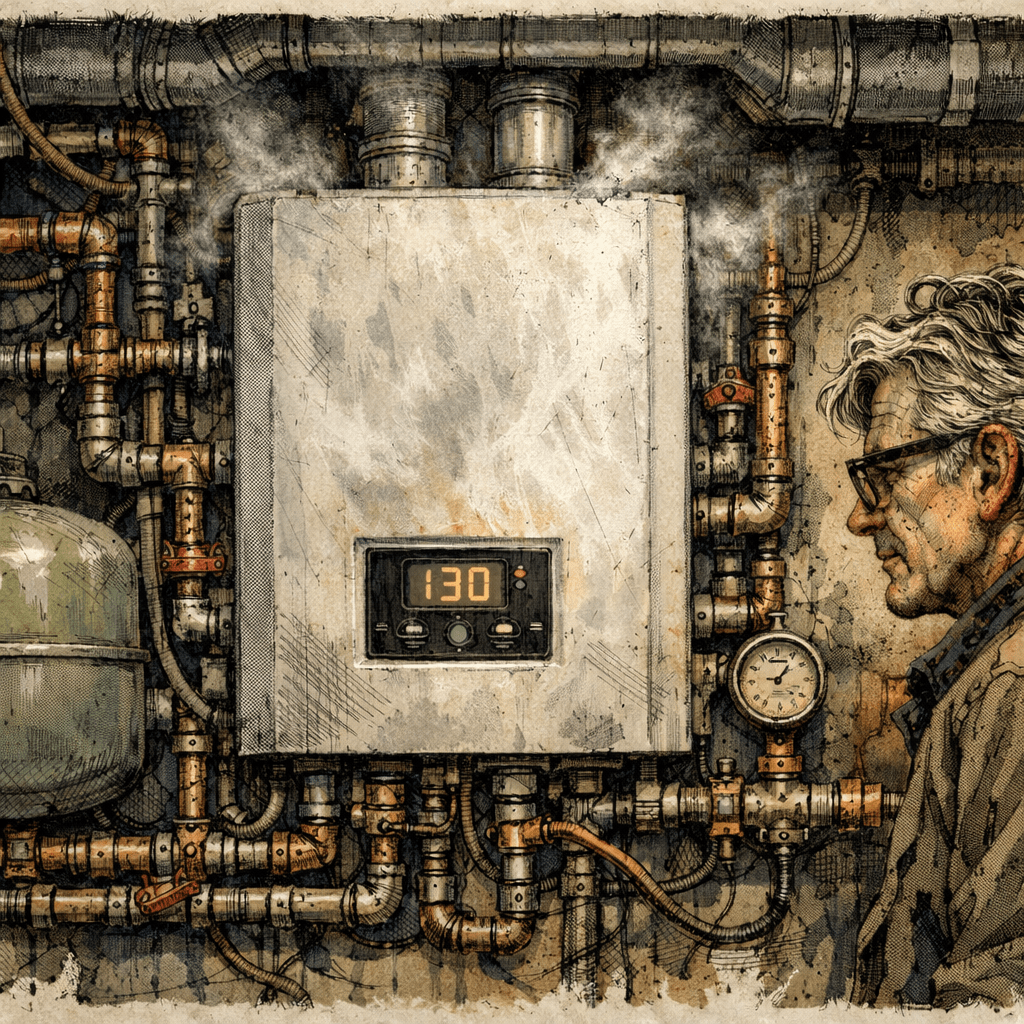
If you’ve been following along, you know our Triangle Tube Prestige SOLO 110 finally gave up the ghost. Actually, “finally” is generous — it went out on its own schedule, which was, of course, the worst possible time. You can read about the full Triangle Tube saga here. The short version: indirect water heater tank with an anode rod that needed replacing, ongoing iron and sediment issues, and the slow creeping realization that we were throwing good money after bad. So when it died, we decided to go all-in on a combination boiler and simplify our lives. Get rid of the extra tank. One box. One thing that does everything.
We went with the Navien NCB-240/110 Propane Combi Boiler. We’ve now had it for a little over a year, and I figured it was time to stop white-knuckling through every cold morning and actually write up what I think.
How We Got Here (The Emergency Edition)
I’m going to take partial credit for the chaos that followed. I had actually started getting estimates in advance — responsible adult behavior — because I knew the Triangle Tube was on borrowed time. I just didn’t expect it to call in that debt during what turned out to be a full-on emergency. And here’s the thing about emergencies: it’s your emergency. Not the HVAC company’s. So the company I’d been talking to? Not exactly leaping into action. I was not thrilled.
Ended up going with a different installer. Some confusion along the way — I’ll spare you the details — but we got the Navien in, got it running, and said goodbye to the indirect water tank. We figured: if the boiler went down, we lost hot water anyway, so what exactly was the indirect tank giving us? The answer, it turned out, was complexity we didn’t need.
One Year Later: The Honest Assessment
Overall? Thumbs up. And I say that as someone who spent the first several months genuinely unsure whether I’d made the right call.
My initial concern — the one that kept me up at night — was whether a combi boiler could keep up when multiple people were showering or running hot water at the same time. My in-laws had gone the on-demand water heater route and hated it so much they ripped it out. That was in the back of my head. But it turned out that what I was experiencing early on wasn’t a Navien problem. It was a well tank problem.
We had a ruptured bladder in our well pressure tank. I know. In my defense: I checked the bladder pressure, water came out, and I thought “water came out, system has water, we’re fine.” What I did not know — and, in retrospect, absolutely should have looked up — is that water coming out when you check the bladder pressure is actually a sign the bladder is ruptured. So I’m not sure how long we were running with that, but long enough to probably add extra rust and sediment into a well water system that was already dealing with iron. Which may have gunked up the iron filter. Which was dropping water pressure. Which was affecting performance across the board. Classic domino effect, classic me.
Once we sorted out the well tank situation, the Navien settled in nicely. Keeps up with what we need. No issues meeting demand. No cold-water sandwiches mid-shower. No complaints from anyone in this house, which is a meaningful data point.
Efficiency: The Inconclusive Report
I genuinely cannot tell you whether we’re using more or less propane than with the Triangle Tube. And I want to be honest about that rather than just picking a number. The problem is the variables: different winter temperatures year over year, whether we’re cooking more, what the house thermostat schedule looked like. It’s a legitimately hard comparison to make fairly. I’d need to normalize for heating degree days at minimum.
This past winter was cold. If our usage came in under previous years adjusted for that, then I’d call the Navien more efficient. I’ll try to dig into those numbers and update this post. But I’m not going to pretend I have a conclusion I don’t have yet.
The Mystery Buzz
There is one minor annoyance worth flagging. The boiler lives in the basement, directly below our living and dining room. Occasionally — not constantly, just occasionally — we hear a small buzzing or beeping sound coming from down there. I have not definitively tracked down the source. Loose sensor? Vibration from a component? The HVAC spirits expressing displeasure? Unknown. It’s subtle enough that it doesn’t interrupt life, but noticeable enough that I keep meaning to investigate it properly.
On a related note: we also replaced our AC and air handler around the same time, and the new air handler now produces a low rumbling sound when it runs — like distant thunder. Same ductwork. Identical unit. Completely new personality. Ghosts in the machine. I don’t have an explanation for that either, and I’ve mostly made my peace with it.
Bottom Line
A highly recommended plumber — someone I actually wanted to install this but couldn’t get because he was booked — suggested the Navien. A few other people echoed that recommendation. I did have one installer try to sell me on a different unit and different sizing, and I pushed back: what does our heating load actually call for? We ended up with the same capacity as the Triangle Tube, which felt right. I’m glad I asked.
One year in. No repairs. No significant complaints. The combi boiler concept has worked well for us — simpler system, fewer things to fail, one appliance to rule them all. Knock on wood. Literally. I just knocked on wood.
I’ll update this post with propane usage data once I’ve had a chance to do a proper year-over-year comparison. Check back.
 Even that's Odd
Leave a comment