
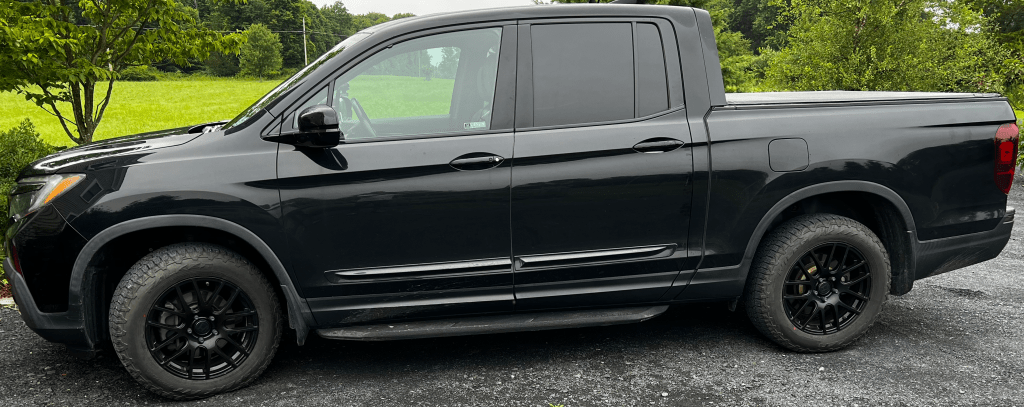
When I purchased my Ridgeline in 2019, Honda sent me a few surveys. Since I did a pretty detailed job on the first one, they ended up sending me a second, more comprehensive survey. I think I gave them a thorough review, but it was in their format, so I never had a copy. I always meant to write up my notes, but something else would always come up.
They’ve actually fixed some of the issues I had with the truck in later models, and I’ll note where I know they made improvements.
What I Loved About the Ridgeline
First off, I really liked this small truck. Some people don’t think it’s a “real” truck, but who cares? It’s perfect if you need a comfortable ride more often than you need heavy-duty truck capabilities—which I think describes most people. I’m a Honda fan, so people who aren’t probably won’t feel the same way, but to each their own. I’m not trying to change anyone’s mind here.
The ride was very comfortable—large but small at the same time, if that makes sense. The 5,000-pound towing capacity was plenty for me, as was the bed size. All I needed was a bed extender for when I had to haul longer pieces of wood or pipe. The interior was typical high-end Honda with leather seats and good build quality.
All in all, I really liked the Ridgeline and would consider getting another one if I found myself needing a small truck again. Right now, I’ve decided the third row is more important for our current lifestyle.
My Suggestions to Honda (And What They Fixed)
Design Issues
The front end needed redesign help to make it look more like a truck and less like the Pilot SUV. I also noted that the split headlights were annoying—it would look better if they weren’t broken up. Good news: They fixed most of this except the split headlights, so the newer version is a big improvement.
The Black Edition wheels were too flat and not aggressive enough for my taste. They fixed this design in later models.
Electronics & Controls
The electronics seemed very outdated—old calculator-style display for the speed, and the graphics felt dated, as did the interface on the info screen. The lack of manual controls was also an issue (similar to Tesla’s approach). They added a knob back, so I think this is fixed.
The emergency brake was a pedal by your left foot, up by your knee. This was a terrible location—it stuck out and I would hit it with my legs. One time my pant leg even caught on it. Why not just make it an electric brake? I believe they did make this change.
The transmission could have been electronic as well. I think they did this too.
Performance & Handling
The turning radius really wasn’t very good. I would love for the vehicle to be a little more nimble.
I’d prefer if the body was 3 inches narrower for better maneuverability.
Power delivery was adequate but not great. I found myself waiting until I had plenty of room to pull out because you really had to stomp it to get going in a hurry, and that’s not my usual driving style. That’s really the biggest difference between my Tesla and the Ridgeline.
Problems I Encountered
The problems I had were pretty minimal, and most were eventually covered by recalls.
Rear camera wiring harness failure: This was a known design flaw that went bad. It was fixed under my extended warranty before the recall came out.
Flooded passenger carpet: After pulling up the carpet to dry it and reading about all the leak issues people had with their Ridgelines, I tried spraying with water and having Honda check it. Finally decided it was a drainage issue and had the AC drain blown out. I made sure to have this done every oil change after that.
Rear door lock issue: One of the rear doors couldn’t be opened from the inside—odd problem.
Transmission stuttering: The transmission needs frequent flushing, and even before it was due for a flush, it started stuttering. I thought it might be ignition, fuel, or transmission failure. I even recorded the dropping RPMs for Honda service since my warranty was running out and I wanted to make sure any serious issues got fixed under warranty. Turns out the flush solved the problem completely.
Accessories & Modifications That Worked
Running boards, sill lights, and mud flaps were all good additions that I’d recommend.
Wheels and tires: I got a separate set of wheels for winter tires but ended up preferring them over the OEM wheels, so I made them my three-season setup and put snows on the original wheels. Eventually, I switched to snow-rated all-terrain tires.
Cargo net was genuinely useful for keeping things organized.
All-weather mats: Skip WeatherTech for the rear—I found a one-piece mat that covered the back seat and under-seat area, which kept most debris out of the cracks much better.
Rolling tonneau cover is a must-have if you get one of these trucks. It gives you the most flexibility for bed usage.
The Best Features
One of the best things about the truck was the bed trunk and dual-action tailgate—super useful features that set it apart from other small trucks.
More Annoyances & Solutions
No tailgate lock was annoying. It could at least be electronic—actually, it should just be electronic.
Garmin map updates were kind of a pain to deal with.
Camping Setup
I bought the bed tent and it came in handy. A full-size air mattress just fits in the bed, and the 120V outlet is perfect for inflating it. The setup worked great, but the entry is fairly high off the ground, so you need a step, bench, or cooler to step on when getting out.
I think the best camping setup would be the bed tent for the kids and a ground tent facing the Ridgeline tent. This way you get double the awning coverage, a little “prison” to contain the kids, and an easier way for adults to handle middle-of-the-night bathroom trips.
Final Thoughts
Despite the issues, I genuinely enjoyed the Ridgeline. It hit the sweet spot for someone who needs truck capability occasionally but wants car-like comfort daily. Honda clearly listened to feedback like mine, as they’ve addressed many of these concerns in newer models. For the right buyer, it’s a solid choice that doesn’t pretend to be something it’s not.
 Even that's Odd
Leave a comment