
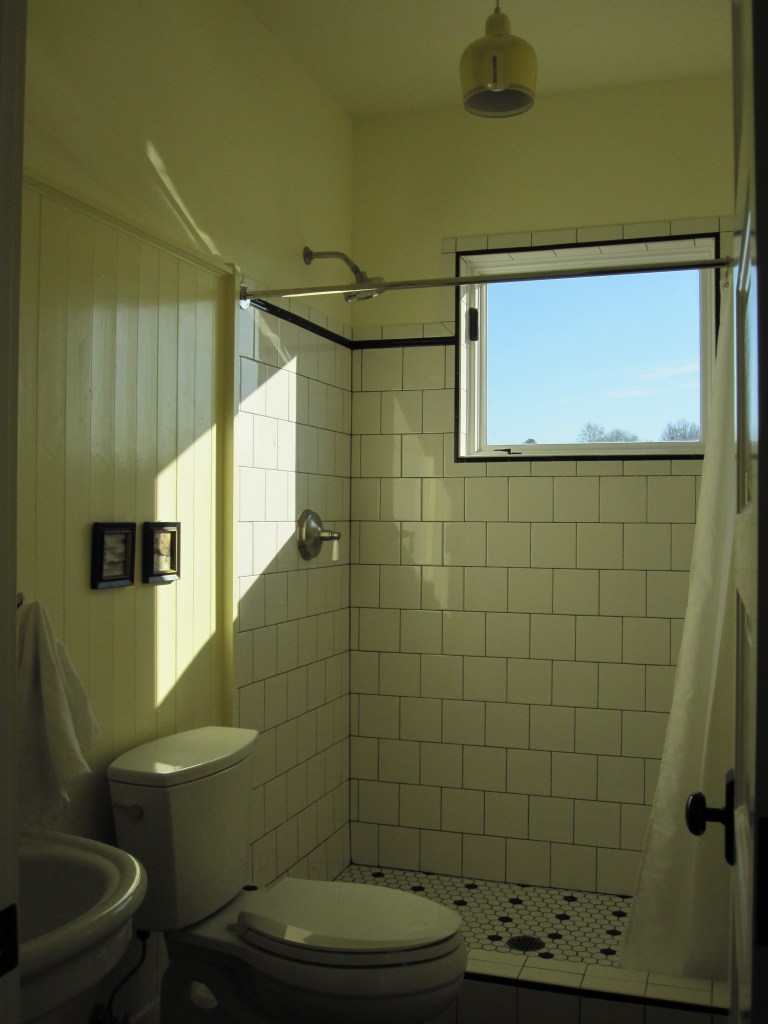
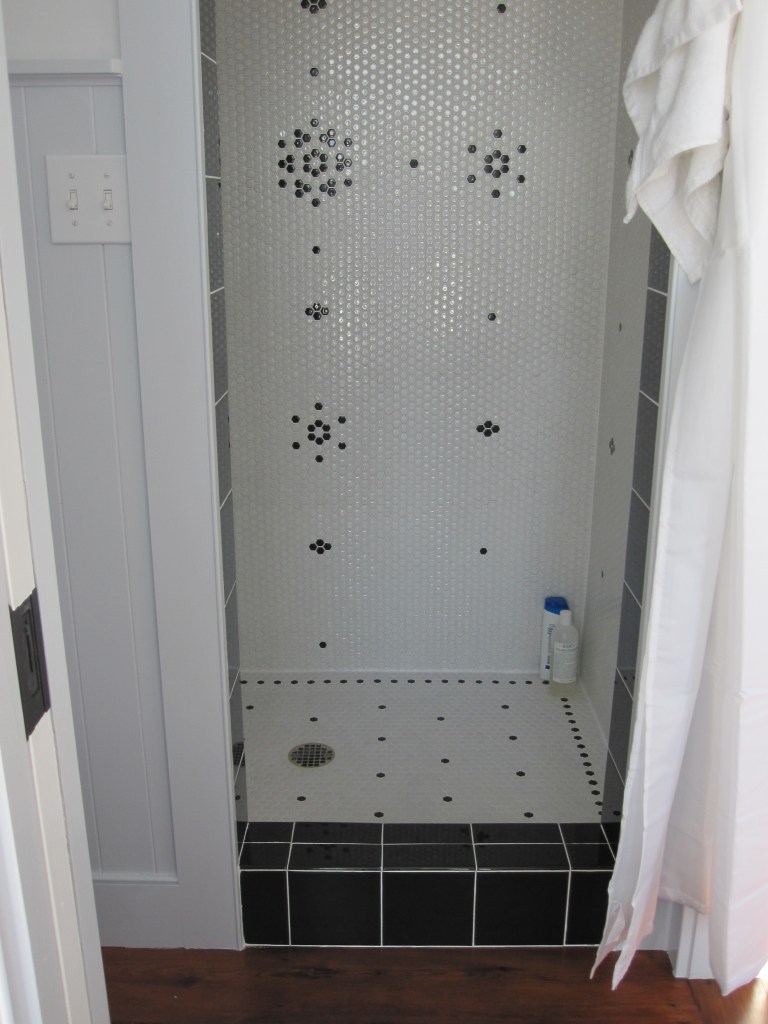
When we designed the bathrooms, we made one decision upfront that was purely forward-looking and, honestly, pretty smart: the first-floor powder room got a shower. The room next to it — which we were using as a playroom, game room, whatever it is on any given Tuesday — could eventually become a bedroom. Aging parents, aging us, whatever the future holds. If that ever happens, that bathroom needs a shower, so we put one in now. That’s the kind of thinking I wish I’d applied to more decisions during this build.
The layout otherwise followed the house. Upstairs, two bedrooms share one bathroom — that’s the kids’ bathroom, and has been for years. On the master side of the second floor, there’s a private bath off the bedroom, with a separate water closet for the toilet. That last part was Jennifer’s call and she was right, as usual.
The floors, again
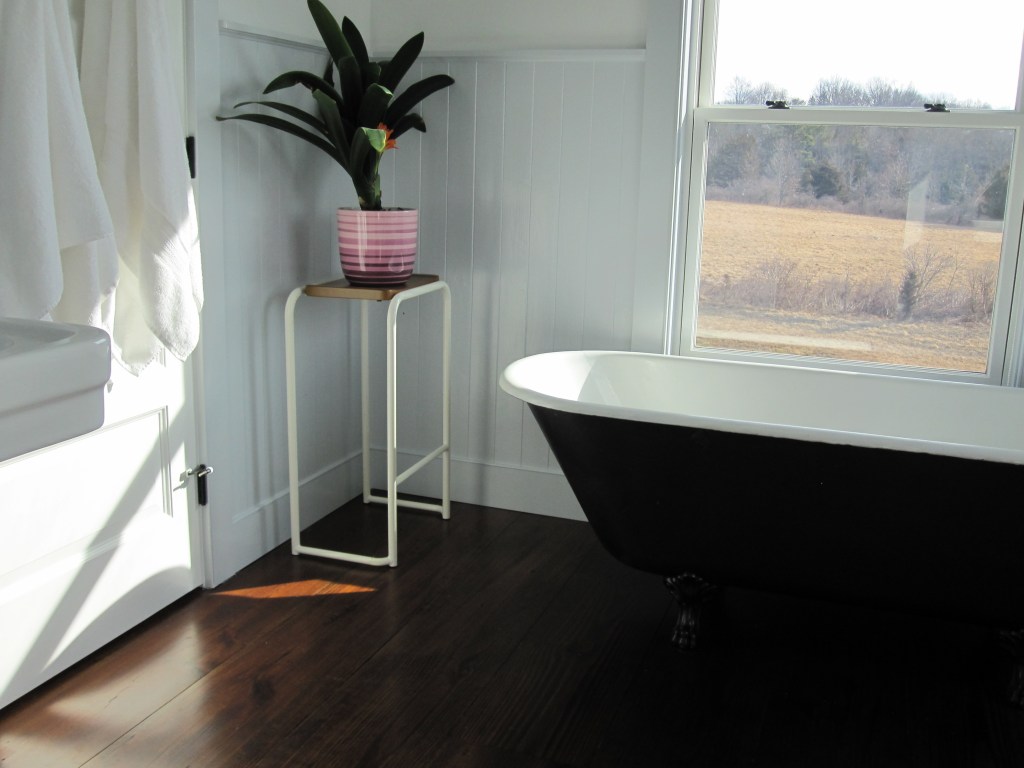
We continued the wide-plank heart pine into all three bathrooms. Historically this wasn’t unusual — before tile became ubiquitous, wood floors were what you had, and in a house trying to feel like it’s been here 200 years, it made sense. Whether it was a good idea is a different question. In the master bath it’s fine. In the kids’ bathroom, where two boys have spent years treating the tub like a water park attraction, it has taken some abuse. Water and wood have a relationship, and it’s not a healthy one. If I redo that bathroom, the floor gets tile. Same thought applies to the kitchen and the mudroom — there are places where you want character and places where you want a surface that doesn’t care if someone leaves a wet towel on it for three days.
The salvage run
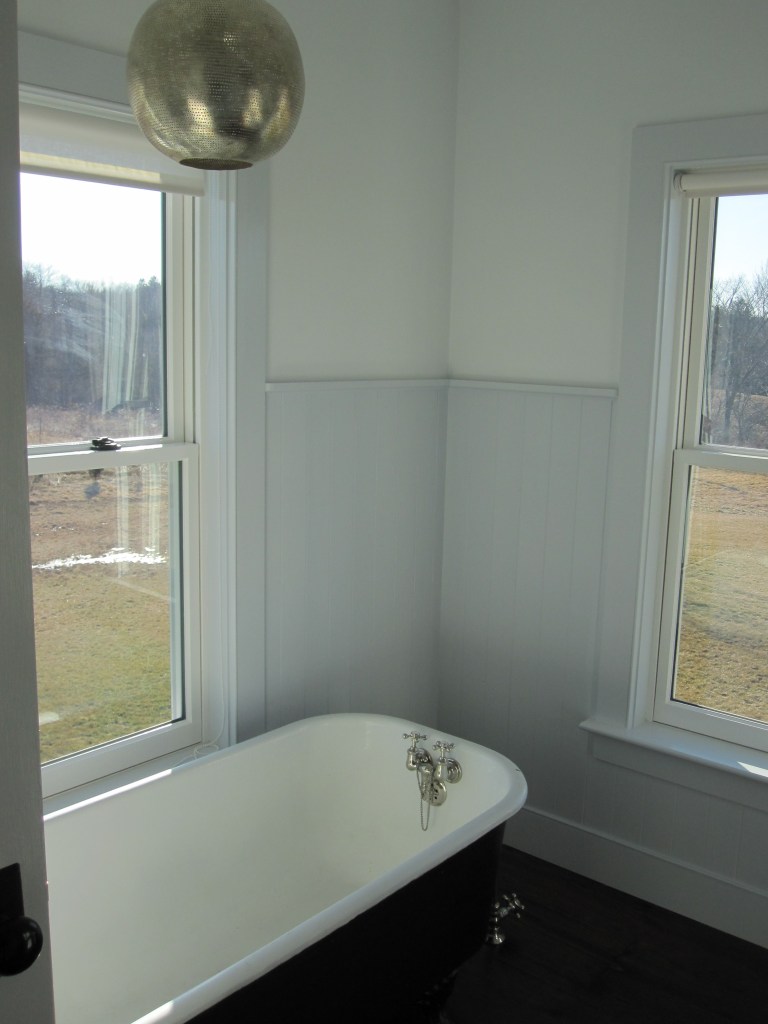
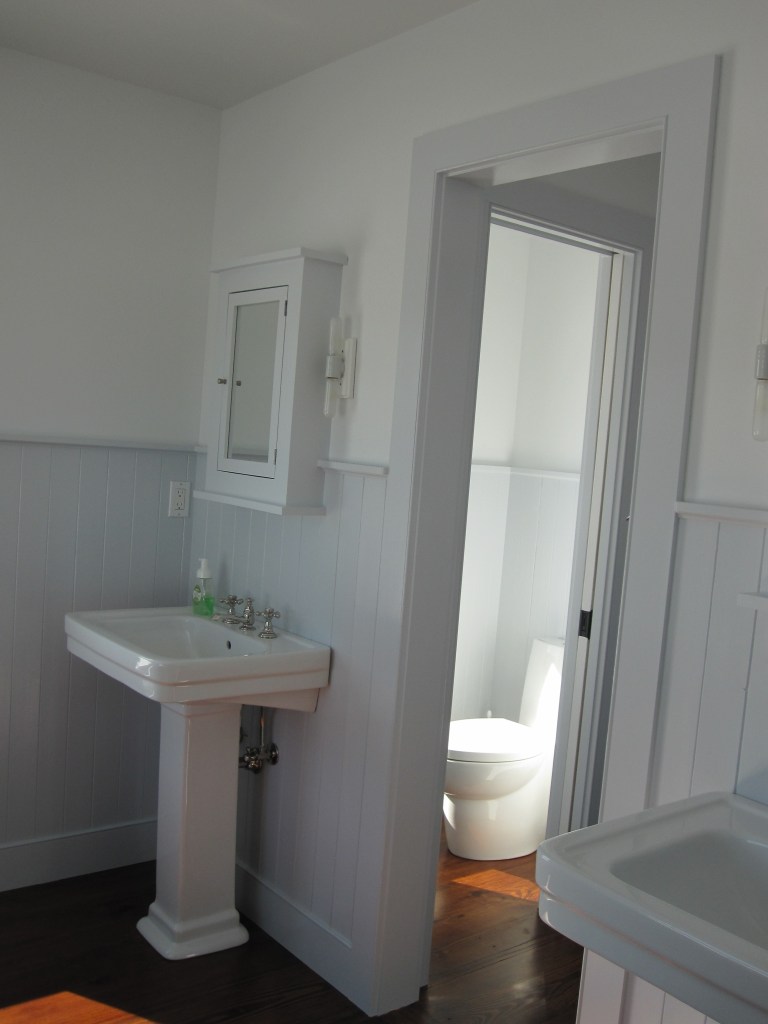
For fixtures, we wanted things that fit a house of this vintage — pedestal sinks, clawfoot tubs, cast iron. Some came from Kohler. Most came from architectural salvage.
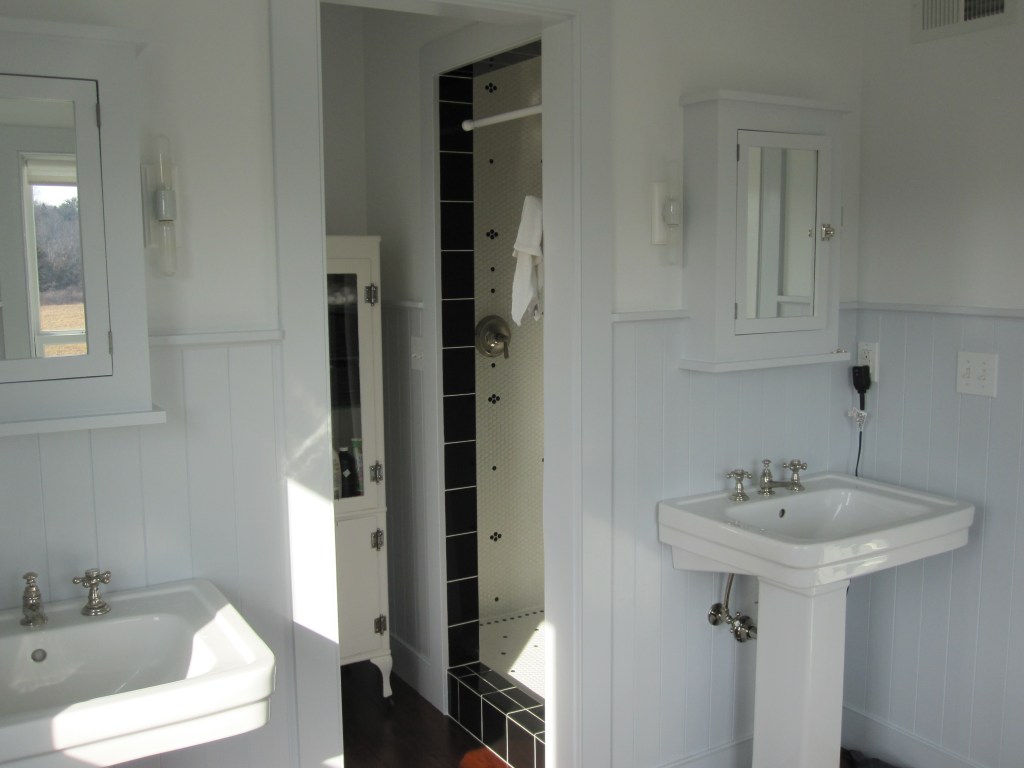
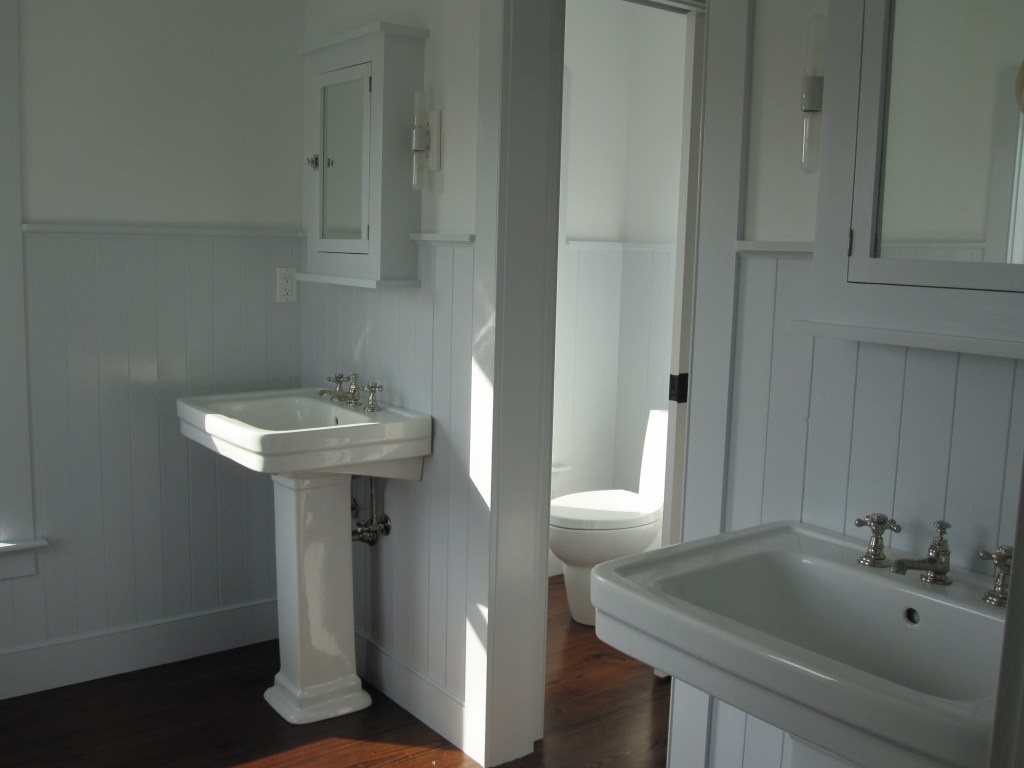
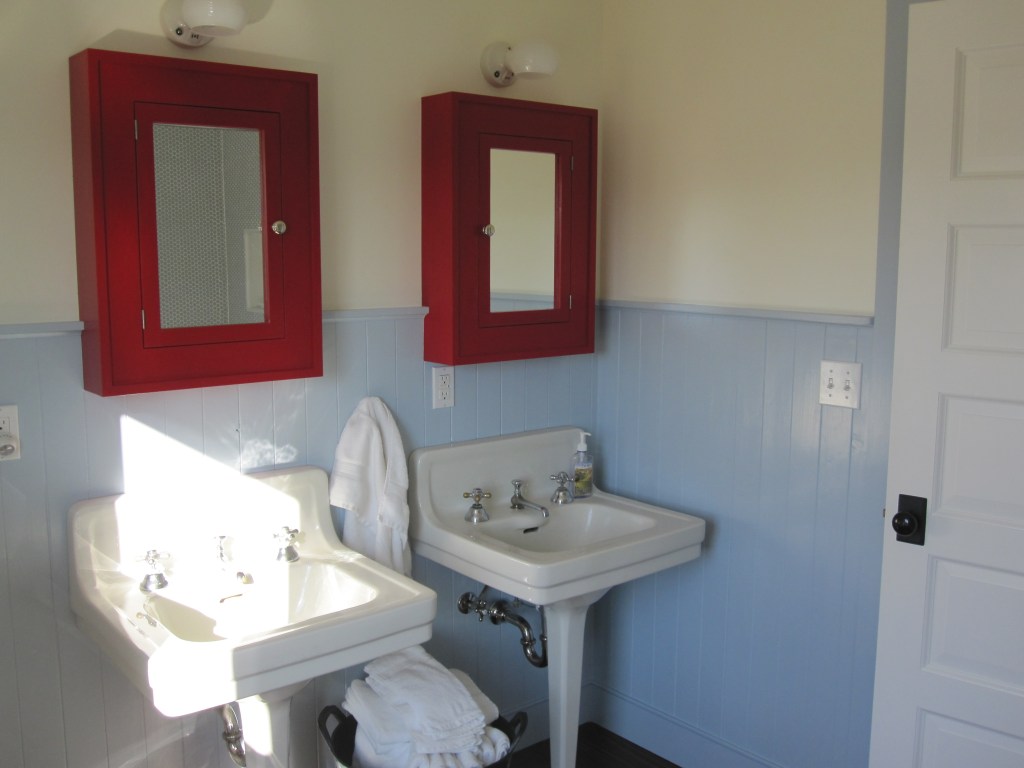
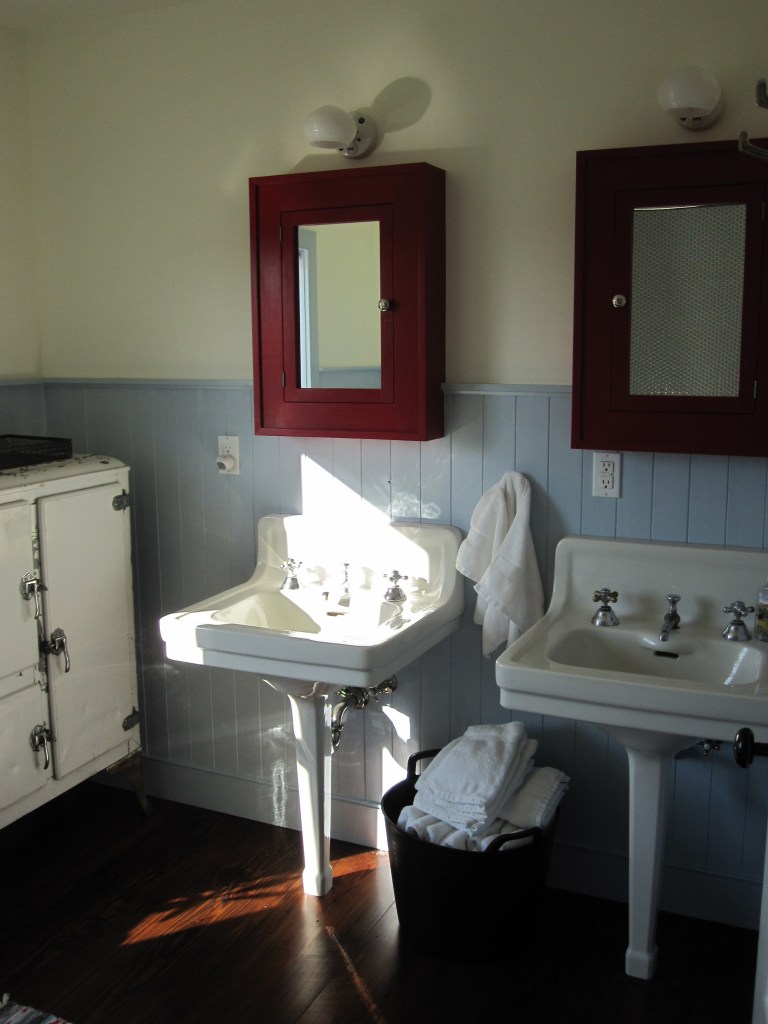
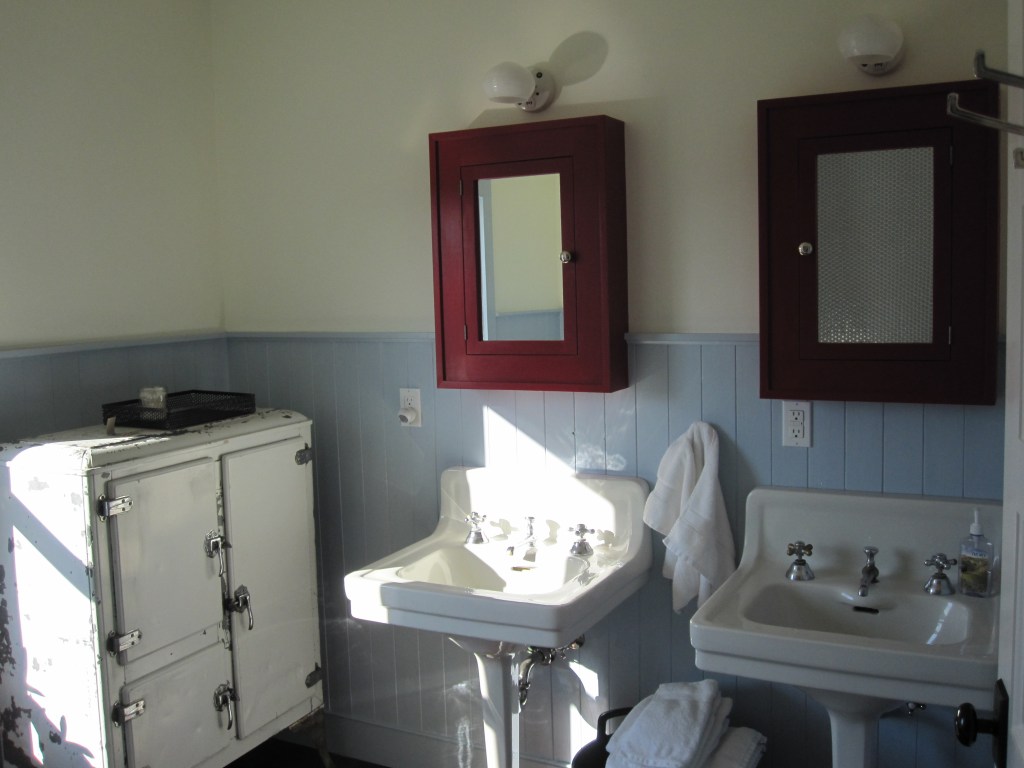
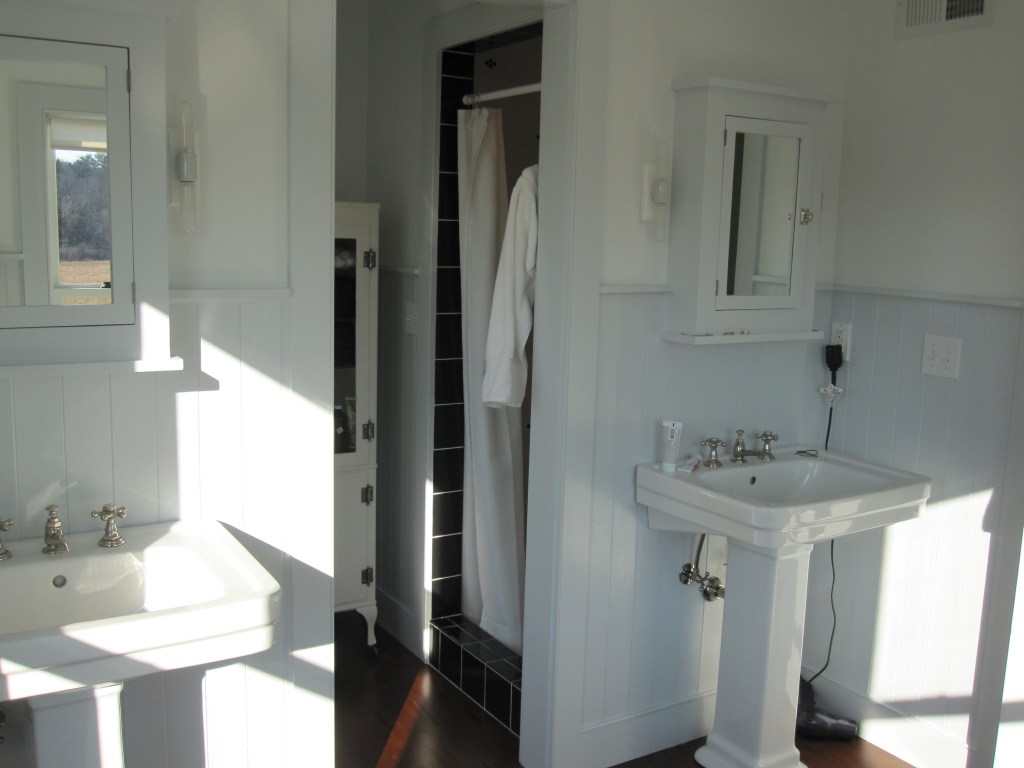
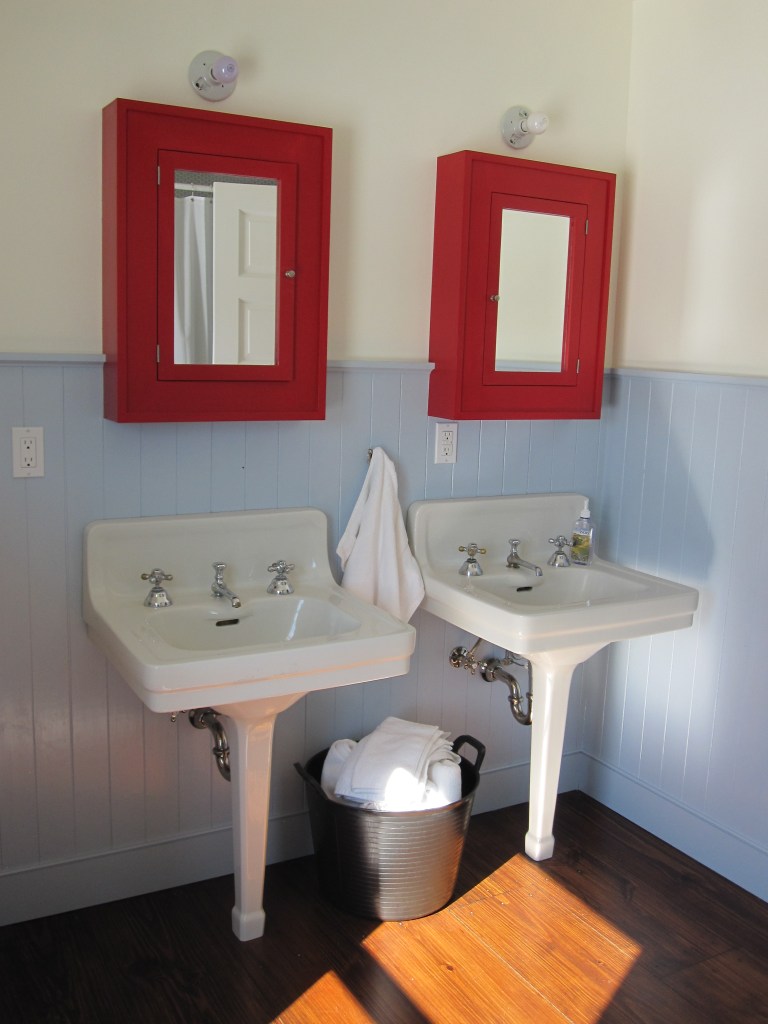
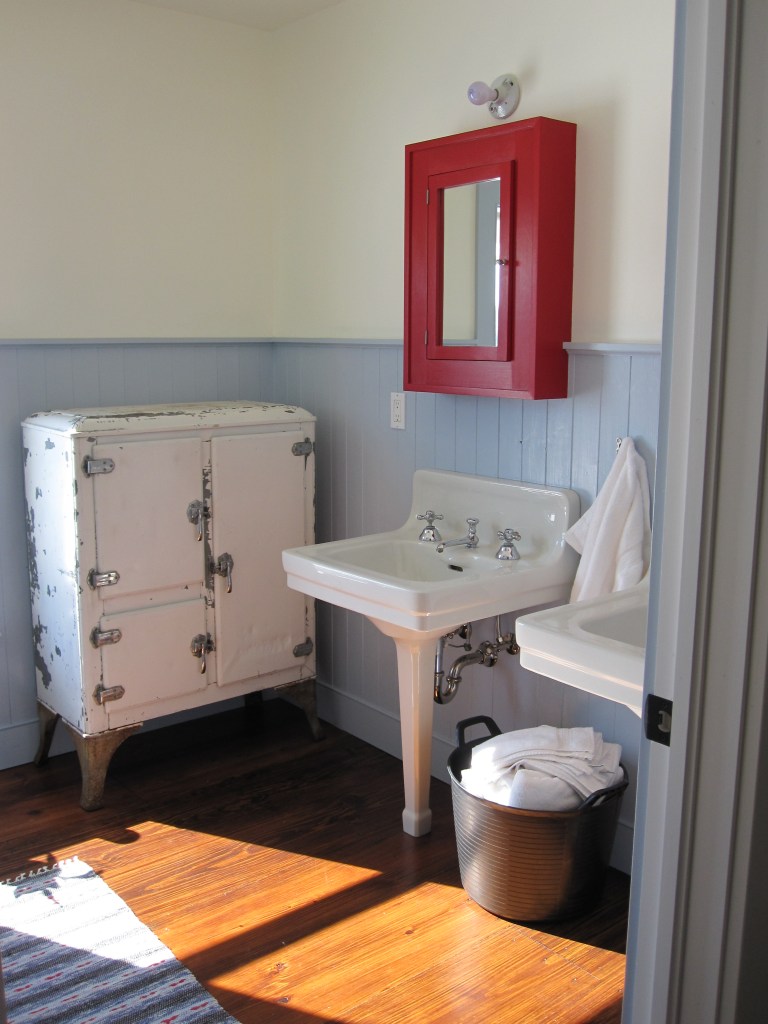
There’s a salvage place up near Ithaca — Cortland area — that had exactly what we were looking for. There’s also a place in Kingston that’s the kind of operation that has seventeen cousins with similar names and we went to the wrong one. The Ithaca trip was the productive one. We came home with the cast iron tub for the shared bathroom, a clawfoot for the master, and a pedestal sink for the powder room. The two sinks in the shared bathroom came from a different source — architectural salvage, originally from Colgate University. They’re not cast iron; they’re vitreous china, the kind of dense institutional material that was standard for the early 20th century, and the kind of thing that chips if you look at it wrong. Ours have some cracks. They also still work perfectly, and the original faucets are still on them, which tells you something.
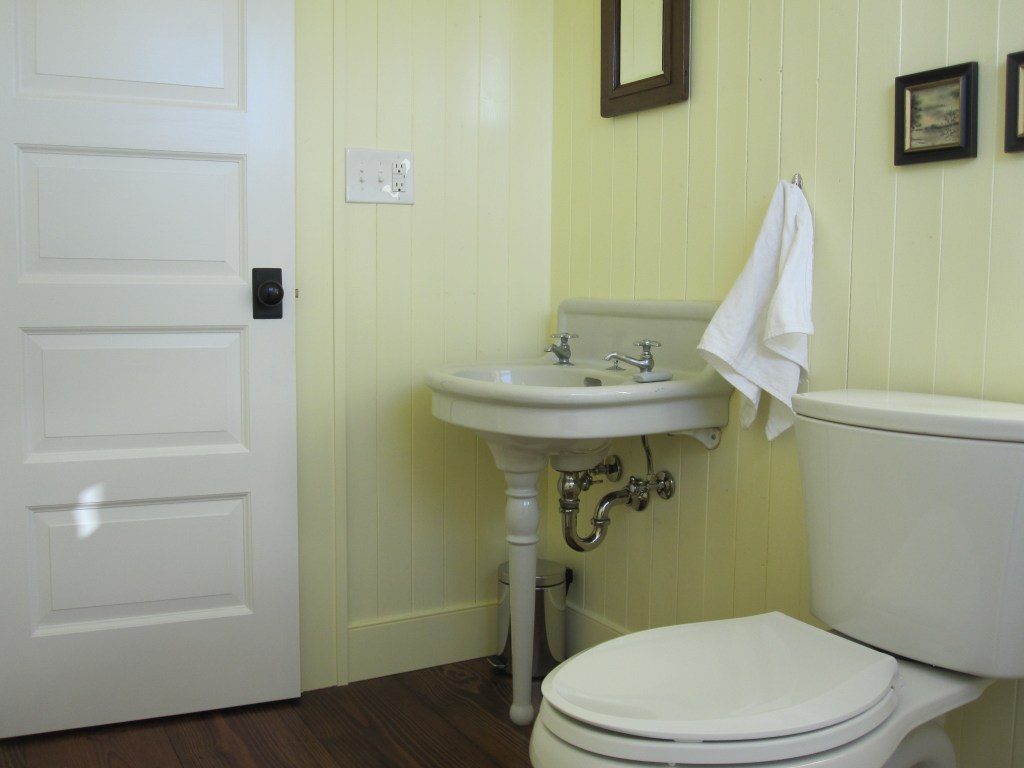
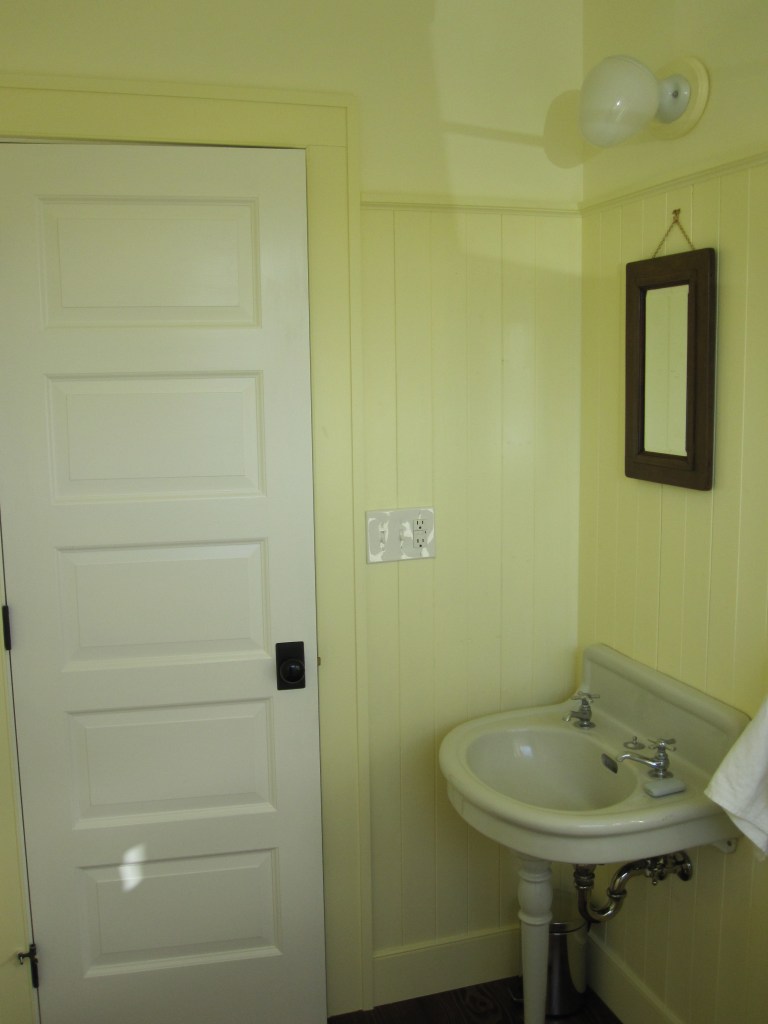
The powder room pedestal was an older style with separate hot and cold taps — no mixer, just two handles. Which is charming until you’re standing there with one hand under scalding water and one hand under cold water trying to make something usable happen. At some point someone figured out you could bridge those two faucets together so the water mixes before it exits, and I found exactly that product — and then couldn’t find it to buy. Discontinued. Eventually I found one. Problem solved, mostly.
Now, the tubs.
The part where we didn’t look closely enough
Both of them.
The cast iron tub in the shared bathroom looked dirty when we bought it. We figured it would clean up. It did not clean up because the porcelain surface was ruined — abraded over decades by whoever owned it before, probably with the wrong cleaner, maybe just with age and hard water. What we thought was grime was the surface itself, gone. Lesson: if you’re ever buying a salvage tub, clean it thoroughly before you hand over any money and make sure what you’re looking at is dirt, not damage.
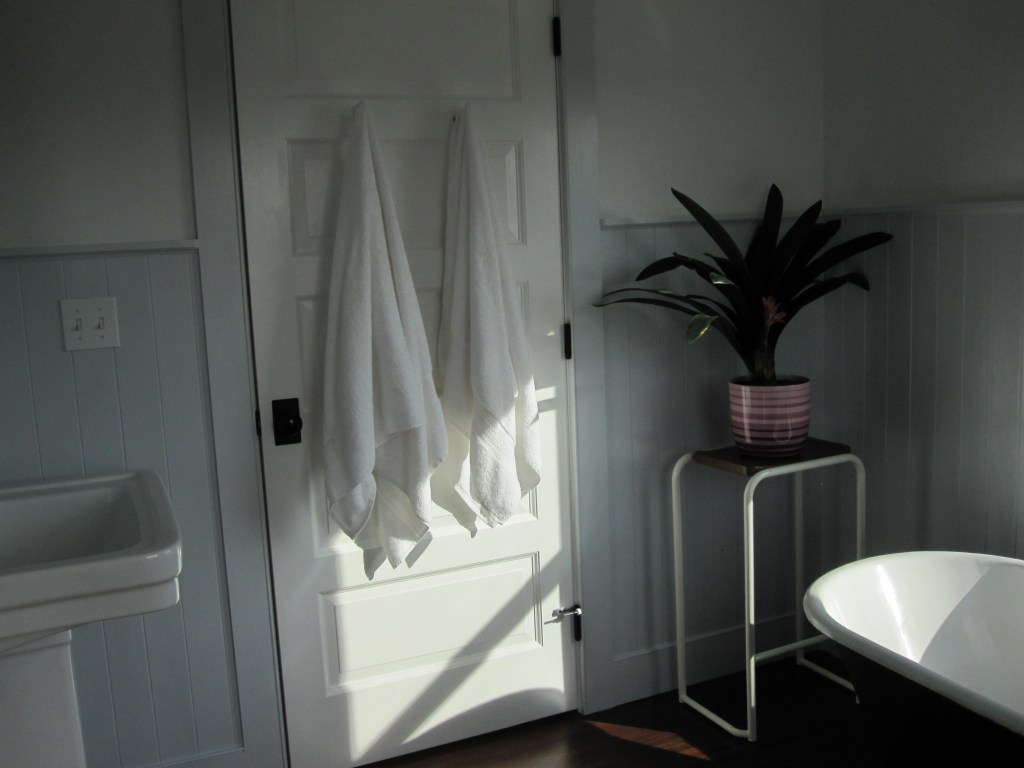
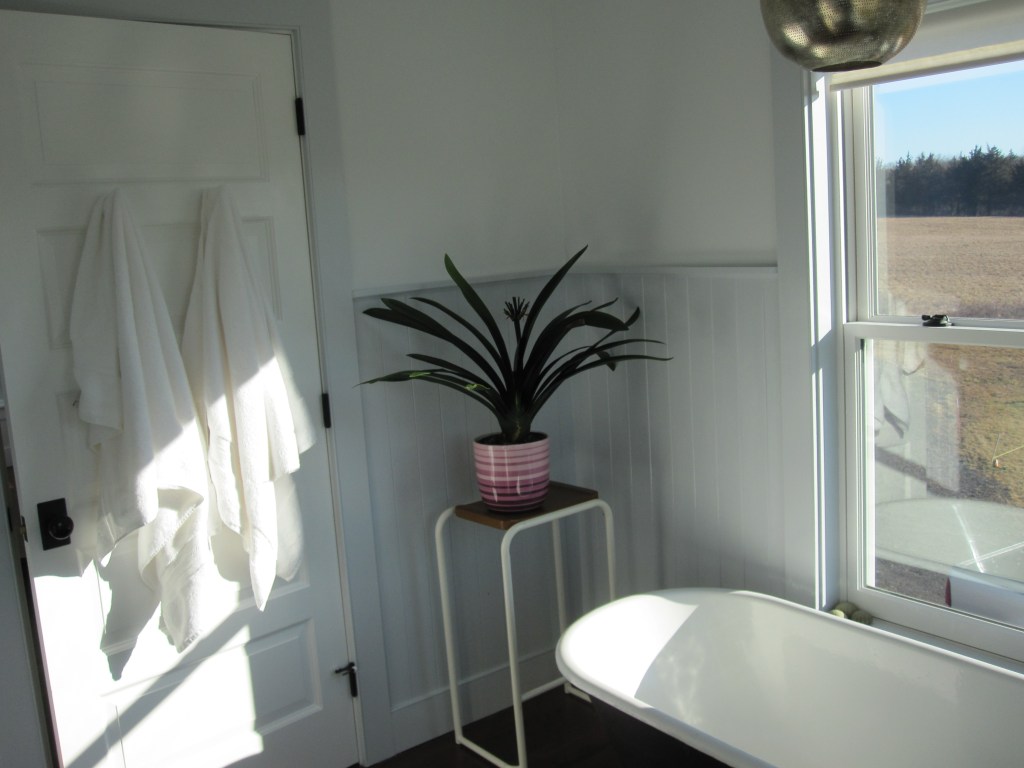
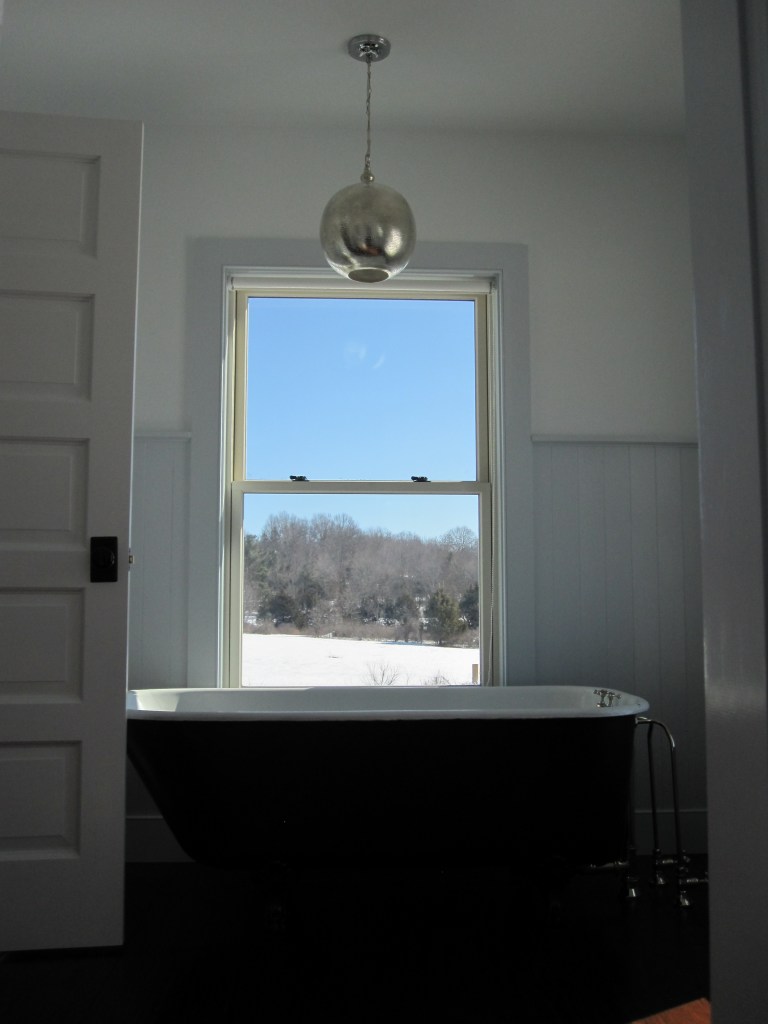
The clawfoot in the master bath had the same problem — surface gone — plus a bonus problem we also didn’t notice: one of the legs had broken off. Cast iron. These legs are not an afterthought. I found a guy who thought he might be able to weld it, wasn’t sure because cast iron is a particular thing to weld, but he did it and it’s held. Then we had the tub resurfaced. It looks fine now. We almost never use it — we’re not bath people — and at this point it’s more of a period piece than a fixture, sitting in front of the window doing its job as a visual. The master bath has a separate shower, so the tub is really just there to maintain the general sense that the house has been around for a while.
For the master bath pedestal sinks we went to Home Depot, which in retrospect may have been optimistic given what pedestal sinks endure in a household with children. my sink has a crack. Jennifer’s sink has a few giant cracks that are separating. We’ll replace them at some point.
Wainscoting
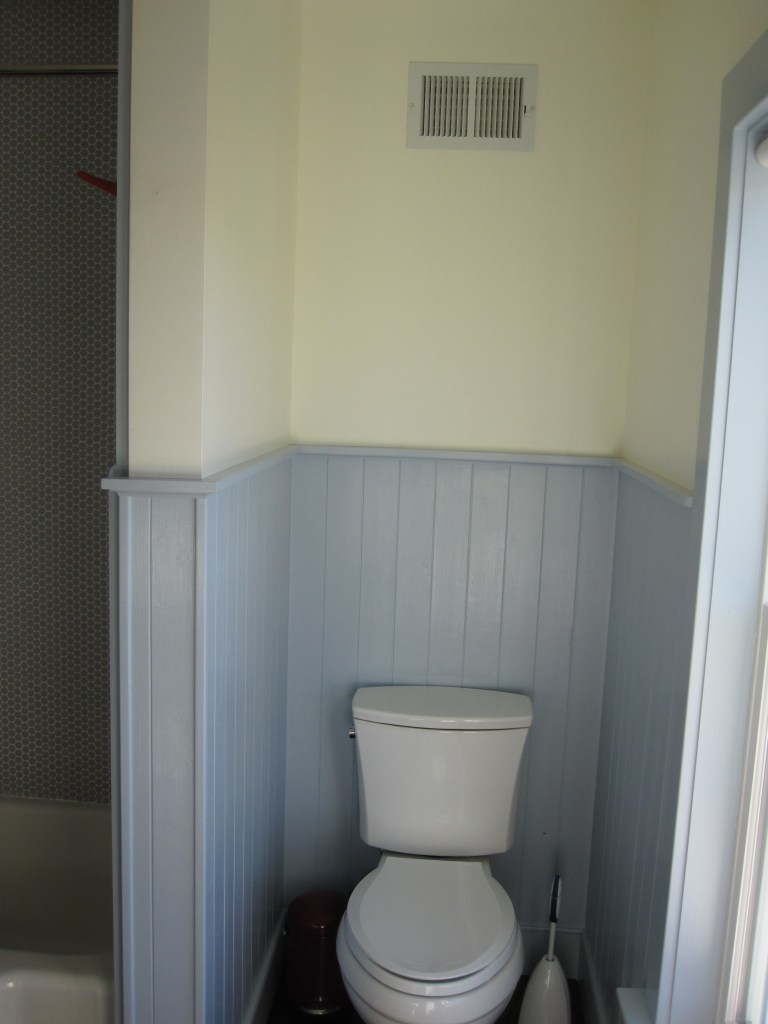
All three bathrooms have wainscoting. In the two upstairs bathrooms it runs 4 feet up the wall — about halfway on a 9-foot ceiling — which is a traditional height and looks right. In the powder room we took it to 6 feet 6 inches, which on a 9-foot ceiling is nearly three-quarters of the wall. It makes the space feel almost fully paneled, more like a proper room than a bathroom. The shower tiles in the powder room stop at the same height, so the wainscot cap and the tile line up across the room. That’s one of those small details that makes a space feel considered rather than cobbled together, and it wasn’t accidental.
The problem is that we used the thin flat wainscoting they sell at Lowe’s and Home Depot — not real raised-panel wainscoting, which would have taken too much depth — and it didn’t behave well with moisture. It absorbed some humidity during installation, dried unevenly, and you get gaps. We’ve caulked, repainted, caulked again. The downstairs bathroom I just redid, and I may have used the wrong caulk — the fast-dry stuff isn’t as flexible as the slow-dry, and “ready to paint in 20 minutes” is not actually something you want when the whole point is adhesion in a humid environment. We’ll see how it holds.
Jennifer chose different blues for the upstairs bathrooms, and the powder room downstairs is a shade of yellow with the walls above the wainscot slightly lighter than the wainscot itself. It works.
Fixtures and fittings
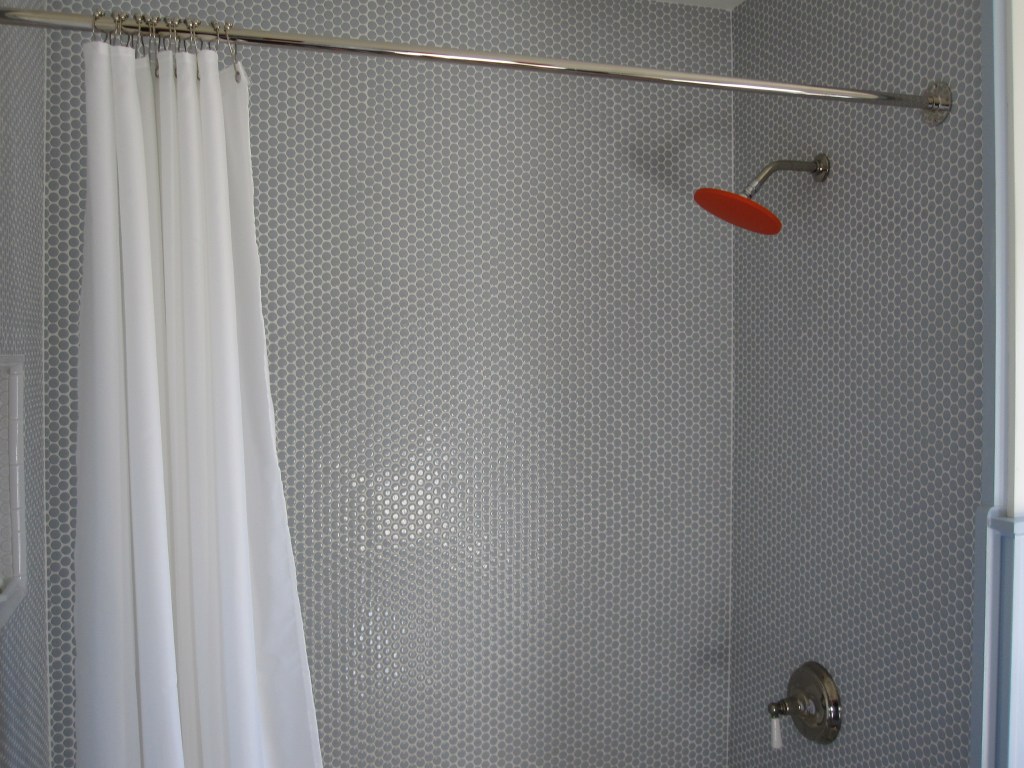
All the showers are Kohler. The toilets are Kohler. On one of Jennifer’s work trips to the Kohler factory in Wisconsin, they gave her a toilet — which is a sentence I enjoy — and it’s been in the master bath ever since.
The faucets came from an antique plumbing supply company that I believe is no longer in business, which has become something of a theme in this series. They’re reproduction traditional fixtures — nothing flashy, just right for the house. What really finishes it is everything underneath: the exposed drains, the traps, the supply lines are all solid bent pipe in polished nickel. Every shutoff valve has a white porcelain handle with hot and cold marked on it. I wasn’t sure that level of detail was necessary. It was. It all looks exactly as it should, and it’s the kind of thing visitors notice without quite knowing why the bathroom feels the way it does.
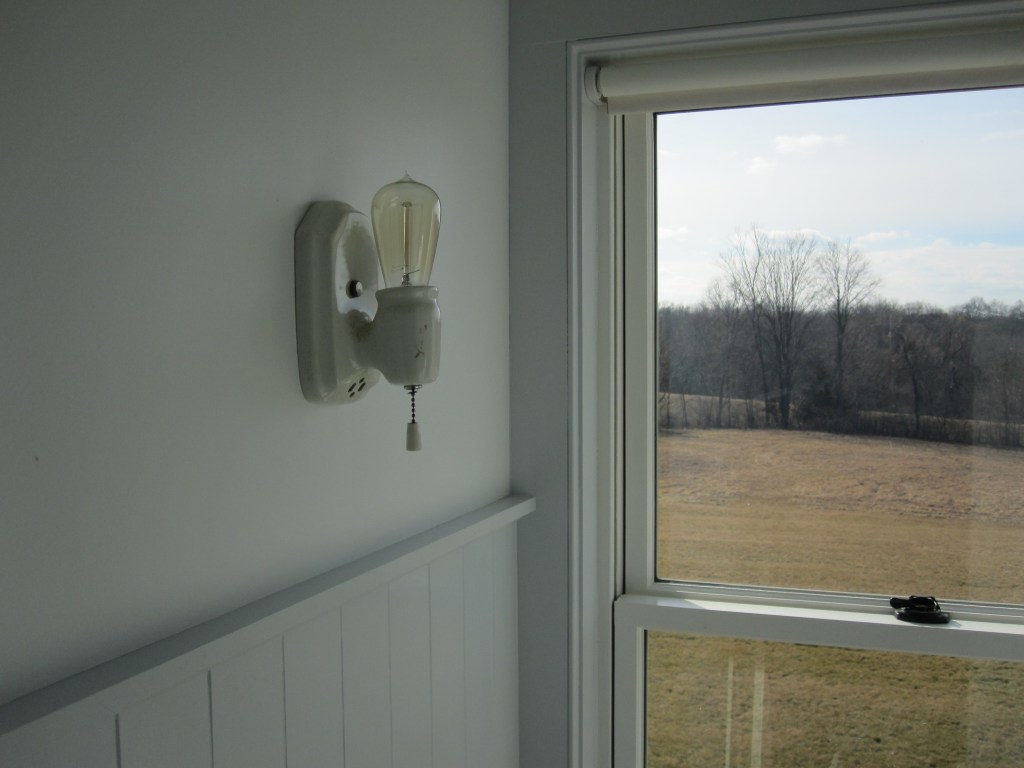
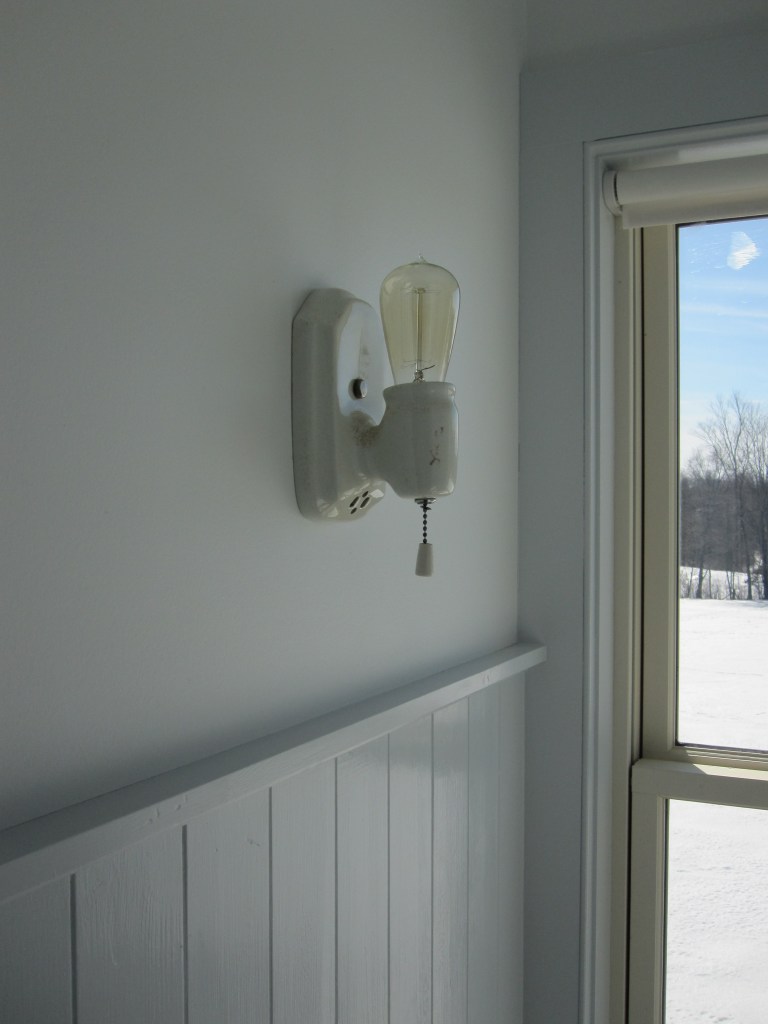
Jennifer made the sconces that flank the medicine cabinets — built-in cabinets she found, one over each sink in both the shared bath and the master. They’re painted, one bathroom red, one blue. The powder room just has a hanging mirror. We probably should have put a medicine cabinet in there too if we’re ever going to use that room as a real bedroom suite, but we didn’t, and that’s a future problem.
The exhaust fans are Broan. They rattle. They are loud. Fifteen years later I’m going to replace them with Panasonic WhisperSense fans, which are whisper quiet and motion-sensing and the thing you should have put in from the start. I just haven’t gotten around to determining whether swapping them out requires cutting into the ceiling or whether I can do it from below, and I’ve been not finding out for about twelve years now.
The tiles
Here is where this post gets long.
The powder room walls are 4×4 white ceramic in a brick pattern, cheap from Lowe’s, and they look fine. Zero complaints. The shower floor is larger hexagonal tile — roughly 2-inch, white with black accents — from a local tile shop, with black grout. Simple, period-appropriate, no drama.
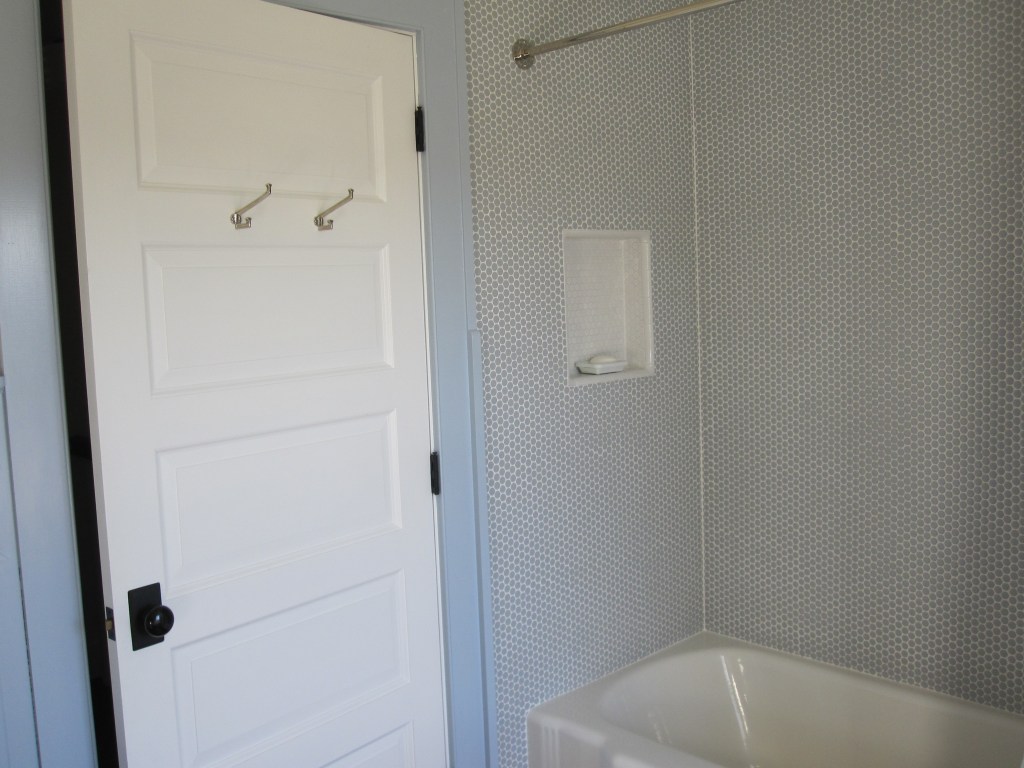
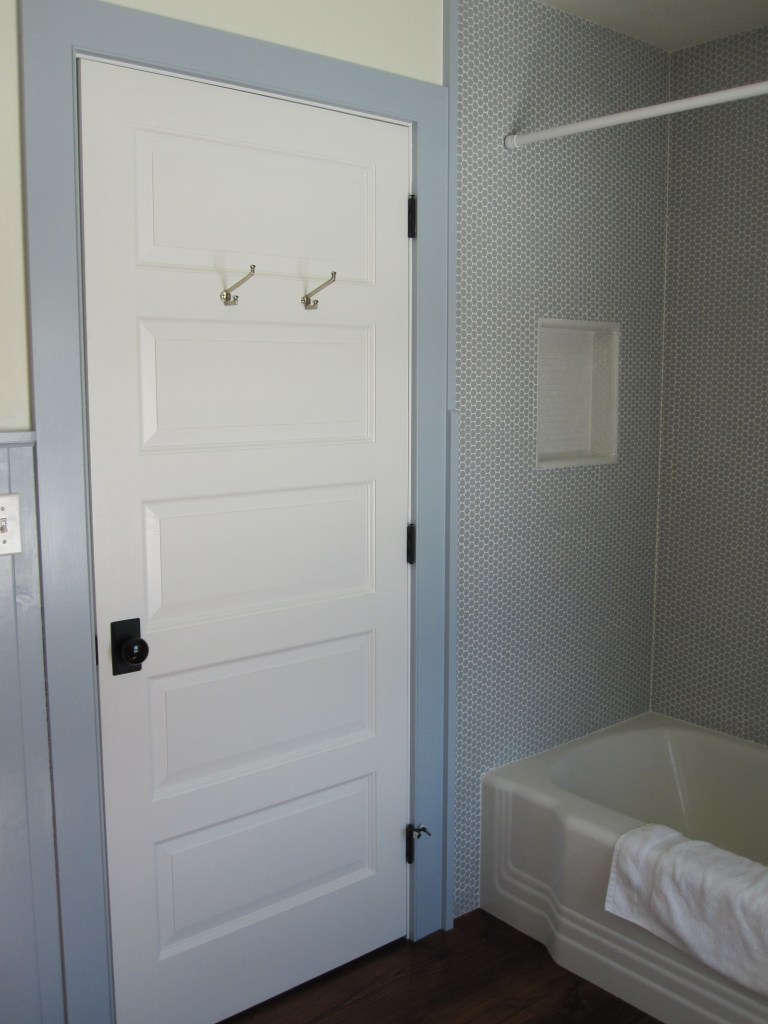
Upstairs in the shared bathroom, Jennifer chose a blue-gray penny tile for the shower. It looks genuinely great. There were installation issues — the thin set wasn’t deep enough at the tub border, so some of the smaller tiles were breaking off where they overlapped the edge, and there was excess grout left behind that had to be scraped out with a flathead screwdriver in a process that was tedious but manageable. I’ve done worse.
And then there’s the master shower.
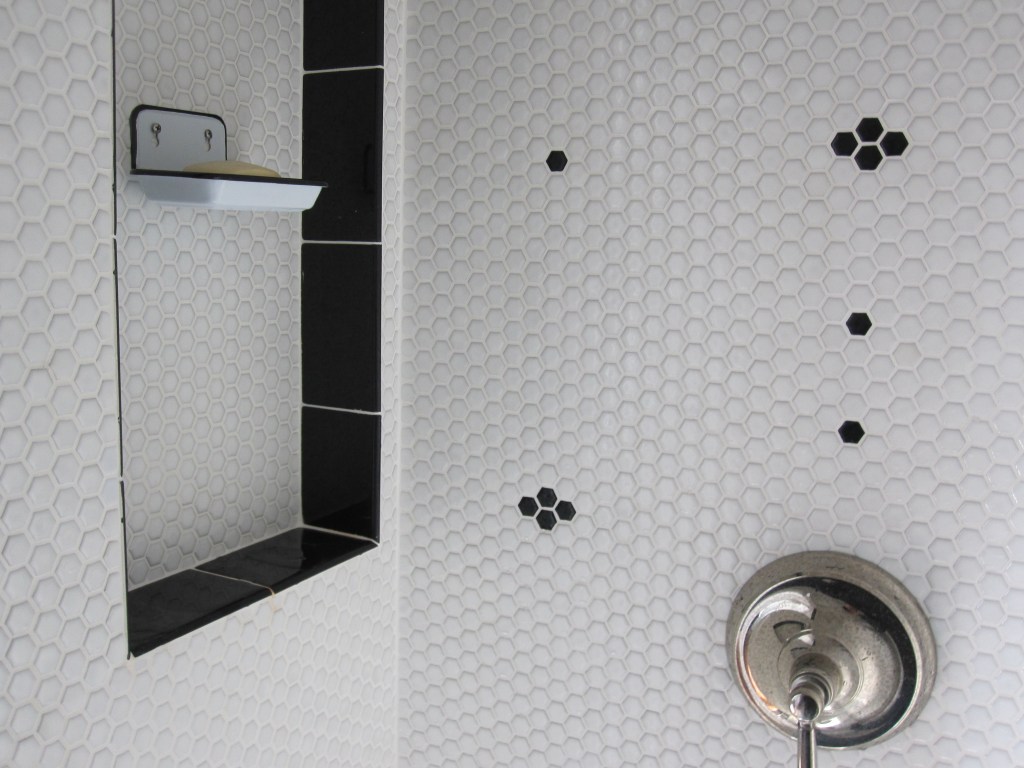
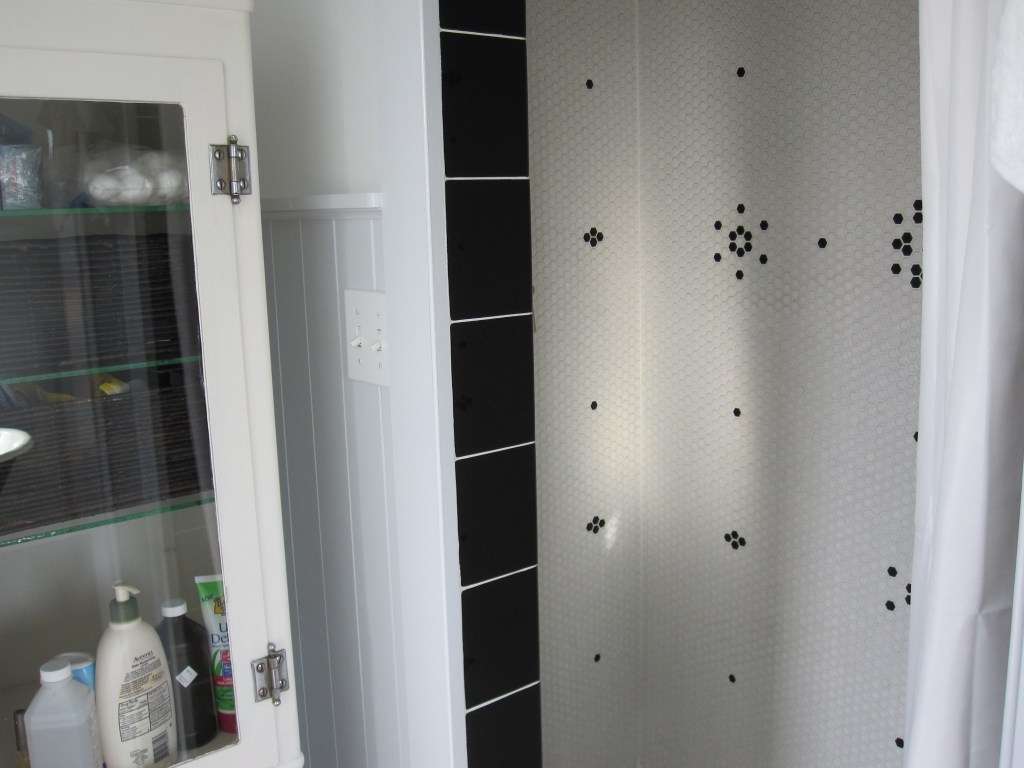
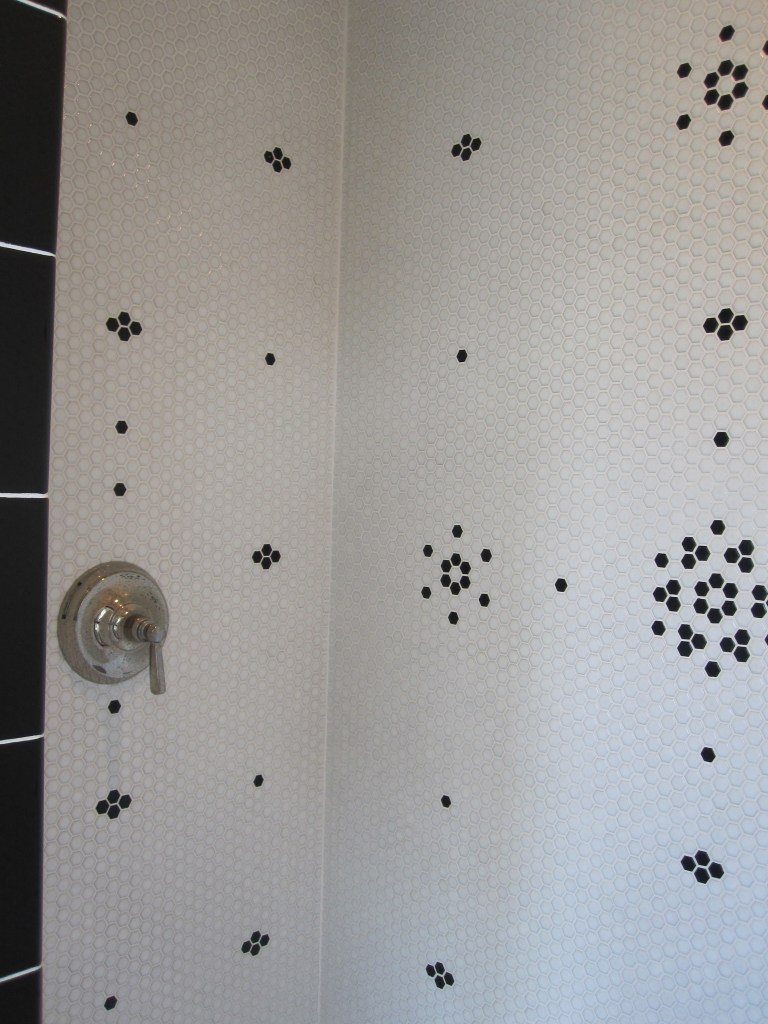
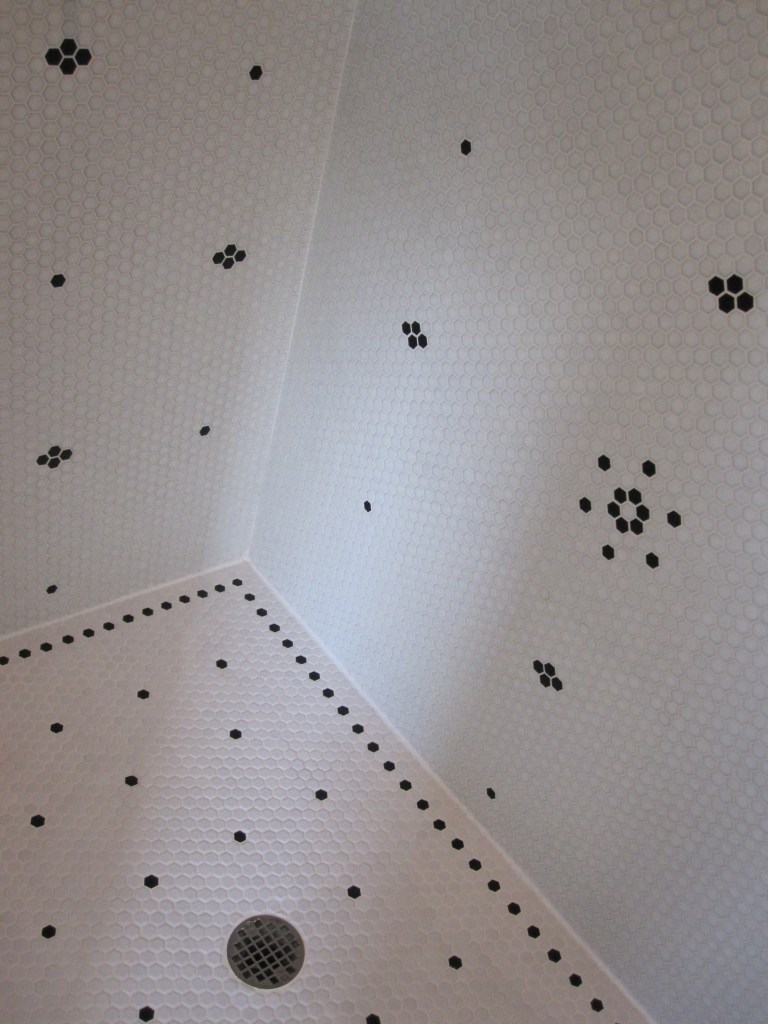
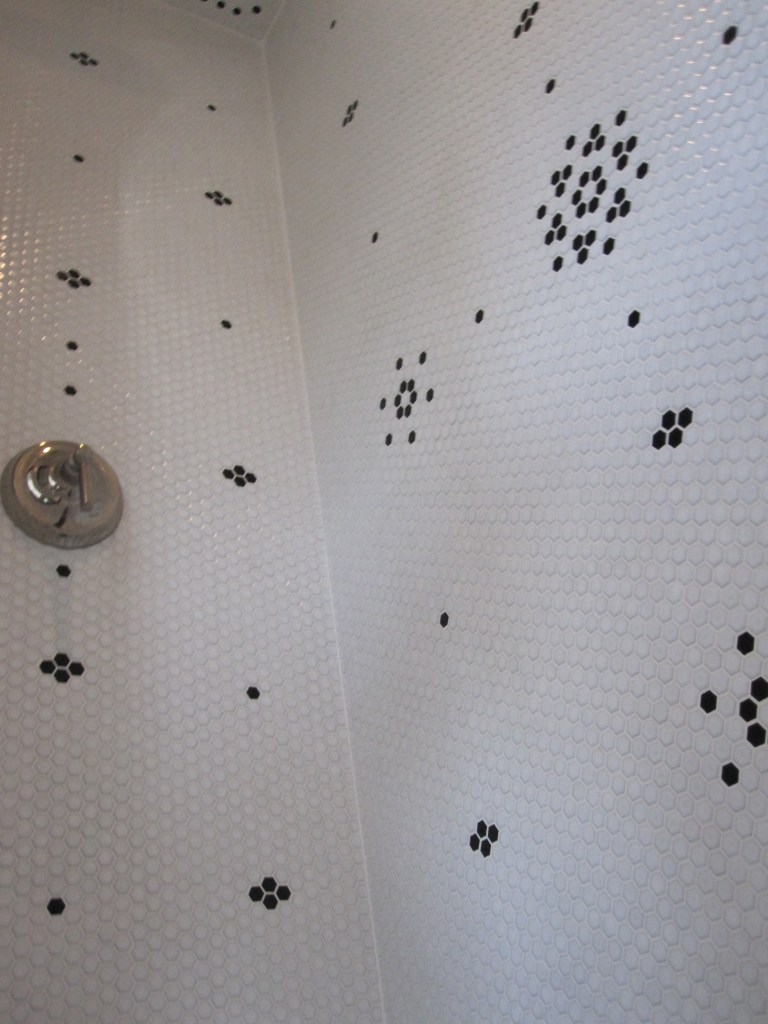
The original master shower was small hexagonal tile — about an inch — white, with black tiles Jennifer had worked into a flower pattern in a few places across the walls. To execute the pattern while we were in the city and our friend was up here working alone, we laid the whole thing out on the floor of the house so he could see exactly where each black tile went before he started. That part was actually kind of elegant as a solution.
What was not elegant was the grout.
We were all exhausted. It was late in the project. Our friend was done, we were done, everyone was done. He ran out of grout partway through. Rather than finishing the section he was working on with what he had and then going for more, he went to get more grout and couldn’t get back right away. In the time he was gone, the grout he’d applied — but not yet cleaned off — hardened. On the tiles. Which are approximately one inch. Which means there is an almost infinite number of individual grout lines and edges and tiny places where grout can park itself and refuse to leave.
He came back and finished. But a significant portion of the tile now had hardened grout haze that an abrasive sponge could only partially address. What I eventually did — and I want to be precise about this so future people understand what they’re signing up for — was take small flat-blade screwdrivers and scrape every individual grout line. I bought several. I wore them down. I did this a couple hours at a time over what felt like weeks, and probably was. I got it to a place where it wasn’t obviously a disaster, but it was never right.
And then, because we have iron in our well water and the grout wasn’t epoxy — which would have solved the staining problem but would have been its own nightmare to work with — the grout always had a reddish cast. Always looked dirty even when it was clean. Iron Out spray helped a little. Sealer helped a little. Nothing fixed it. I had genuine PTSD every time I used that shower for years.
About three years ago I tore it out.
Did the demo myself, got one of those contractor trash bags, kept costs down where I could. Hired a tile guy down the road to do the install. First thing he did: pulled the moisture-resistant drywall and put up cement board, which is what should have been back there from the beginning — the drywall company’s cost-saving call that nobody thought to question at the time. We also moved the built-in nook from where it had been sitting in the direct path of water to closer to the door, where it could actually do its job without becoming a standing-water problem. Replaced it with a black marble shelf.
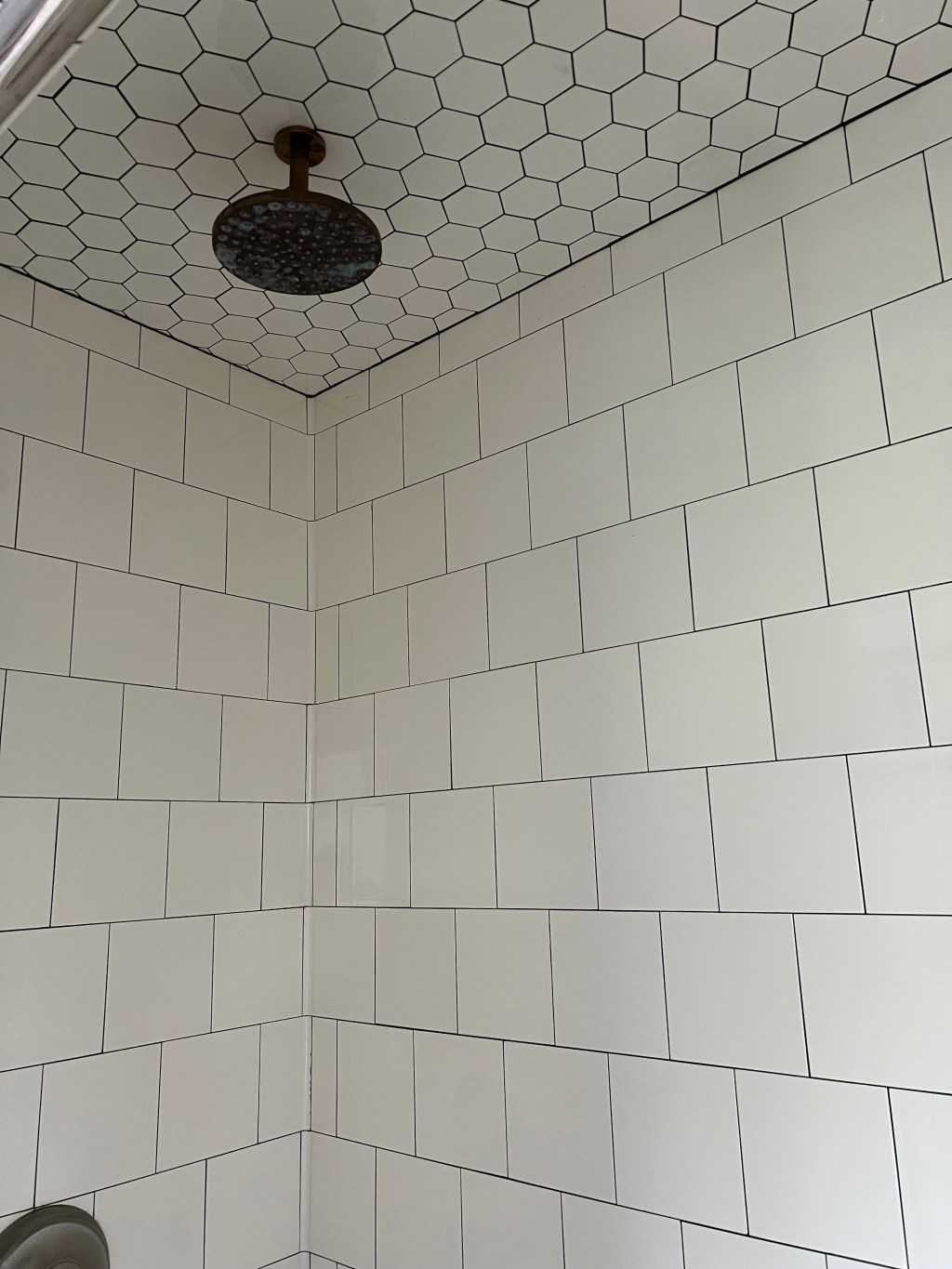
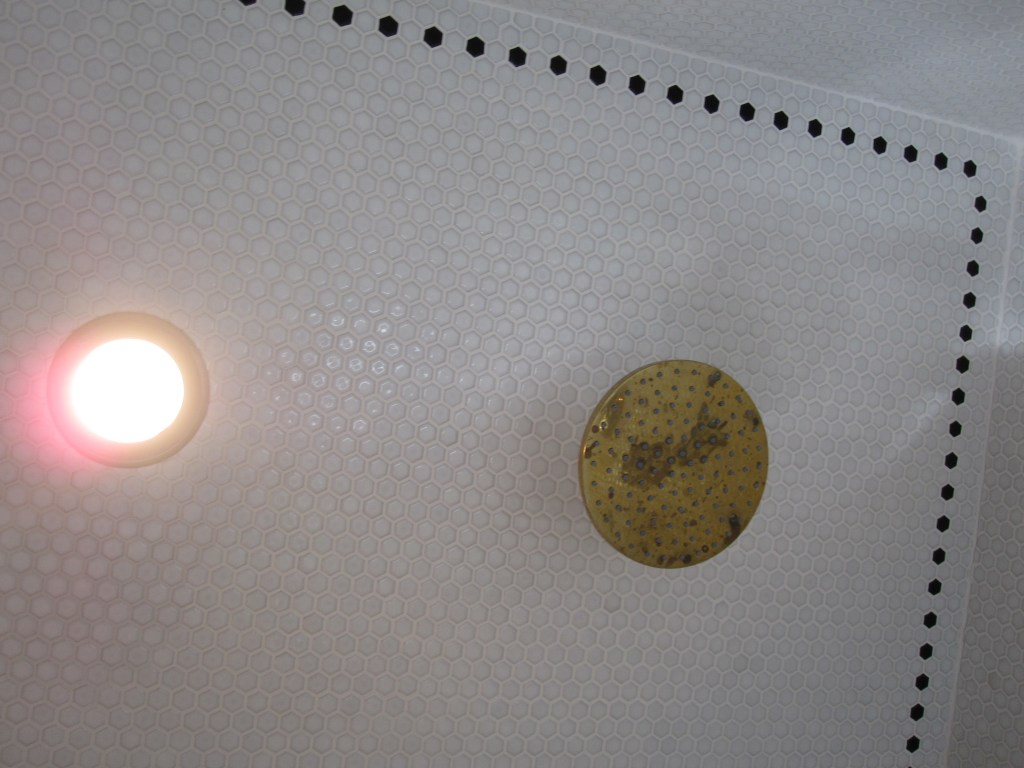
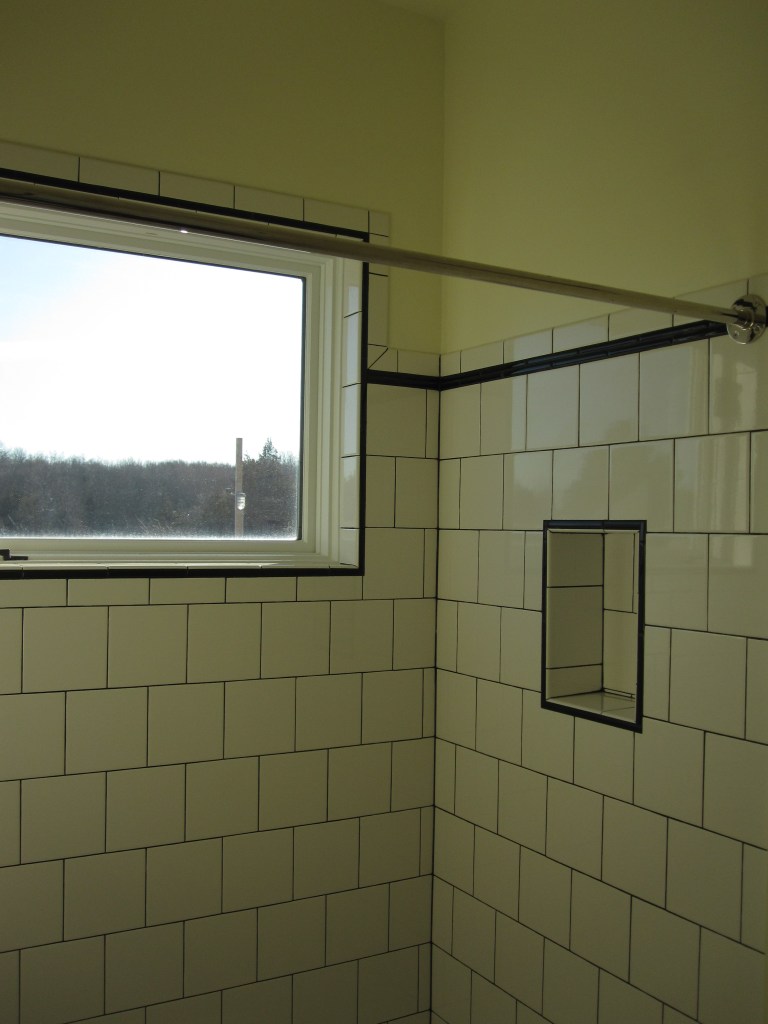
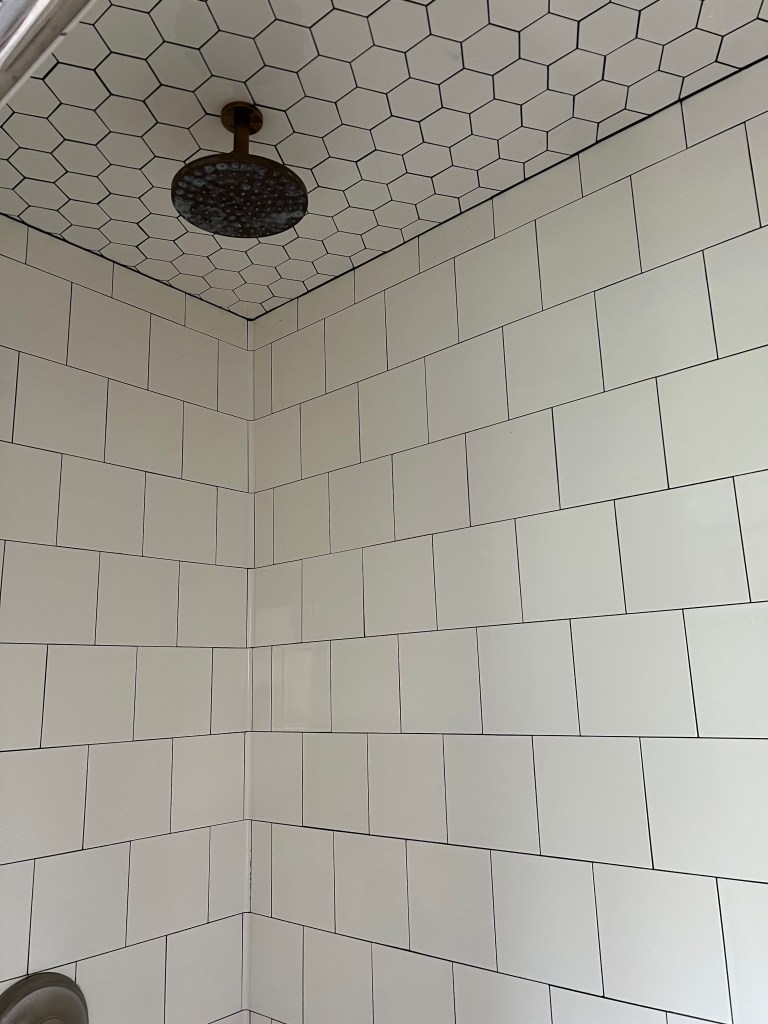
For tile, I pushed for Subway Ceramics — the same company we used in the kitchen, the ones who still make the original spec thick flat-back subway tile from the transit era, nearly invisible grout lines, exactly right. Jennifer thought that look might be overdone. I didn’t care, and made the argument I make every time someone wants to build for resale rather than for themselves: you can’t design a house for what a future buyer might want. They’ll rip it out anyway. Do what fits the house. The walls are 6×6 Subway Ceramics (easy to clean) with all the corner trim pieces — bullnose edges, finished corners — so everything terminates cleanly. The floor is 2-inch black marble hex with black grout and a black marble threshold. The ceiling is 3-inch Subway Ceramics hex. We tiled it because the shower is enclosed enough that you’d notice if we didn’t, and once you commit to Subway Ceramics on the walls it would feel wrong to stop.
The grout is supposed to be a stain-resistant enhanced formulation. It has, in fact, stained. But I don’t care, because the shower is finally what it should have been from the start, and I no longer feel a sense of dread walking into my own bathroom.
Grade: B+
The bathrooms have some genuinely good things in them — the Colgate sinks, the polished nickel plumbing, the wainscoting, the Subway Ceramics redo, Jennifer’s lighting. But between the salvage tubs we didn’t inspect properly, the master shower that consumed years of my life before I tore it out, the wainscoting that won’t fully sit flat, and the exhaust fans I’m still listening to rattle in real time fifteen years later, it’s hard to give this better than a C. The bones are right. The execution had problems. Some of them I fixed. Some of them I’m still getting around to.
 Even that's Odd
Leave a comment