
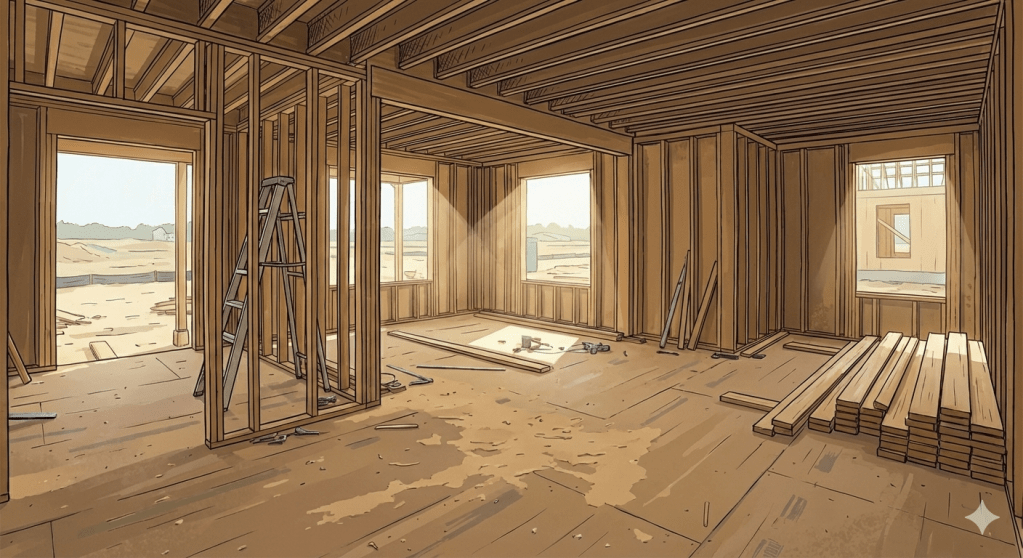
If you spend a fortune making your house air-tight with spray foam insulation, and then punch 27-29 holes in it and fill them with cheap windows, you’ve basically defeated the entire purpose of the exercise.
This is the story of how we did exactly that.
The Window Budget Reality
By the time we got to windows, we’d already blown through our budget on things like the above-ground septic system, well issues, water filtration, radiant floor heating, and spray foam insulation. We needed windows. Lots of windows. And we needed them to not cost a fortune.
Jennifer designed the house with tons of natural light. We had windows everywhere: a triple window in the kitchen, French doors, two entry doors, and depending on how you count, somewhere between 27 and 29 windows total. Our house was designed to be bright and airy, which meant we needed a lot of glass.
The problem with lots of glass is that it costs lots of money. Especially if you want GOOD glass.
Why We Chose Pella
We went with Pella Architect Series windows for a few reasons that seemed sensible at the time:
The Good Reasons: – National brand with good reputation (we thought) – Available through local suppliers – “Premium” line that should have been high-quality – Better than the big-box store brands – Within our (already stretched) budget
The Real Reason: – We were tired, we were over budget, and Pella seemed like a safe middle ground between “cheap garbage” and “windows that cost as much as a car.”
We didn’t know enough to ask the right questions. We didn’t know what features actually mattered. We just knew we needed a lot of windows and Pella was a name-brand we’d heard of.
The First Signs of Trouble
The problems started almost immediately after installation, but we didn’t recognize them as problems at first.
When you’re building a house, everything is chaos. You’re making a thousand decisions, dealing with a thousand issues, and living somewhere else while trying to manage construction from a distance. So when your brand-new windows started showing a little condensation, you tell yourself it’s normal. New house. Lots of moisture from drywall, paint, everything drying out.
Except it never stopped.
Winter came, and the windows were covered in moisture. Not just a little fog — I’m talking water running down the glass, pooling on the sills, freezing into ice on the coldest days.
We ran the HRV 24/7. We ran dehumidifiers. We wiped down the windows with towels every morning.
Nothing helped.
The Performance Issues (Brief Version)
Fifteen years later, here’s what we’re still dealing with:
- Constant moisture buildup (even with dehumidifier + HRV running continuously)
- Two windows completely covered in moisture during winter
- Mold growth in kids’ rooms from the constant dampness
- Ice dams forming ON THE WINDOWS THEMSELVES
- Paint failure on the sills from all the water
- Warped wood components
- Broken hardware
- UV protection failure (everything near windows fades and bleaches)
- Air leaks around the frames
When we get snow piled up against the windowsills, blocking the air infiltration, the house is noticeably warmer and drier. That tells you everything you need to know about where our problems are coming from.
Pella’s Response
When we contacted Pella about the issues, their response was to blame us for “lack of moisture control” and “faulty installation.”
Never mind that: – We run a dehumidifier constantly – We run the HRV 24/7 – We have spray foam insulation creating a tight envelope – Every other component of the house works fine – ONLY the windows have moisture issues
According to Pella, it’s our fault. The windows are fine. We’re just not managing our indoor environment correctly.
This is, to put it mildly, horseshit.
What We Should Have Done
Looking back with fifteen years of bitter experience, here’s what we should have done:
1. Bought Better Windows Marvin. Triple-pane. Period. Yes, they’re more expensive. But you know what else is expensive? Replacing all your windows after fifteen years because the cheap ones failed.
2. Understood That Windows Are Critical We spent a fortune on spray foam to make the house air-tight. Then we bought mediocre windows that leak air like sieves. It’s like buying a safe and leaving the door open.
3. Done More Research We should have looked at actual performance data, not just brand reputation. We should have talked to people who’d lived with different window brands for years. We should have asked harder questions about condensation resistance.
4. Allocated Budget Differently We could have bought fewer windows and bought better ones. Or we could have compromised somewhere else in the budget. Instead, we compromised on windows and have regretted it ever since.
The Math That Hurts
Here’s the painful calculation:
- Money saved going with Pella instead of Marvin: Maybe $8,000-$12,000 (guessing)
- Cost of running dehumidifiers for fifteen years: $2,000+
- Cost of HRV running 24/7 trying to manage moisture: Thousands more in electricity
- Damage to paint, trim, and finishes: $1,000+
- Value of not having to wipe down windows every winter morning: Priceless
- Current replacement cost for all windows: $30,000-$50,000
We “saved” maybe $10,000 and it’s cost us far more than that in energy, repairs, and misery. And we’re facing a full window replacement eventually anyway.
Great investment.
The Bigger Lesson
This isn’t just about Pella windows. This is about understanding that in a house, everything is connected.
You can’t build a super-tight, well-insulated house and then put mediocre windows in it. The windows become the weak point. All the air leakage, all the heat loss, all the moisture problems — they concentrate at the windows because that’s where the envelope fails.
If we’d known then what we know now, we would have: – Spent less on interior finishes – Skipped some features we didn’t really need – Cut the budget somewhere, ANYWHERE else – And bought windows that actually worked
Because fifteen years later, nobody cares that we saved $10,000 on windows. But we sure as hell notice every winter morning when we’re wiping condensation off the glass.
Want the Full Horror Story?
If you want all the gory details about exactly what’s wrong with our Pella windows, I wrote a separate detailed review covering every single issue we’ve experienced over fifteen years.
[Link to: “Pella Architect Series Windows: The Review I Should Have Posted 14 Years Ago”]
Fair warning: it’s not pretty. But if you’re considering Pella windows, you should probably read it before you make the same mistake we did.
Grade: D-
The windows themselves get an F. The installation was fine. Averaging those out, and giving ourselves a tiny bit of credit for at least recognizing our mistake (even if it took fifteen years), we get a D-.
We created a beautiful, tight, well-insulated house. And then we punched holes in it and filled them with windows that leak air and generate moisture.
Everything else we got wrong, we can live with. The basement we don’t finish, the HVAC access that’s difficult, the plumbing that’s quirky — those are all annoying but manageable.
The windows? They affect our daily quality of life, our energy bills, our comfort, and the durability of the house itself.
Don’t cheap out on windows. Just don’t.
Next up: Part 12 – Insulation and Air Sealing (or: How We Made a Tight House That the Windows Promptly Defeated)
 Even that's Odd
Leave a comment