

The setup, briefly: we have a 2016 Audi Allroad my wife loves, somewhere past 100,000 miles and probably pushing 125k by the time we replace it. Comfortable, capable, hauls everything. The brief for its replacement is simple — she wants an EV wagon. I did quietly float a small EV pickup as an alternative. That conversation was short.
On the other side of the driveway is my Model Y, which I have a complicated relationship with — and have written about elsewhere. Three things I love: the torque, regenerative braking, and the way it carries more interior space than the outside would suggest. That’s the list.
Here’s where the math gets interesting. Our kids are a few years from driving, and the Model Y actually makes a lot of sense as a first car — parental controls, safety tech, the general over-engineering of crashworthiness. There’s a real possibility it gets handed down when the time comes. I go back and forth on whether I want to hand them a car at all. There’s real value in working and saving for your first vehicle. Then I think about a sixteen-year-old in traffic and every safety feature Tesla ever shipped starts to sound like a bargain. Haven’t resolved that one.
What I have resolved is that whenever the Model Y moves on — to the kids or otherwise — I want something for myself that the market isn’t quite making yet. We’ll have to swap out the Audi at some point too, so I went looking.
The EV Wagon Problem (Not My Problem, But Still)
Quick detour, since we’re on the Allroad replacement: it is genuinely hard to find a good EV wagon in the US market right now. Europe has options. The US, basically not.
I had my eye on the VW Space Vizzion concept for years. That was the right car for this market. But VW has had its share of organizational turbulence, and the Rivian partnership that might have helped doesn’t seem to be materializing on the US side. The ID. Buzz had me excited for a while until I realized you couldn’t get the 7-seat with all-wheel drive, the acceleration was slow, the range was short, and that was before we got to price. The BMW i3 Touring is rumored for around 2027, which could be exciting if it lands at a reasonable price and they deliver on the promise — but that’s a long wait.
She’ll find something.
What I Actually Want: The Telo MT1
For my next vehicle — post-Tesla, whenever that comes — I’ve been thinking a small pickup would actually be perfect. I drove a 2019 Honda Ridgeline Black Edition for a few years (full review elsewhere on this blog), and it was a great truck. My only real complaint was that it was a bit bigger than I needed. I’d love something that stepped down from the Ridgeline in footprint while keeping the utility. And on top of that, we owned a 2003 Mini Cooper S — a car that was a blast to drive, except for a ride that would rattle your fillings. Add EV torque to the truck utility and the fun of the Mini brief, and you have exactly what I’m looking for.
I stumbled on the Telo MT1 — I think while searching for any EV wagons or range-extended options on the horizon — and the pitch is compelling: Toyota Tacoma capability in the footprint of a Mini Cooper. A 60-inch bed, same as a Tacoma, larger than a Rivian R1T. Four doors, five seats standard, expandable to eight via a midgate and tunnel storage system. Zero to sixty in four seconds on the dual-motor version. 500 horsepower. 350 miles of range. 20-minute fast charge from 20 to 80. Ten inches of ground clearance. 2,000-pound payload. 6,600-pound towing capacity.
On paper, that’s a staggering amount of capability packed into a 152-inch vehicle. For context, that’s shorter than a lot of midsize sedans.
The Telo is trying to do exactly what I want. It almost gets there.
Where Telo Misses the Mark (For Me)
The concept is right, the execution needs work, and the priorities feel slightly off for the US market.
The size. I get why they made it Mini Cooper-sized. Urban parking, European market appeal, the marketing wow factor of fitting a real bed into a tiny footprint. But does it need to go that small? Making it literally Mini-sized feels like a constraint imposed for the sake of a clever comparison, not because it was the optimal answer. A little more length — not Tacoma length, just a little more — would open up interior comfort and real-world bed usability without sacrificing what makes the thing interesting.
The front end. This is the big one. The nose on the MT1 right now isn’t great. Cab-forward proportions make sense for an EV — no engine to cool, no need for a long hood — but the execution of the front fascia feels unresolved. There’s an odd body cutout that reads as a problem rather than a choice, the headlights don’t quite cohere, and the whole front end looks like it’s still searching for its identity.
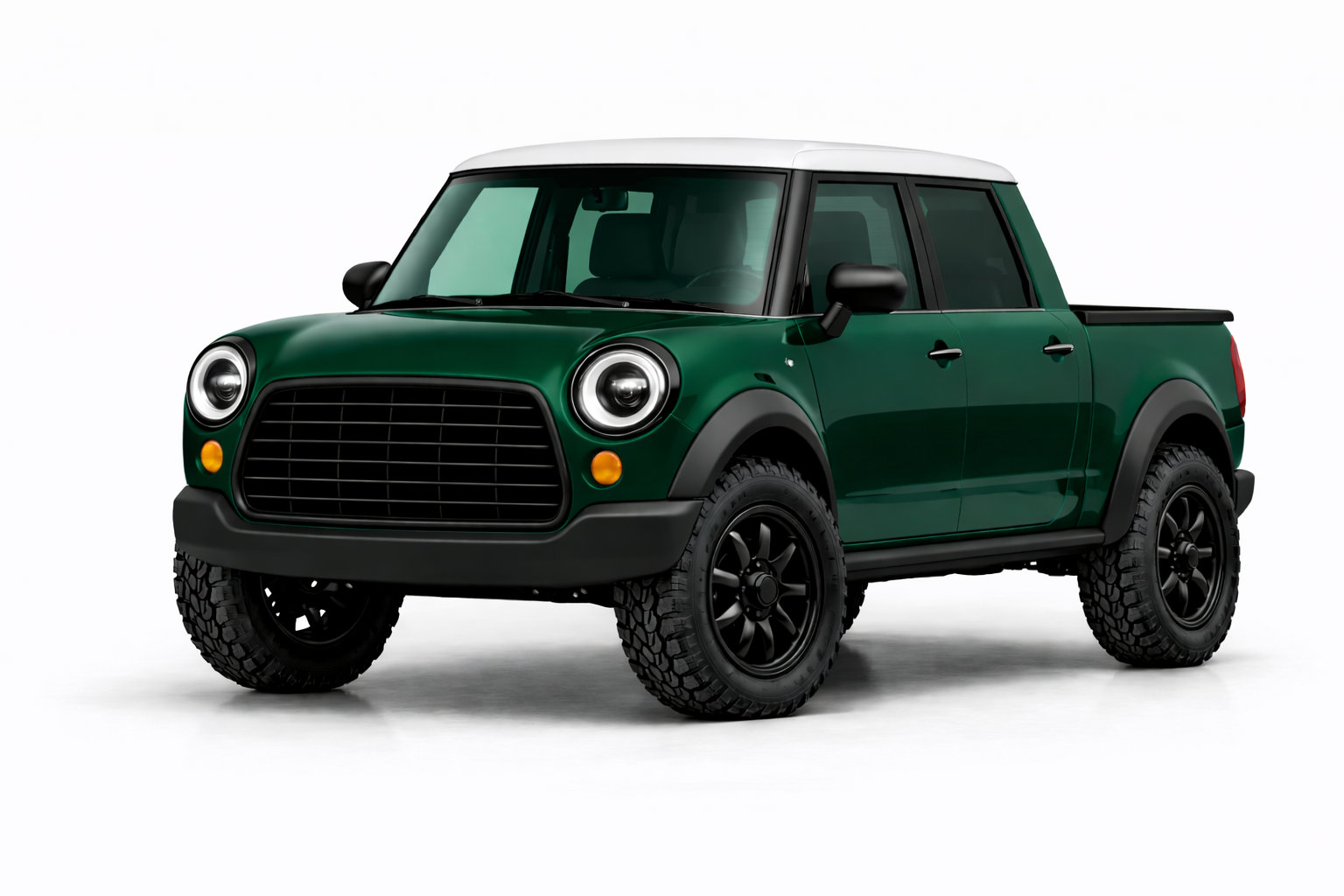
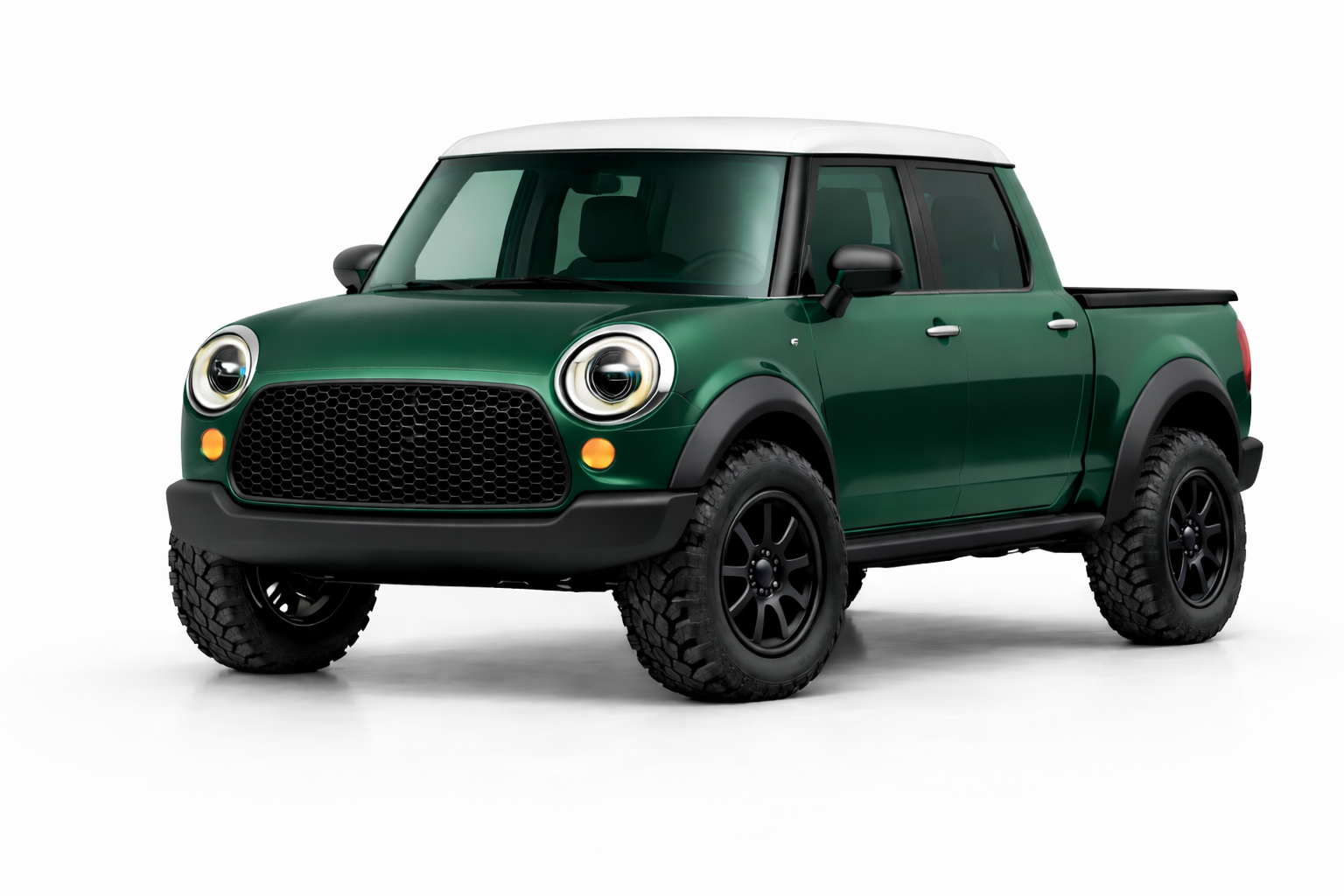
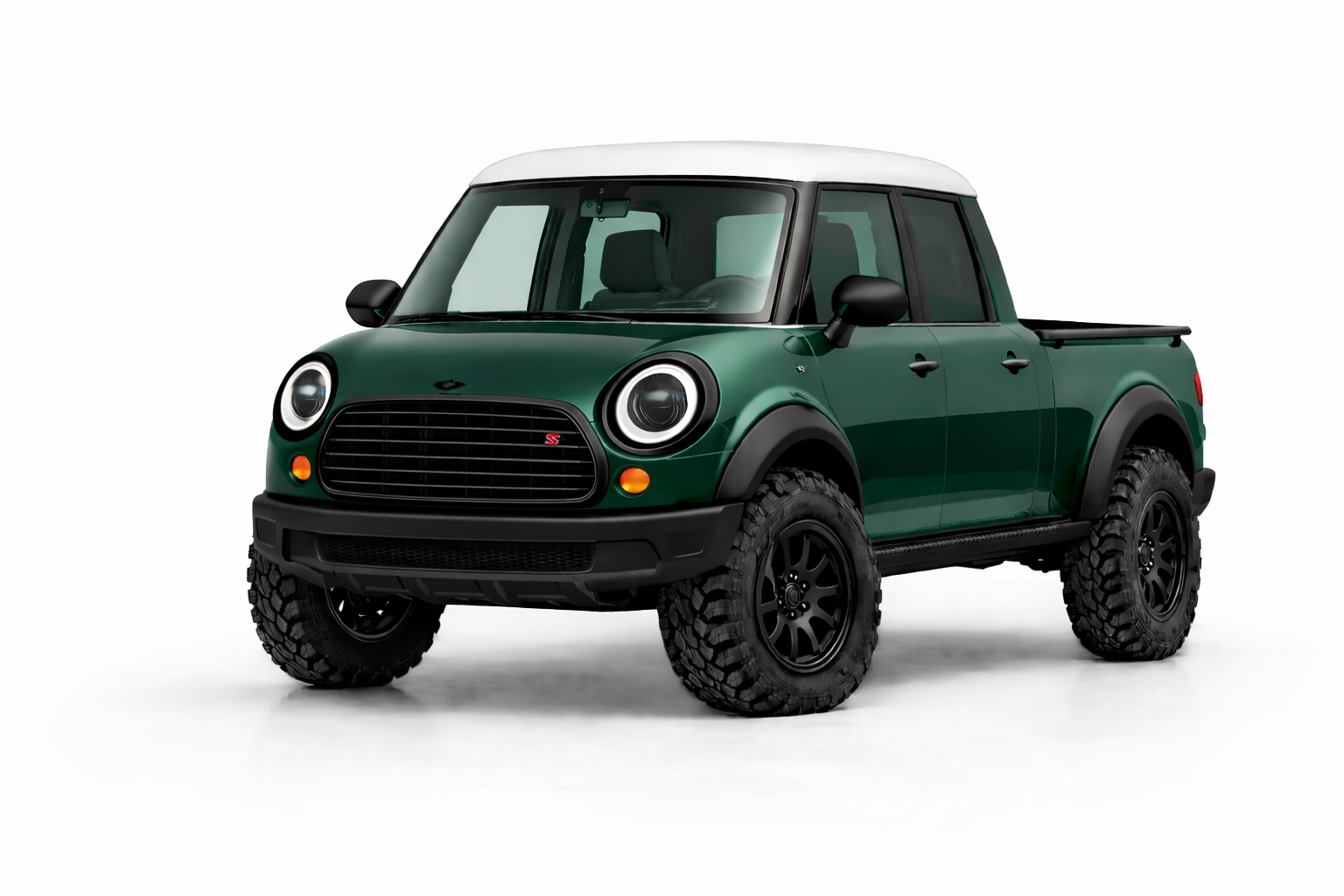
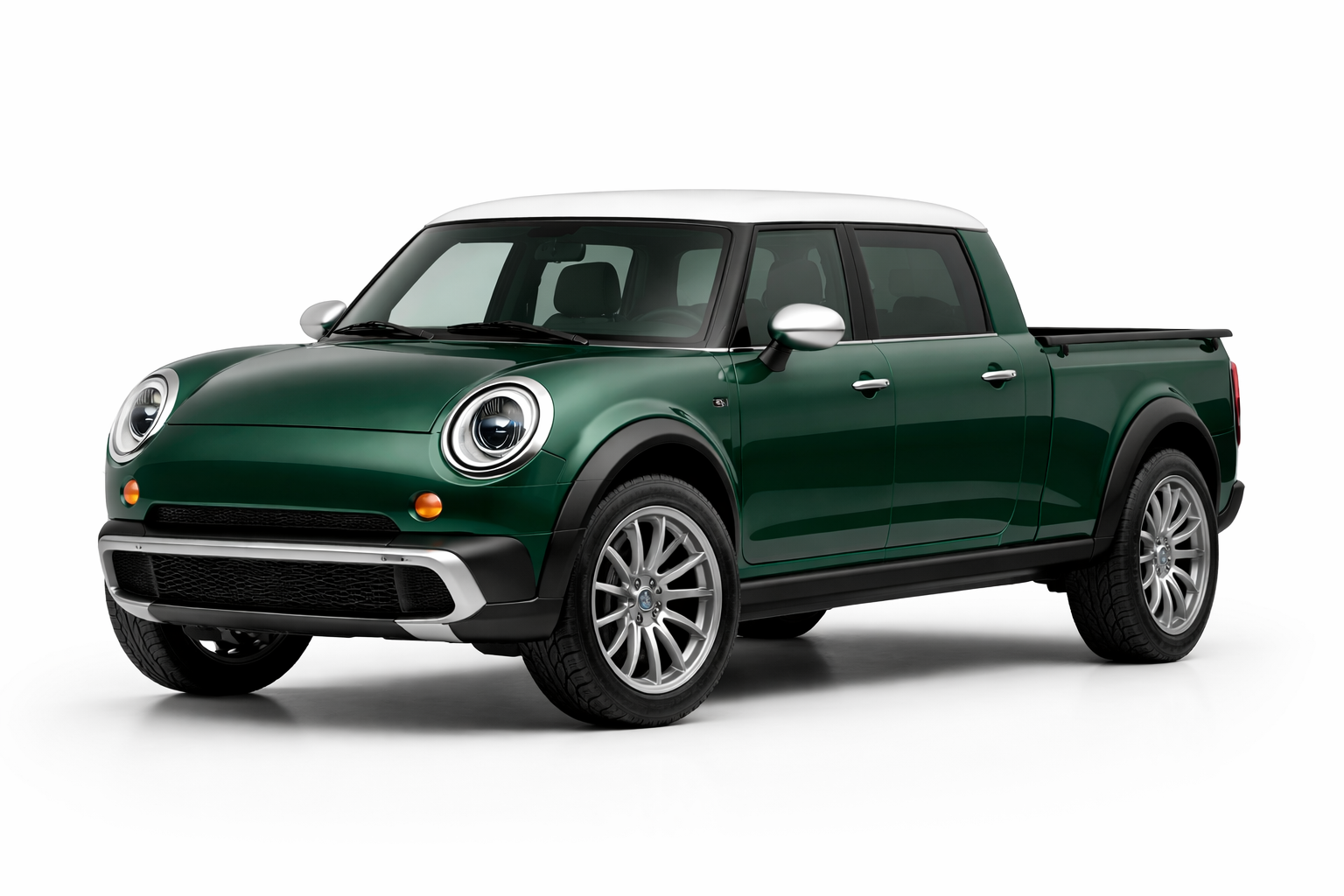
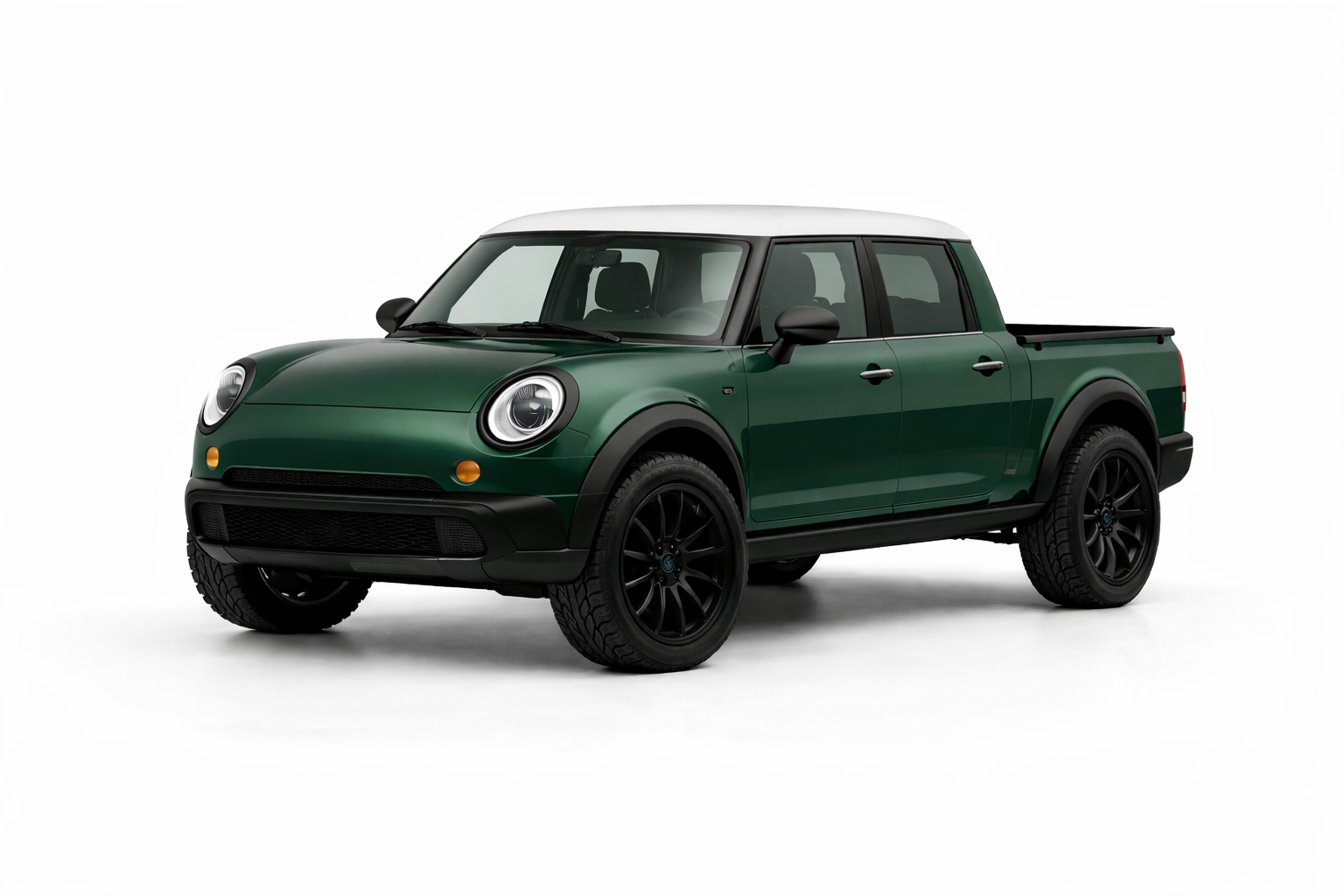
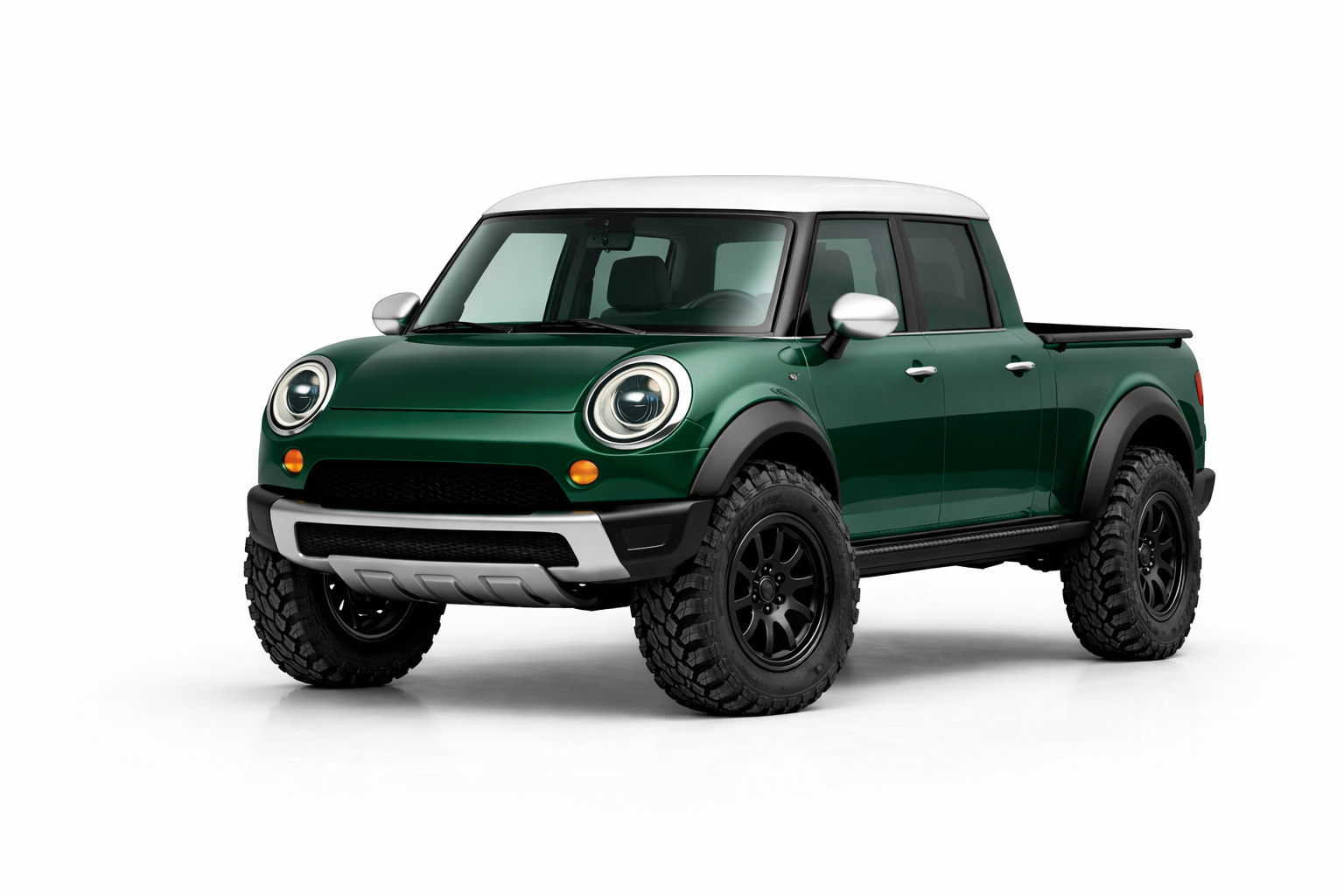
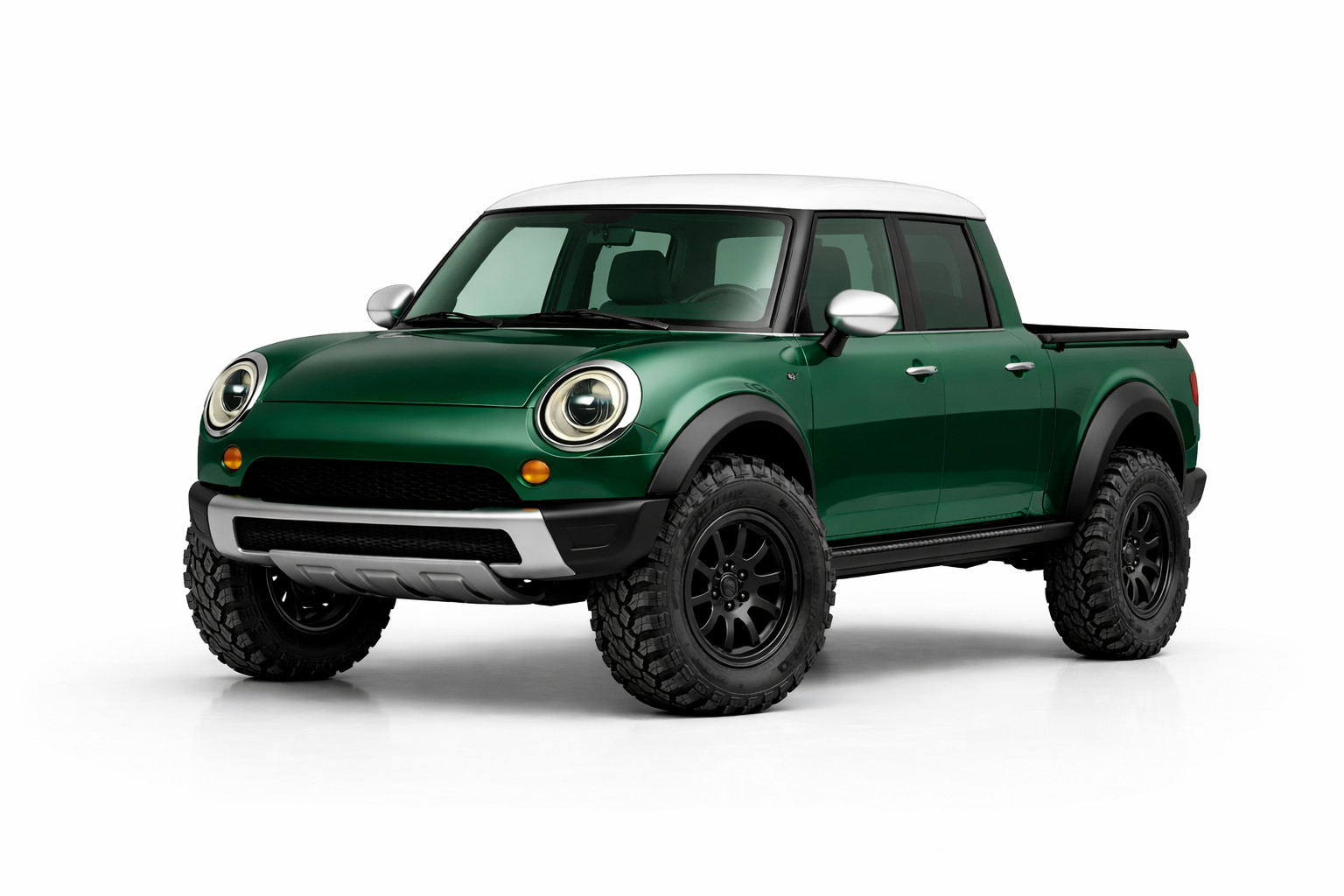
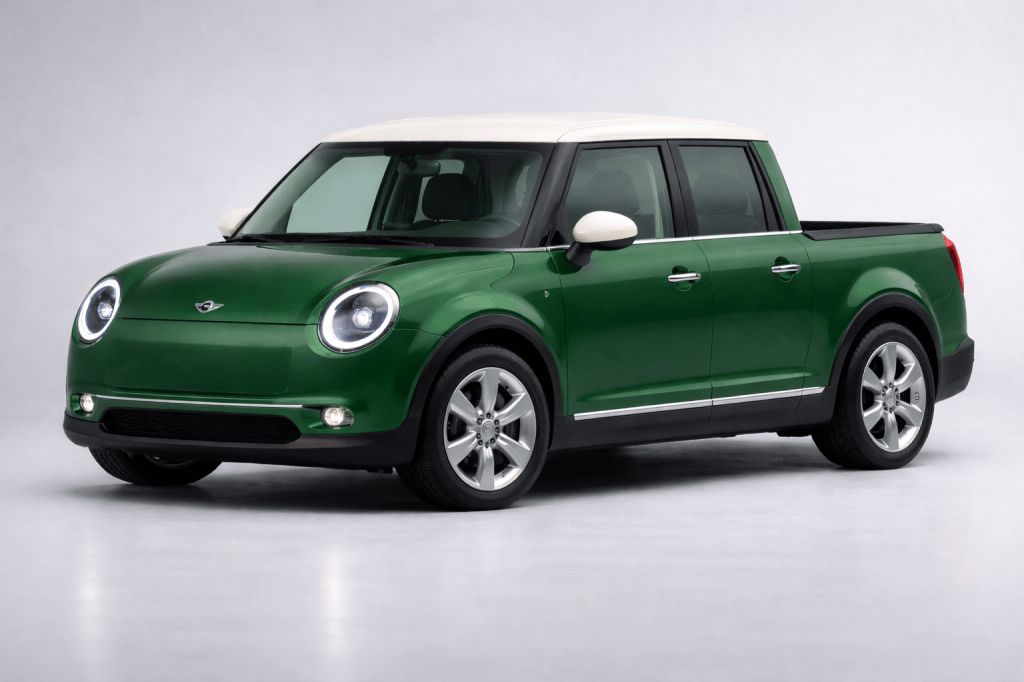
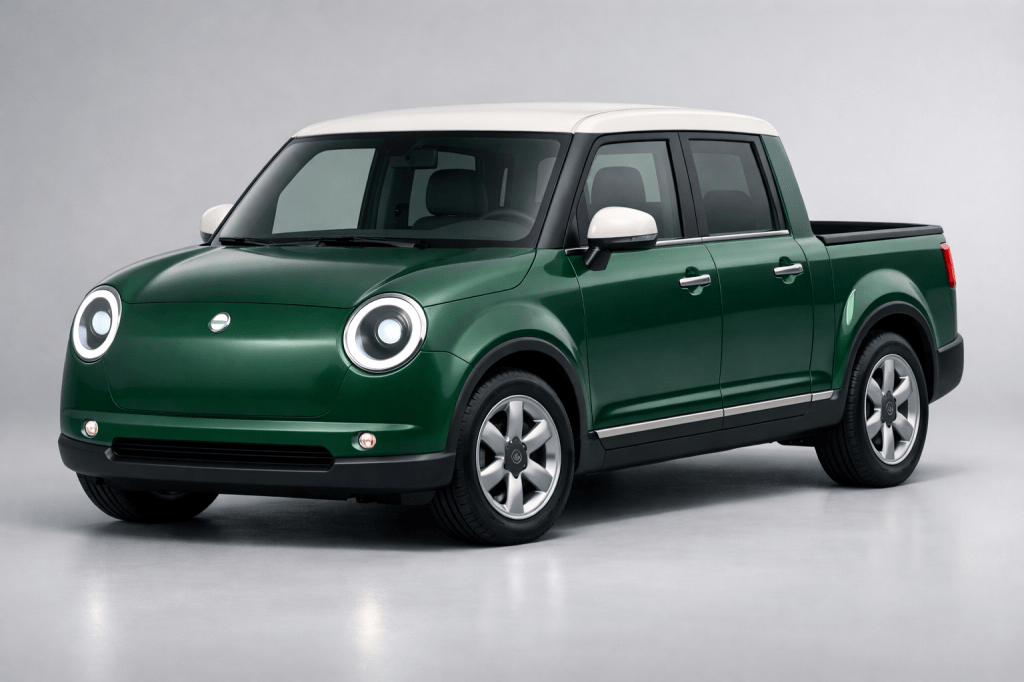
The fix isn’t complicated. Extend the nose just slightly — cover the front wheels, round out the front, clean up the headlights. Think less “cab-over delivery van” and more “friendly European compact.” Rounded, confident, distinctive. Old-school Mini headlights, big round bug eyes. Matching tail-light treatment in the rear. And here’s the part I think people get wrong about EV design — the grille shouldn’t go. The grille is the mouth. Round eyes plus a mouth is what makes a car look like a face. Take the mouth away and you get the dead-eyed, blank-faced look most EVs have settled into. Keep the grille, make it functional or decorative, doesn’t matter — but keep the face.
And while we’re talking about the nose: that’s exactly where an onboard fuel cell generator should live. I’ve argued in another post that the right architecture is a range-extender EV powered by a fuel cell, and the front of a cab-forward EV truck is genuinely the right place to put one.
The glass roof. No. Give me a solid roof, a bench seat option, and call it done.
The stance. Ten inches of clearance is actually good. The problem is that the overall stance reads more urban commuter than capable crossover. I’d love to see it sit more like a Subaru Outback or Mini Countryman — enough elevation to feel adventurous, without going full lifted-truck theater.
The Reference Point: A Mini Unimog
The reference point I keep coming back to isn’t a current car. It’s a truck most people have forgotten about: the old Mercedes-Benz Unimog. Specifically the 406 series from the 70s and 80s, that rounded, almost cartoonishly capable little 4×4 with the same-size wheels all around, a flexible chassis that’s part of the suspension, and a go-anywhere posture in a surprisingly compact footprint. The Unimog won the Paris-Dakar twice as a support vehicle. It wasn’t even racing.
That’s the energy. What I’m describing in my head is basically a mini Unimog with an EV powertrain and a truck bed. Round it off, electrify it, give it a real bed, stop apologizing for being small. That’s the brief.
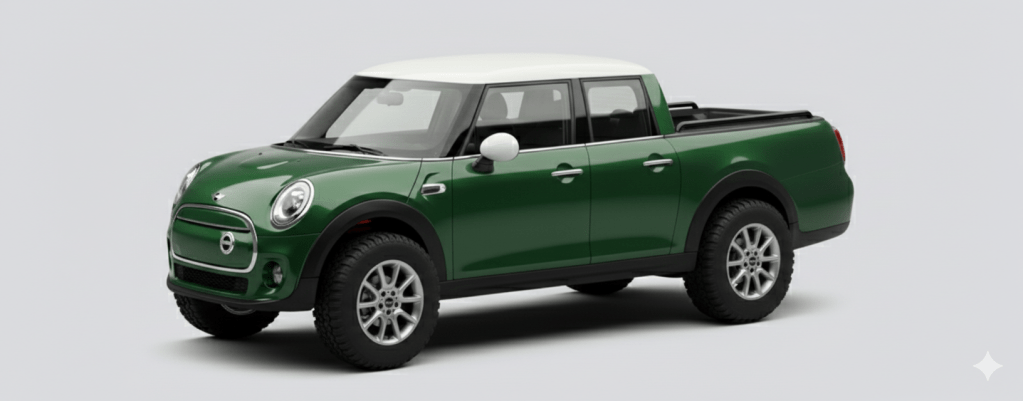
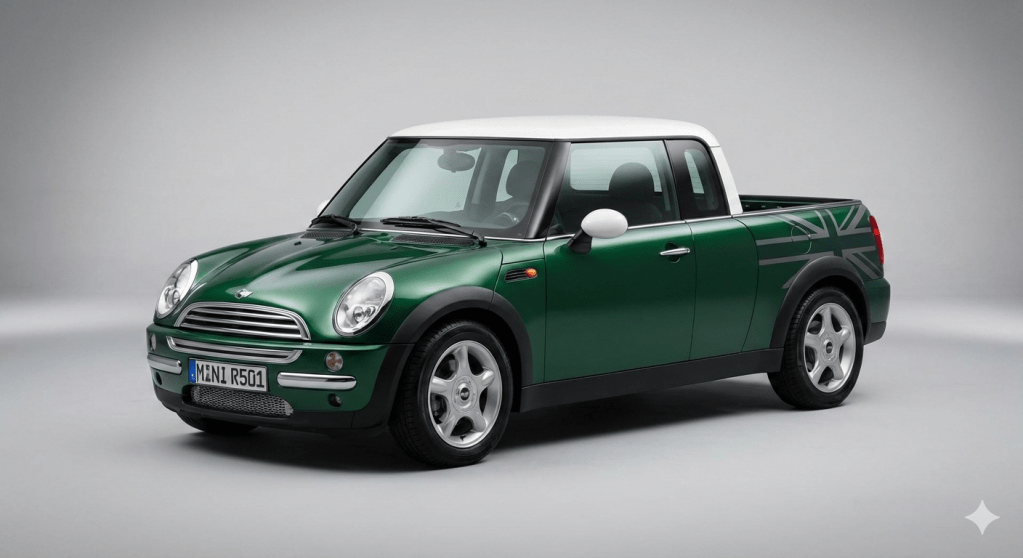
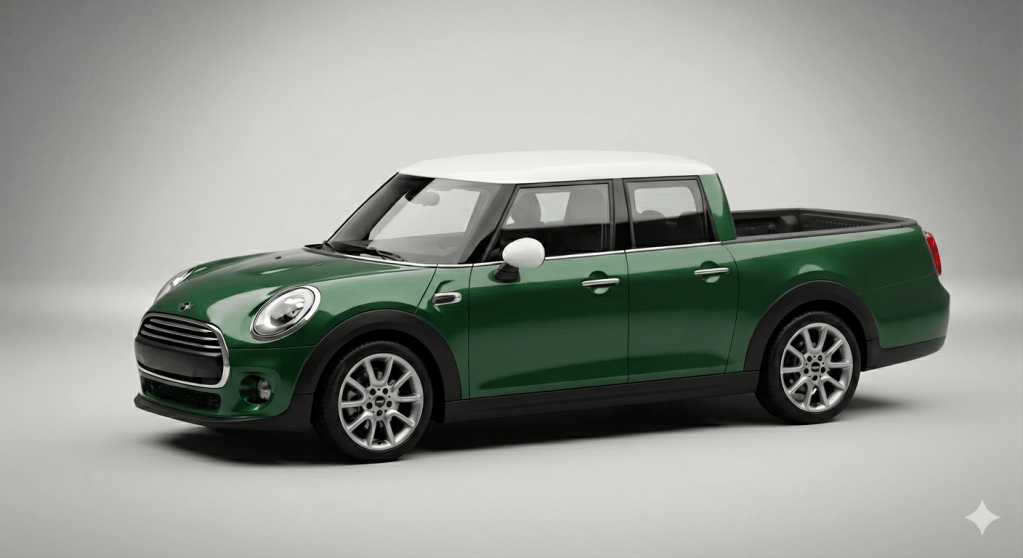
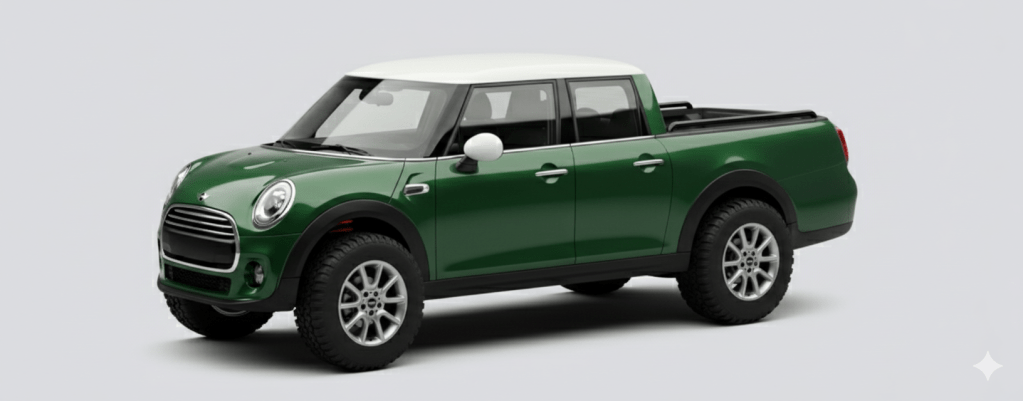
I got curious enough about the “what could it be” version of this that I started working through it in AI image generation. The concept I kept coming back to: the Telo’s fundamental architecture — crew cab, short bed, compact footprint, EV powertrain — dressed in the rounded retro-modern design language the original Mini, the Beetle, and the Microbus all share. Soft round body lines. Big circular LED headlights. A functional or decorative grille (the mouth). Flared wheel arches. Two-tone paint — British Racing Green with a white roof if you want to commit to the bit. Crossover stance. A vehicle equally at home on a mountain road and in a city parking garage.
One note on this, since I keep wanting Mini to be the company that builds it: Mini knows how to do this. They had the design language a decade ago and they’ve spent the years since making it worse. The SUV version didn’t need to look the way it does. The four-door car broke the backend when there was no reason it had to. The original Mini people fell in love with had a face, a stance, and a sense of humor. The current Mini lineup keeps misplacing all three.
That’s the vehicle I want. Nobody is building it yet.
The Fallback Plan
If the Telo doesn’t come together in a form that works for me, the honest fallback is heading south and finding a clean early-2000s Tacoma from back when they were actually compact trucks — somewhere it never saw a salt truck, pre-rust, maybe a 2001. The downside is giving up EV torque, and once you’ve lived with instant electric power and regenerative braking, that’s a real sacrifice. It changed how I drive.
The Scout Motors truck has promise on paper, but it reads full-sized, which doesn’t solve the problem. The Rivian R1T is excellent if your budget has no ceiling, and it’s a good-looking truck — except for those headlights. I don’t know what they were thinking with the front end. Everything from the A-pillar back is great, and then you get to the face and it looks like it’s wearing safety goggles. Fix the nose and it’s a beautiful vehicle.
So the hope is that Telo — or someone watching what Telo is doing — refines the design, adds a few inches where it matters, commits to a rounded friendly stance, and gets to market before I need to replace anything.
The Bottom Line
The Telo MT1 is closer to what I want than anything else announced. It just needs more polish — literally and figuratively. Sort out the front end. Keep the grille (the mouth). Round the eyes. Extend the nose slightly, dial in a crossover stance, lose the glass roof, add a bench seat option. Do that and there’s something genuinely worth getting excited about.
Until then, I keep one eye on the Allroad’s odometer and the other on Telo’s development updates, and hope the timing works out.



Leave a Reply