Both Parties Protect the System
In Part 11, we showed you who profits from cost-shifting. Now we need to explain why this system persists regardless of which party controls Congress or the White House.
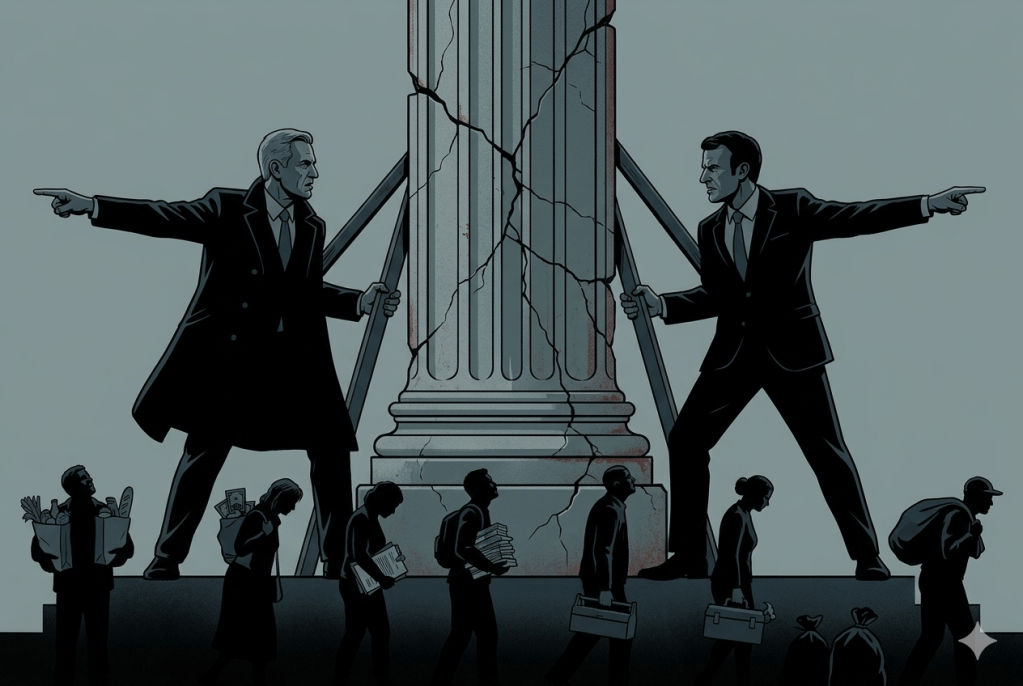
The uncomfortable truth: Both parties protect corporate interests. Both parties enabled the cost shifts. Both parties take corporate money.
This isn’t “both sides are the same.” They’re not. There are real differences on many issues. But on the core question of whether corporations can shift costs onto workers while wages stagnate, there’s a bipartisan consensus: Yes, they can.
Let’s look at the evidence.
The Money: Both Parties Feed at the Same Trough
2024 Election Cycle (as of mid-cycle):
Corporate PAC contributions:
Finance, Insurance, and Real Estate:
- Total: $478 million
- To Republicans: $248 million (52%)
- To Democrats: $230 million (48%)
Health:
- Total: $242 million
- To Republicans: $119 million (49%)
- To Democrats: $123 million (51%)
Communications/Electronics:
- Total: $189 million
- To Republicans: $91 million (48%)
- To Democrats: $98 million (52%)
Energy:
- Total: $156 million
- To Republicans: $103 million (66%)
- To Democrats: $53 million (34%)
Pharmaceuticals:
- Total: $108 million
- To Republicans: $52 million (48%)
- To Democrats: $56 million (52%)
Agribusiness:
- Total: $89 million
- To Republicans: $58 million (65%)
- To Democrats: $31 million (35%)
Pattern: Corporations hedge their bets. They give to both parties to ensure access regardless of who wins.
Top corporate donors give to BOTH parties:
Comcast (from Part 7):
- 2024 cycle contributions: $4.2 million
- To Republicans: $2.1 million
- To Democrats: $2.1 million
UnitedHealth Group (from Part 8):
- 2024 cycle contributions: $3.8 million
- To Republicans: $1.8 million
- To Democrats: $2.0 million
JPMorgan Chase (from Parts 3, 4, 11):
- 2024 cycle contributions: $6.4 million
- To Republicans: $3.5 million
- To Democrats: $2.9 million
They’re not picking sides. They’re buying both sides.
The Telecom Deregulation: A Bipartisan Gift
1996 Telecommunications Act:
Signed by: President Bill Clinton (Democrat) House vote: 414-16 (overwhelmingly bipartisan) Senate vote: 91-5 (overwhelmingly bipartisan)
What it did:
- Eliminated most regulations on telecom companies
- Allowed unlimited media consolidation
- Promised competition and lower prices
What actually happened (from Part 7):
- Cable companies divided territories and don’t compete
- Prices increased 182% faster than inflation
- 83% of Americans have 0 or 1 choice for high-speed internet
- Companies spent $400 billion in subsidies meant for rural broadband, didn’t build it, pocketed the money
Who lobbied for it:
- AT&T: Donated to both parties
- Verizon: Donated to both parties
- Cable companies: Donated to both parties
The result 28 years later:
- Americans pay 3-4x more than other developed countries
- Service quality is worse
- Rural areas still abandoned
Bipartisan result: Corporate profits, consumer harm.
Net Neutrality repeal (2017):
FCC Chairman: Ajit Pai (Republican, Trump appointee, former Verizon lawyer)
Who opposed repeal:
- Democrats (in Congress, but didn’t have votes to stop it)
But here’s what Democrats DIDN’T do when they had power:
2009-2010: Democrats controlled House, Senate, and Presidency
- Didn’t restore net neutrality through legislation
- Didn’t break up telecom monopolies
- Didn’t stop the Comcast/NBC merger
2021-2022: Democrats controlled House, Senate, and Presidency
- Didn’t restore net neutrality through legislation
- Didn’t stop T-Mobile/Sprint merger (approved under Trump, but could have challenged)
- Didn’t pass municipal broadband protection
Why not? Because telecom companies donate to Democrats too.
The pattern: Republicans actively gut regulations. Democrats don’t restore them when they have power.
Banking Deregulation: Bipartisan Catastrophe
Gramm-Leach-Bliley Act (1999):
Signed by: President Bill Clinton (Democrat) Sponsored by: Phil Gramm (R-TX), Jim Leach (R-IA), Thomas Bliley (R-VA) Senate vote: 90-8 (Democrats voted 38-7 in favor) House vote: 362-57
What it did:
- Repealed Glass-Steagall Act (Depression-era law separating commercial and investment banking)
- Allowed banks to merge with investment firms and insurance companies
- Created “too big to fail” banks
Result:
- Led directly to 2008 financial crisis
- Banks got bailed out with taxpayer money ($700 billion)
- Executives kept their bonuses
- Workers lost homes and jobs
2010 Dodd-Frank Act (response to 2008 crisis):
Signed by: President Obama (Democrat) House vote: 237-192 (mostly party-line) Senate vote: 60-39 (mostly party-line)
Democrats passed reform! That’s good, right?
What it did:
- Added some regulations on banks
- Created Consumer Financial Protection Bureau (CFPB)
- Required banks to hold more capital
What it DIDN’T do:
- Break up “too big to fail” banks (they’re now bigger)
- Restore Glass-Steagall
- Prosecute executives who caused the crisis
- Stop predatory lending practices entirely
2018 Banking “Reform” (weakening Dodd-Frank):
Signed by: President Trump (Republican) Senate vote: 67-31 (17 Democrats voted YES)
What it did:
- Rolled back Dodd-Frank regulations for smaller banks
- Raised the “systemically important” threshold from $50B to $250B in assets
- Made it easier for banks to engage in risky behavior
Democrats who voted YES included:
- Jon Tester (Montana)
- Heidi Heitkamp (North Dakota)
- Joe Donnelly (Indiana)
- Claire McCaskill (Missouri)
- Many others
Why did Democrats vote with Republicans to weaken banking regulations?
Banking industry donations to those Democratic senators:
- Jon Tester: $643,000 (2013-2018)
- Heidi Heitkamp: $412,000
- Joe Donnelly: $524,000
The result:
- Banks continued fee practices from Part 3
- Continued high-interest credit cards from Part 4
- Continued monopolistic behavior
- No real accountability
Bipartisan pattern: Republicans push deregulation aggressively. Democrats either go along or pass weak reforms that don’t fundamentally change the system.
Healthcare: The Corporate Protection Plan
Affordable Care Act (2010):
Signed by: President Obama (Democrat) House vote: 219-212 (no Republican votes) Senate vote: 60-39 (no Republican votes)
This was Democrats alone. So it must be good for workers, right?
What it did (good parts):
- Expanded Medicaid (helped millions)
- Banned denial for pre-existing conditions
- Allowed kids to stay on parents’ insurance until 26
- Required coverage of preventive care
What it DIDN’T do:
- Public option (government-run insurance competing with private)
- Medicare for All
- Drug price controls
- Limit insurance company profits beyond 80/20 rule
What it DID do for insurance companies:
- Mandated everyone buy insurance (guaranteed customers)
- Subsidized premiums with government money (guaranteed profits)
- Allowed insurance companies to write the regulations
Remember from Part 8:
- Average family premium: $6,575/year (employee portion)
- Average deductible: $4,200
- Insurance company profits: $43.4 billion (top 4)
The ACA helped millions of people. That’s real and important. But it also locked in a system where private insurance companies profit from mandatory purchase with shrinking coverage.
Why no public option?
Senator Joe Lieberman (I-CT, caucused with Democrats) killed it. Needed his vote for 60-vote supermajority. He opposed public option.
Why did Lieberman oppose it?
Connecticut is home to major insurance companies (Aetna, Cigna headquarters). Insurance industry donated heavily to Lieberman:
- $448,066 in 2008 cycle alone
One senator, funded by insurance companies, killed the public option.
Drug Price “Reform” (2022):
Inflation Reduction Act allowed Medicare to negotiate prices for 10 drugs.
Democrats passed it! That’s good, right?
Yes, but:
- Only 10 drugs initially (Medicare covers thousands)
- Negotiation doesn’t start until 2026
- Pharmaceutical companies can opt out by pulling drugs from Medicare
- No price controls on commercial insurance
Compare to other countries:
- Germany: Government negotiates ALL drug prices
- UK: National Health Service sets maximum prices
- Canada: Patented Medicine Prices Review Board sets maximums
U.S. approach: Negotiate 10 drugs, maybe, eventually, if pharma companies cooperate.
Why so weak?
Pharmaceutical industry donations (2022 cycle):
- To Democrats: $56 million
- To Republicans: $52 million
They bought both sides.
Antitrust: Decades of Bipartisan Failure
The monopolies from Parts 5-8 didn’t happen by accident. They happened because both parties stopped enforcing antitrust law.
Meat processing consolidation (Part 6):
- 1980: Top 4 beef packers = 36% market share
- 2024: Top 4 beef packers = 83% market share
This happened under:
- Reagan (R)
- Bush Sr. (R)
- Clinton (D)
- Bush Jr. (R)
- Obama (D)
- Trump (R)
- Biden (D)
40+ years of both parties allowing consolidation.
Recent merger approvals:
T-Mobile/Sprint (2020):
- Approved by: Trump administration (FCC, DOJ)
- Opposed by: Some Democrats, some state attorneys general
- Result: Three companies now control 99% of wireless
- Prices went up, not down
- Competition decreased
Could Biden administration have challenged it? Yes, but didn’t.
Kroger/Albertsons (proposed, 2024):
- Would create 15% grocery market share
- Would eliminate competition in many cities
- FTC (under Biden) is challenging it
But here’s the thing: FTC challenged it only after years of allowing previous consolidation. And FTC might lose in court because decades of precedent favor corporations.
Biden’s FTC (2021-present) is better on antitrust. Chair Lina Khan is aggressively challenging mergers. But:
Bipartisan opposition to Khan:
- Republicans oppose her (expected)
- Some Democrats oppose her too
- Corporate Democrats want her gone
Why? Tech companies and other corporations donate to both parties and want weak antitrust enforcement.
The Revolving Door: Bipartisan Corruption
Obama administration examples:
Timothy Geithner:
- Obama’s Treasury Secretary
- Before: New York Federal Reserve
- After: President of Warburg Pincus (private equity)
Tom Wheeler:
- Obama’s FCC Chairman
- Before: Cable and wireless lobbyist
- During: Implemented net neutrality (good!)
- After: Brookings Institution
Eric Holder:
- Obama’s Attorney General
- Before: Partner at Covington & Burling (corporate law firm)
- During: No major bank executives prosecuted for 2008 crisis
- After: Returned to Covington & Burling
Trump administration examples:
Steven Mnuchin:
- Trump’s Treasury Secretary
- Before: Goldman Sachs, OneWest Bank
- During: Tax cuts for corporations and wealthy
- After: Private equity
Ajit Pai:
- Trump’s FCC Chairman
- Before: Verizon lawyer
- During: Killed net neutrality
- After: Private equity firm
Scott Gottlieb:
- Trump’s FDA Commissioner
- Before: Pfizer board member
- During: Oversaw FDA
- After: Pfizer board member (again)
The pattern is identical. Corporate executives regulate their former (and future) employers.
Biden administration (different?)
Some better picks (Lina Khan at FTC). But also:
Jennifer Granholm:
- Energy Secretary
- Before: Board member of Proterra (electric bus company)
- Had to divest, but shows the connections
The revolving door exists in both parties.
Where They Differ (And Where They Don’t)
Real differences:
Democrats generally support:
- Higher minimum wage
- Stronger labor protections
- More healthcare access (even if not single-payer)
- Environmental regulations
- CFPB (consumer protection)
Republicans generally support:
- Lower minimum wage (or oppose increases)
- Weaker labor protections
- Less healthcare access
- Weaker environmental regulations
- Eliminating CFPB
These differences matter. They affect millions of lives.
But on core economic structure:
BOTH parties support:
- Corporate consolidation (until very recently, and weakly)
- Private health insurance industry
- Employer-sponsored healthcare
- High CEO pay (no maximum wage)
- Stock buybacks (legal since 1982 under Reagan, never reversed)
- Corporate lobbying
- Citizens United (Supreme Court, but Congress could legislate around it, hasn’t)
- Low corporate tax rates
- Weak antitrust enforcement (until Biden/Khan, and facing bipartisan opposition)
On the cost-shifting we’ve documented in Parts 1-11, both parties have enabled it.
The Rhetoric vs. Reality Gap
Democrats say:
- “We fight for working families”
- “Tax the rich”
- “Corporate accountability”
Democrats do:
- Pass tax increases that hit upper-middle class, not true wealthy (capital gains loopholes remain)
- Accept corporate donations
- Appoint corporate-friendly regulators (not always, but often)
- Pass weak reforms that don’t fundamentally change corporate power
Republicans say:
- “Free markets”
- “Small government”
- “Personal responsibility”
Republicans do:
- Give massive subsidies to corporations ($400B to telecoms, Part 7)
- Bail out banks ($700B in 2008)
- Protect monopolies (opposite of free markets)
- Big government for corporate benefit, small government for worker protection
Both parties:
- Campaign on helping workers
- Govern to protect corporations
- Blame the other party for problems
- Take corporate money from the same companies
The Voters vs. The Donors
What voters want (bipartisan majorities in polling):
- Lower drug prices: 88% support
- Medicare for All: 63% support
- Higher minimum wage: 67% support
- Breaking up big banks: 57% support
- Net neutrality: 86% support
- Paid family leave: 84% support
What Congress delivers:
- Weak drug price negotiation (10 drugs)
- No Medicare for All
- Minimum wage stuck at $7.25 federally since 2009
- Banks bigger than ever
- Net neutrality dead
- No federal paid family leave
Why the gap?
Donors don’t want these policies. And donors fund campaigns.
Average cost of winning House seat (2022): $2.3 million Average cost of winning Senate seat (2022): $26.5 million
Where does that money come from?
- Small donors: ~25%
- Large donors ($1,000+): ~60%
- PACs and corporations: ~15%
To raise $2-26 million, candidates need big donors.
Big donors are disproportionately:
- Corporate executives
- Wealthy individuals
- Industry lobbyists
Who want:
- Lower taxes on wealth
- Weak regulations
- Continued ability to shift costs to workers
The result: Both parties cater to donors over voters.
The 2024 Reality
Biden administration (2021-present):
Better on some issues:
- Lina Khan at FTC (aggressive antitrust)
- NLRB (National Labor Relations Board) more pro-union
- Some student loan forgiveness (courts blocked major plans)
- Infrastructure investment
But still:
- Approved most corporate mergers
- No Medicare for All push
- No minimum wage increase (parliamentarian blocked in 2021, didn’t pursue further)
- No net neutrality restoration
- No breakup of big tech or big banks
- Corporate donations still flowing
Trump (if elected again):
- Would be worse on regulations
- Would appoint corporate-friendly judges
- Would likely kill what little antitrust enforcement exists
- Would cut corporate taxes more
But the system would persist either way because both parties are funded by the same corporations.
The Exceptions Prove the Rule
Some politicians reject corporate PAC money:
- Bernie Sanders
- Elizabeth Warren (mostly)
- AOC and Squad members
- Some progressives
What happens to them?
- Corporate Democrats oppose them in primaries
- Corporate media criticizes them as “unrealistic”
- Leadership positions denied
- Bills don’t get hearings
Why? Because they threaten the donor class.
Some Republicans oppose corporate consolidation:
- Josh Hawley (sometimes)
- Matt Gaetz (on some issues)
- Populist wing
What happens to them?
- Corporate Republicans oppose them
- Bills don’t pass
- Limited power
The corporate wing of both parties controls leadership.
- House: Both parties’ leadership takes corporate money
- Senate: Both parties’ leadership takes corporate money
- Committees: Funded by relevant industries (Finance Committee members get bank donations, Energy Committee gets oil donations, etc.)
You can’t rise to leadership in either party while opposing corporate interests.
Why This Matters
Emma from Parts 10 and 11 is $253/month away from going underwater.
The policies that would help her:
- Medicare for All (saves $6,300/year in healthcare costs)
- Free public college (eliminates $4,080/year in student loans)
- Antitrust enforcement (lowers food, internet, phone costs)
- Public broadband (saves $1,068/year)
- Strong labor protections (higher wages)
Have bipartisan majority support among voters. Have no chance of passing because both parties protect corporate donors.
This is why the system persists.
Not because voters want it. Because donors want it. And donors fund both parties.
The Uncomfortable Truth
You can’t vote your way out of this.
Not because voting doesn’t matter—it does. Biden’s FTC is better than Trump’s. Democrats are marginally better on labor. These differences affect real lives.
But voting alone can’t break corporate control when both parties depend on corporate money.
To fix this requires:
- Voting for the best available option
- AND building independent worker power through unions
- AND primary challenges to corporate Democrats
- AND sustained pressure campaigns
- AND breaking corporate control of both parties
We’ll cover how to do this in Part 15. But first, you need to understand how we got here.
What’s Next
In Part 13, we’re going back 50 years to show you exactly how this system was built.
How We Got Here:
- The 1970s: When the corporate counterattack began
- Reagan: Deregulation and union-busting
- Clinton: Democrats embrace corporations
- Bush: More deregulation
- Obama: Weak reform
- Trump: Corporate tax cuts
- Biden: Better rhetoric, limited action
We’re going to show you the specific laws, the specific court decisions, the specific policy changes that shifted costs from corporations to workers.
Because you can’t fix a problem until you understand how it was created.
And this was created deliberately. By people with names. Who passed specific laws. For specific corporate interests.
Passing the Buck: Why We Pay More But Make Less is a 15-part series examining how corporations and government systematically shifted costs onto working Americans—while wages stagnated and benefits disappeared.
 Even that's Odd
Leave a comment