Category: Do Unto Others

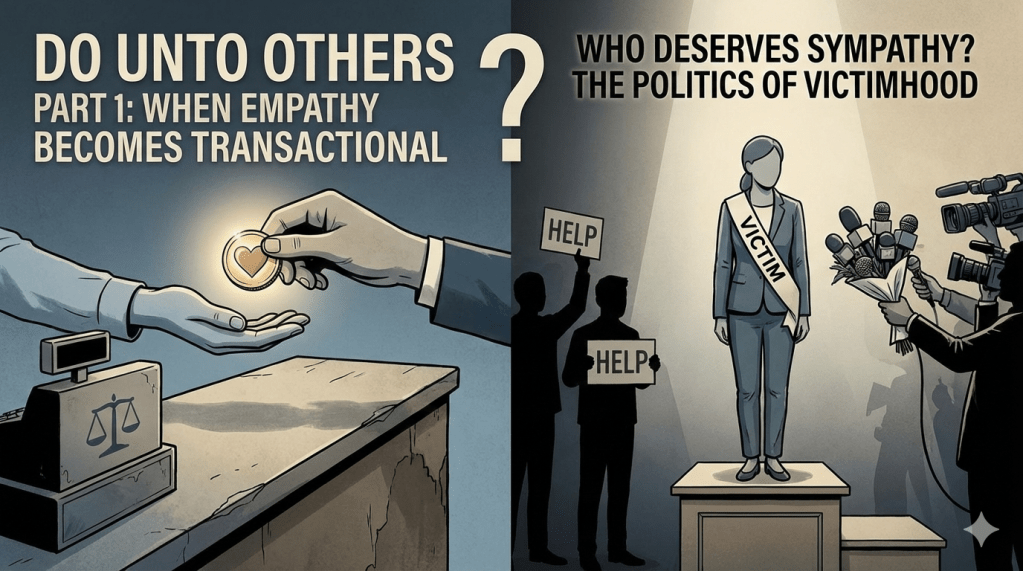
  • Do Unto Others Part 1: When Empathy Becomes Transactional

    ,

    Who Deserves Sympathy? The Politics of Victimhood A Note Before We Begin If this feels like an attack on Trump, I need to address that upfront. I tried to write this like an outside observer would—documenting what happened without partisan spin. I looked for examples across the political spectrum. I stuck to things that actually…

  • Do Unto Others Part 2: “My Own Morality”

    ,

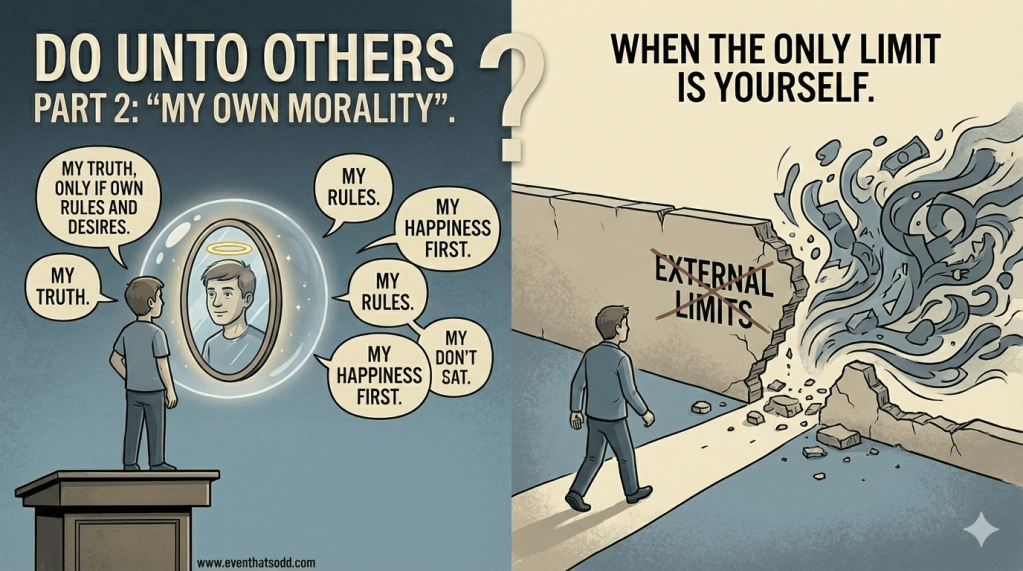
    When the Only Limit Is Yourself ________________________________________________________________________________ On January 8, 2026, President Trump sat down with The New York Times. Asked about constraints on his power, he gave an answer that deserves examination: “Yeah, there is one thing. My own morality. My own mind. It’s the only thing that can stop me. I don’t need…

  • Do Unto Others Part 3: Both Sides Are Hypocrites

    ,

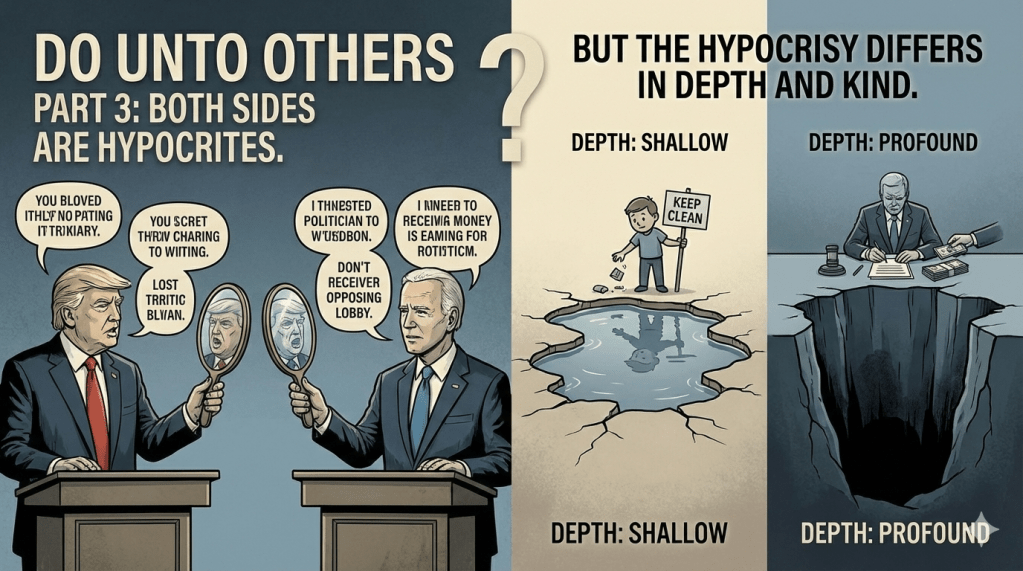
    But the Hypocrisy Differs in Depth and Kind After two parts documenting transactional empathy and Stage 2 moral reasoning, a predictable objection arises: “Both sides do it.” This is true. Both parties exhibit hypocrisy. Both say one thing and do another. Both claim to represent working people while serving corporate donors. But the question isn’t…

  • Do Unto Others Part 4: Flooding the Zone

    ,

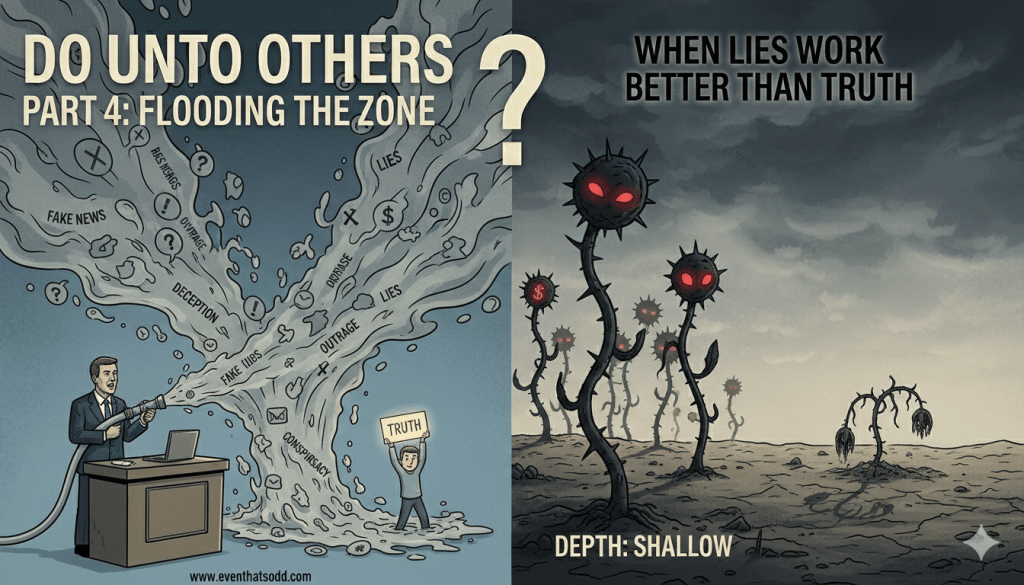
    When Lies Work Better Than Truth After documenting transactional empathy (Part 1), Stage 2 moral reasoning (Part 2), and asymmetric hypocrisy (Part 3), one question remains: How does this actually work in practice? The answer is documented. It’s called the “firehose of falsehood,” and it’s a propaganda technique pioneered by authoritarian regimes. Specifically, Vladimir Putin’s…

  • Do Unto Others Part 5: What This Means for Democracy

    ,

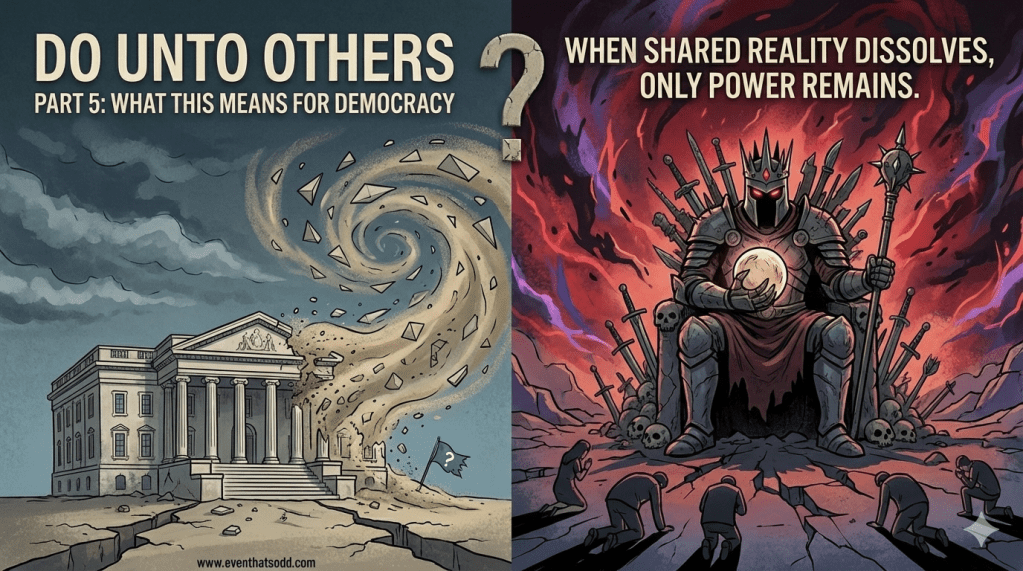
    When Shared Reality Dissolves, Only Power Remains Introduction: The Foundation Is Cracking Democracy rests on three pillars that most Americans take for granted: Over the course of this series, we’ve documented how all three pillars are systematically eroding. Part 1 showed empathy has become transactional – Melissa Hortman gets “I don’t know who she was,”…