
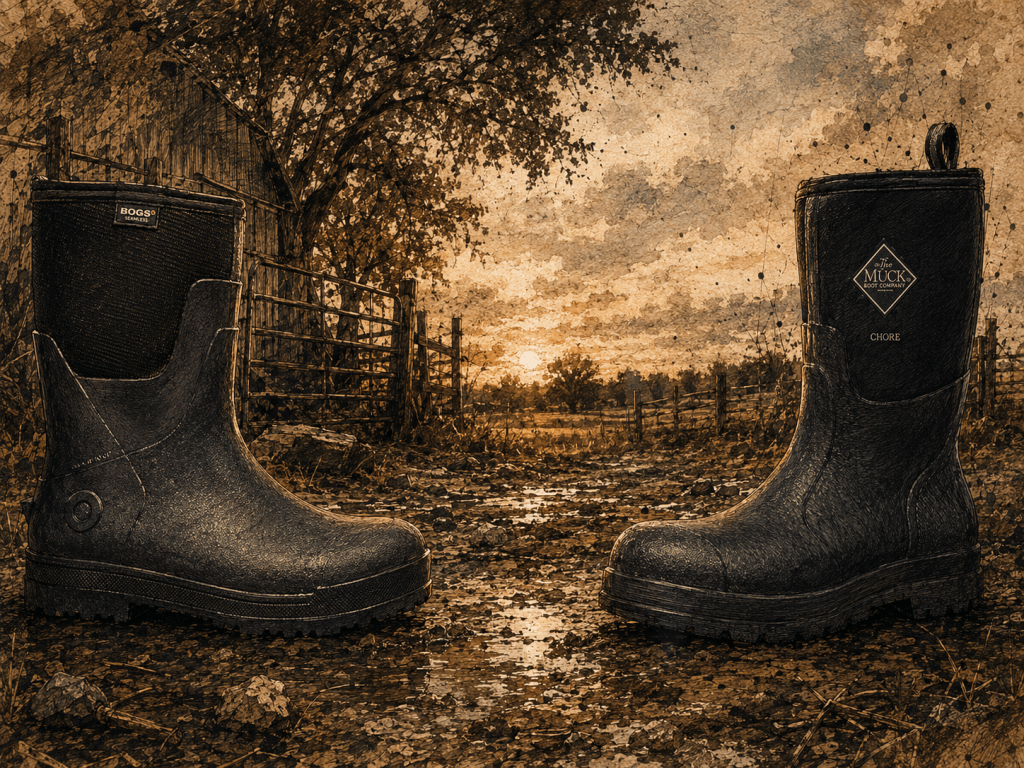
If you live somewhere that actually has winter, regular rubber boots stop working below freezing. You need insulated neoprene. The question is which pair, and after two rounds I have an honest answer with a caveat.
Round One: Bogs Classic High
My first serious pair was the Bogs Classic High. They kept my feet warm and dry through fall, winter, and spring. Too hot to wear in a Northeast summer, but that’s true of every neoprene boot.
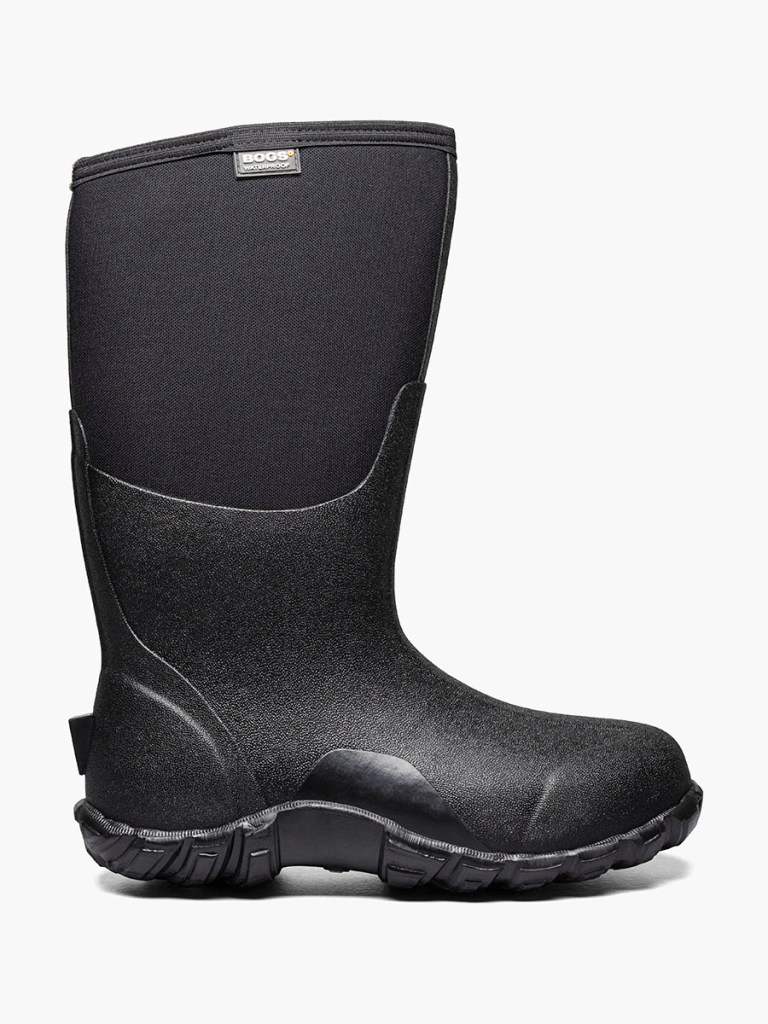
Three problems. They were too tall, so the cuff fought my pant legs every time I put them on — not ideal for a quick run out to the car. The sole tread never bit on snow or ice; on a slick driveway they were basically skis. And after a few years the exterior layer separated from the insulation, leaving a wrinkled, sad-looking boot that still functioned but looked like it had lost a fight with a washing machine.
The Bogs Classic Seamless might have avoided the separation issue based on how it’s constructed. Bogs also makes a chore-shaped, lower-cut version that looks more like a real work boot than a rubber boot — if I were starting over with Bogs, that’s where I’d look.
Round Two: Muck Chore Classic Mid
Two years ago I switched to the Muck Chore Classic Mid, and the shape is what won me over.
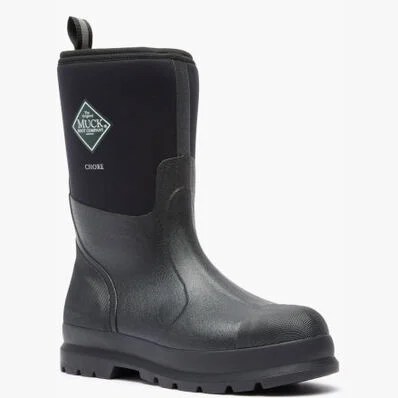
These read as work boots, not rubber boots. Slip-on, no laces, no struggle. Tall enough to handle most puddles and mud, short enough to actually put on without sitting down. And they’ve become the household default — whoever’s heading out the door grabs mine, regardless of whose feet they fit. Whether that’s a compliment to the boot or a problem with the rest of the family’s footwear is unclear.
For really deep flooding situations a taller boot would be better, but a taller boot wouldn’t be a slip-on, and that’s the trade.
The Reservation
Less than two years in, both of my Muck soles are starting to separate from the boot along the side. Not catastrophically — I haven’t tested whether the waterproofing is compromised yet — but the same failure mode that killed my Bogs is now showing up on the Mucks at a faster timeline.
A friend who bought the same pair has a crack in his, but in fairness he wears them as his primary shoe and treats them like sneakers. The heavier-duty Muck would probably be a better fit for that kind of use.
The Verdict
I still prefer the Mucks. The chore-boot shape, the slip-on, and the height ratio are right, and the Bogs Classic High never solved the traction problem in the first place. But neither pair has lasted the way a $150 boot should, and the failure mode is the same on both — sole or exterior layer giving up at the seam.
If you want the right shape and you’re willing to accept that you might be replacing them every two or three years, the Muck Chore Classic Mid is the boot. If durability is the priority over silhouette, I’d take a hard look at the chore-shaped Bogs models and the heavier-duty Muck before committing.


Leave a Reply