
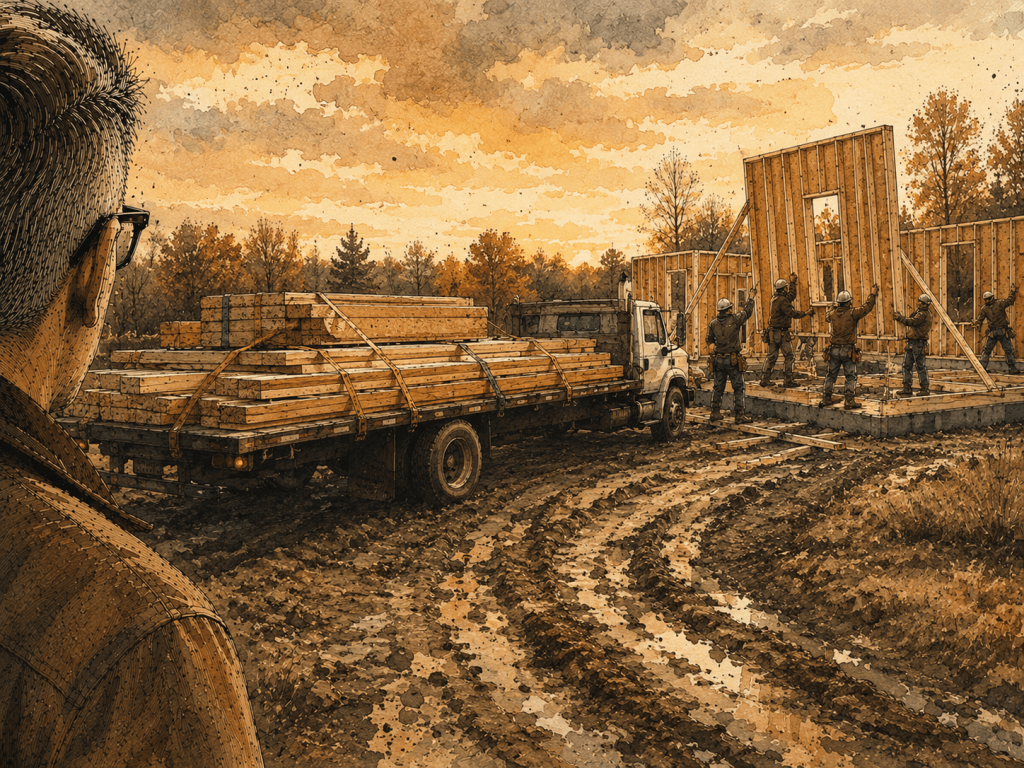
Fall – Winter 2009
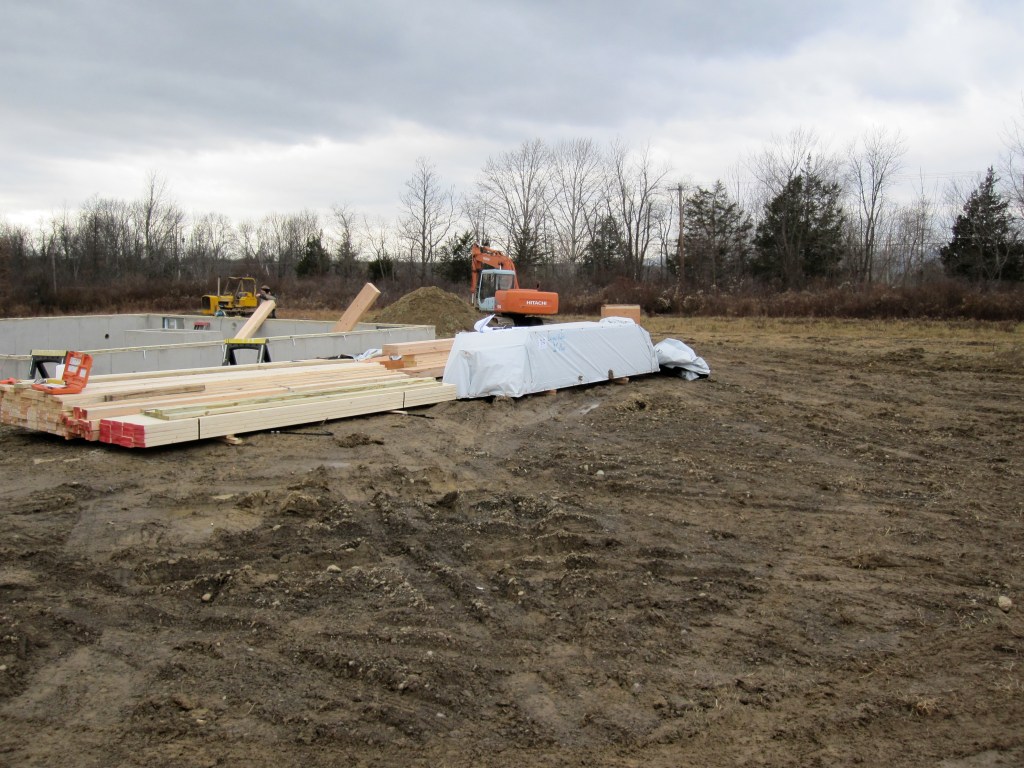
With foundation complete and the Connor Homes kit ready to ship, it was time for framing. This is where our decision to act as our own general contractor would really be tested.
We had a choice: our realtor’s brother was a professional builder who could have managed the entire project. He had experience, established relationships with subs, knew what he was doing. At the time (2008-2009), most contractors were looking for work because of the financial crisis.
In hindsight, maybe hiring a professional GC would have been the smart choice.
But I trusted my friend. One of my better friends, actually—he’s still one of my best friends. He lived nearby and had construction experience. He became our reluctant general contractor, mainly because Jennifer and I were working in the city during the week and he was onsite. Someone needed to be there, and he stepped up.
The Connor Homes Kit Advantage
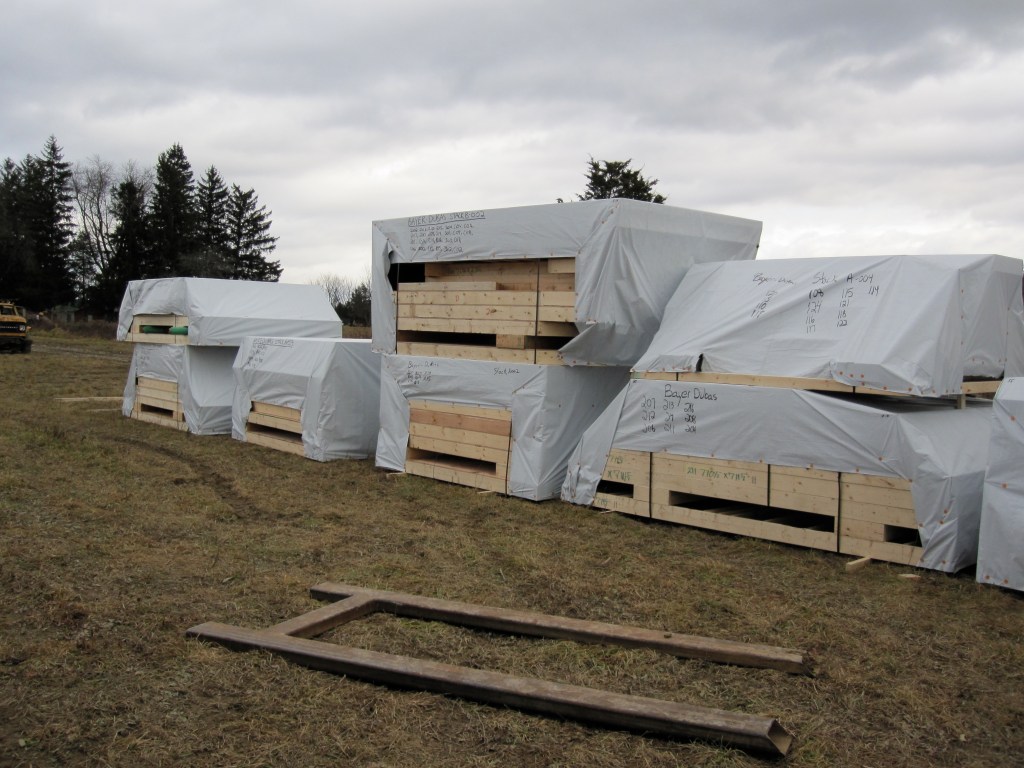
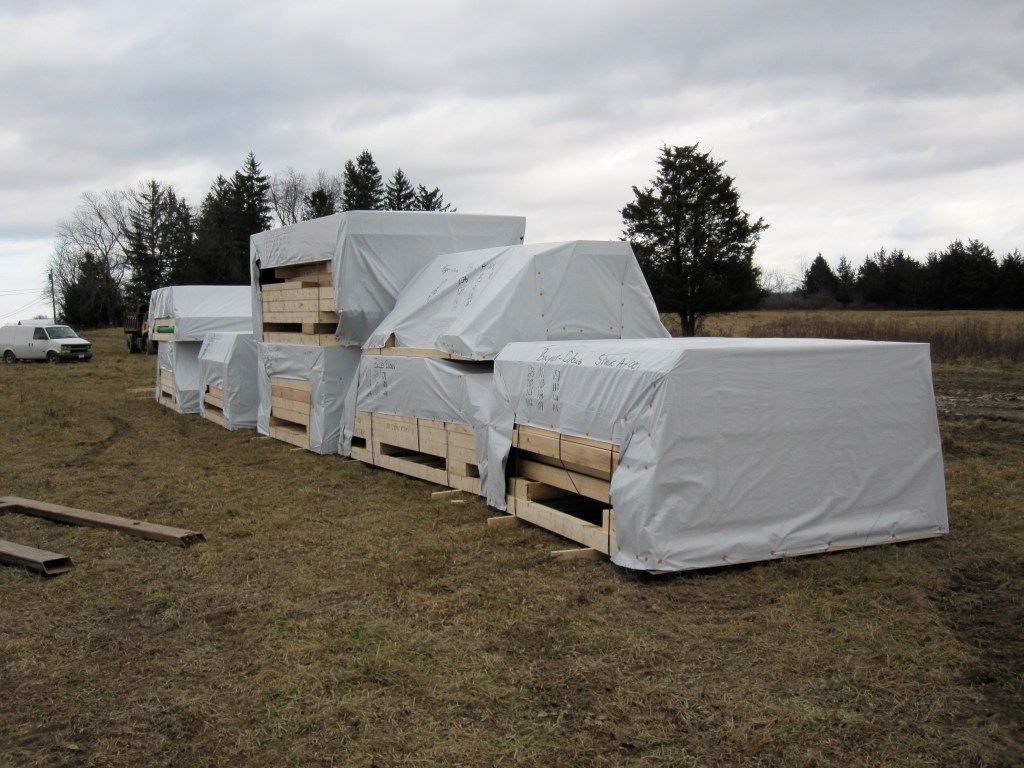
The advantage of a Connor Homes kit house: most of the wall framing was done in the factory. They provided pre-built and sheathed exterior walls, along with pre-framed interior walls and detailed plans showing exactly how everything fit together.
What the framing crew actually needed to build on-site:
- Floor joists and systems
- Roof rafters
- Roof sheathing
- Assemble the pre-framed interior walls
- Assemble the pre-framed and sheathed exterior walls
The heavy cutting and wall framing had already happened in Vermont under controlled factory conditions. This was one of the major advantages of the kit approach—precision factory work instead of field measurements.
We weren’t super concerned about the framing aspect since it seemed fairly straightforward. The walls were already built. They just needed to be assembled.
The Lull Lift and the Field
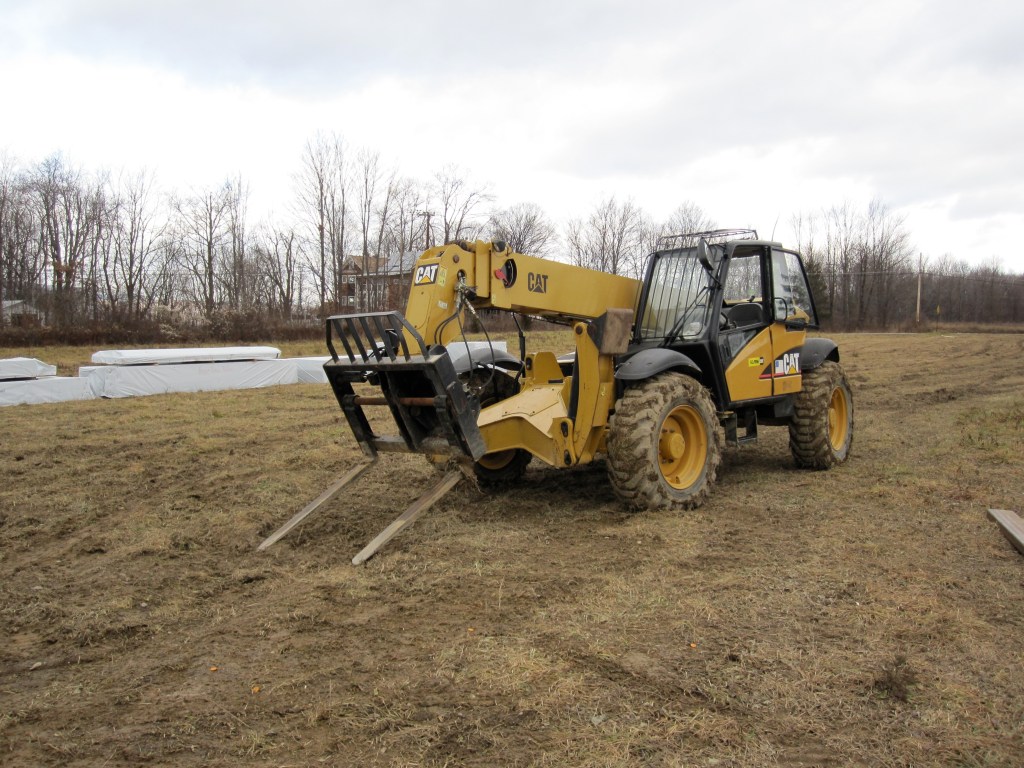
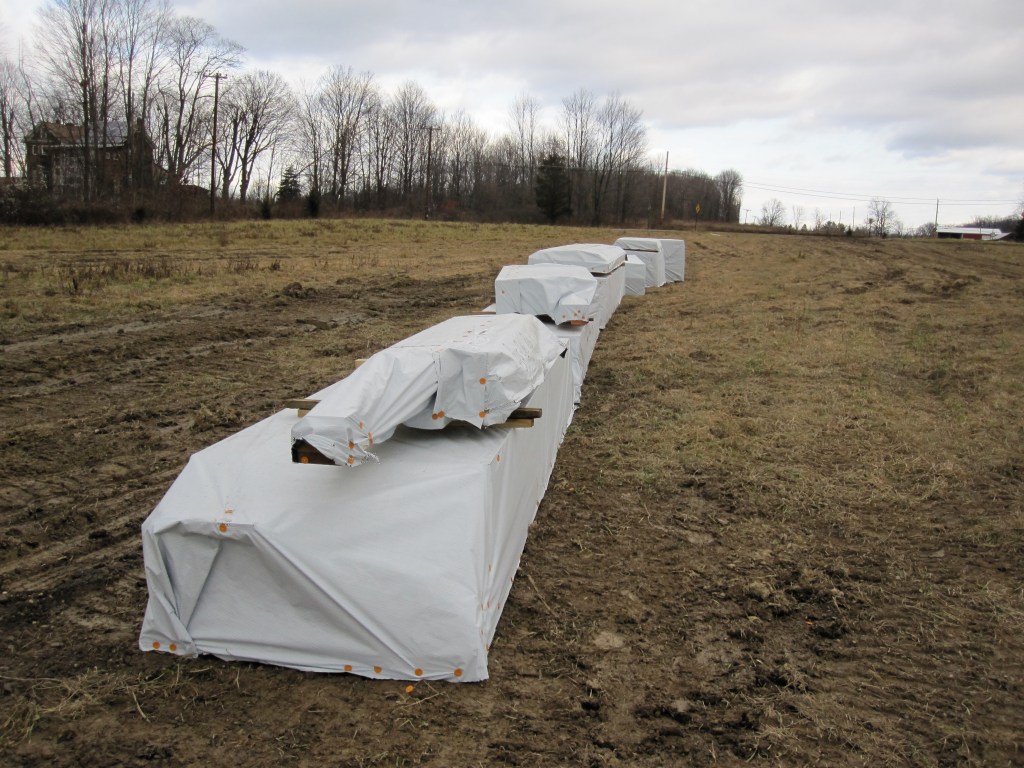
The framing contractor needed to rent a Lull lift—a telehandler forklift—to unload the flatbed truck with all the framing panels and materials, then drive them through our field down to the foundation.
The Lull worked great for moving materials.
The Lull did not work great for our saturated clay field.
It was that perfect time of year: pre-ground freezing, but completely saturated. Clay soil + heavy equipment + moisture = disaster.
The Lull put huge ruts in our front field. Deep, wheel-width trenches where the clay just sank under the weight.
This would need to be fixed later. (Spoiler: “later” took a while, and those ruts were visible for quite some time.)
If you’re moving heavy equipment across fields in late fall, either wait for the ground to freeze or accept that you’ll be regrading later.
The Framing: Actually a Win
Despite our concerns and inexperience, the framing went well.
The Connor Homes pre-fabricated panels fit together as designed. The detailed plans made assembly relatively straightforward. The framing crew did a really good job putting everything together.
How do we know? Our drywall sub later commented it was one of the straighter houses he had seen. When drywall guys compliment your framing, you know the framers did solid work.
This was actually a win. The factory precision paid off. The framing crew executed well. The house went up straight and true.
What We Asked For (And Didn’t)
We did specify some things:
What we asked for:
- Blocking where the TV would go in the living room
- Easy mounting capability for the TV
- A bit of a built-in area to hide the TV components
What we didn’t ask for:
- Blocking in other places where we knew we’d hang heavy things
- Extra reinforcement in the second-floor laundry room
- Additional blocking throughout the house for future flexibility
The TV mounting area worked out great. We got exactly what we asked for.
Everything else? We didn’t know to ask. It’s not a huge deal, but when you want to hang something heavy, you really should be hitting a stud. That limits placement and creates frustration later.
This is on us for not asking, not on the framers for not reading our minds.
The Joist Reinforcement Issue
The one thing the framers didn’t do great: making sure all the joist reinforcement was properly fastened.
They put the reinforcements in place—the pieces were there, positioned correctly. But then they forgot to go back and make sure everything was actually fastened securely.
This is the kind of detail that gets missed when you’re not checking work in progress. By the time we discovered it, it was past the point of no return. Not a major structural issue, just an annoying detail that should have been done right the first time.
The Structural Support Question
The house was engineered. An architect and engineer both signed off on the structure. Everything met code and professional standards.
There were just a few points that looked like they could have used a little more support. Not failures, not problems—just areas where I thought “that seems like it could be stronger.”
You never know if things get missed sometimes. Engineers are human. Builders are human. It’s better to overbuild than to rebuild.
We added some reinforcement in a few areas that concerned us. Should have been more systematic about it.
The Distance Problem
Looking back, the biggest issue wasn’t the framing quality or the friend helping us. It was communication and distance.
Jennifer and I were working in the city during the week. We’d come up on weekends. By the time we saw things, they were often past the point of no return.
Not major things. Just Jennifer’s and my nitpicky things—the details we cared about that didn’t get communicated clearly enough to the subs.
A professional GC onsite every day would have caught these. My friend, doing his best while juggling his own life, couldn’t catch everything. We, showing up on weekends, saw problems too late.
This wasn’t anyone’s fault. It was the reality of part-time general contracting from a distance.
The Reluctant GC Reality
My friend didn’t set out to be our general contractor. He became one by necessity because:
- We were in the city during the week
- Someone needed to be onsite
- He had construction experience
- He lived nearby
- He was willing to help
We hired subs for the work my friend didn’t want to do or couldn’t do. We gave him first refusal on tasks, but he only worked with his nephew—he didn’t have a crew he could bring on. He wasn’t a licensed plumber or other specialized trades, so we needed subs for most of the work.
Electrical was different—he went to school for electrical engineering, so he had the knowledge. He just needed a licensed electrician to inspect the work and sign off on it.
He coordinated, solved problems, made decisions when needed, and did work where it made sense.
But he wasn’t a professional GC with daily onsite presence as his full-time job, experience managing multiple subs simultaneously, knowledge of every detail to specify and check, or systems for tracking and verifying all the little things.
The gap between what a reluctant friend-GC can do and what a professional GC does every day is real.
We’re still friends. He’s still one of my best friends. He helped us when we needed it, did work he didn’t plan to do, and got us through the build.
The issues weren’t his fault. They were the inevitable result of part-time, distance oversight by people (us included) who didn’t know all the questions to ask.
What Would Have Actually Worked Better
Three things would have worked better than what we did.
Daily site presence: be there every day to inspect what had happened, talk to subs directly about progress and details, catch issues before they were past the point of no return. Not realistic with our work situations, but it’s what would have solved most of our problems.
Professional GC: if daily site presence wasn’t possible (and it wasn’t), pay the 10-15% fee and hire someone whose full-time job is being there and managing details.
True prefab: looking back, what I really would prefer is to get this level of detail as a true modular and not just a kit. The Connor Homes kit put us in-between stick-built and true prefab. I still love the idea of the Sears catalog home—but built inside a factory and assembled quickly on-site. Less field work means fewer opportunities for details to go wrong; less time on-site means less weather exposure and faster completion. The kit was better than stick-built for precision, but fully modular would have been even better for our situation.
The Lull Lift Ruts: A Metaphor
Those ruts in our front field from the Lull lift? They stuck around for quite a while. Every time we looked at them, they reminded us that heavy equipment on saturated clay makes an impression.
Kind of like trying to general contract a house build from a distance—you leave marks, and fixing them later takes more effort than preventing them would have.
The Long-Term Verdict
Fifteen years later:
- The framing is excellent (thank you, Connor Homes factory precision and competent crew)
- The house is straight and true (drywall guy was right)
- We have blocking where we asked for it (TV area works great)
- We wish we had blocking everywhere else (hanging heavy things is annoying)
- The joist reinforcements that weren’t fully fastened haven’t caused problems (but they should have been done right)
- We’re still friends with our reluctant GC (friendship survived the build)
- Those field ruts eventually got fixed (but we looked at them for months)
This was actually one of our better outcomes. The Connor Homes kit system worked. The framing crew was good. The structure is sound.
The nitpicky details we missed? Those are on us for not knowing to specify them, not on anyone else for not reading our minds.
Grade: B+. The framing is excellent—Connor Homes factory precision plus a competent crew added up to one of the straighter houses the drywall guy had seen. We got the TV blocking we asked for. We didn’t get the blocking we didn’t know to ask for, which is on us. The joist reinforcements that didn’t get fastened properly haven’t caused problems, but should have been done right. The reluctant friend-GC arrangement got us through the build with the friendship intact and the framing solid. The gaps were real and inevitable: weekend oversight from the city catches nothing, and we paid for that in nitpicky details past the point of no return. One of our better outcomes. Don’t drive heavy equipment across saturated clay unless you enjoy looking at ruts for months.
Next up: Part 8 — Electrical: When My Friend Actually Did Read the Code Book. In which my friend did the electrical work himself, we ran cable everywhere “just in case,” and we discover that over-wiring is one of the few things you can’t do too much of.
 Even that's Odd
Leave a comment