Tag: greed

  • My GMO Concern Confusion (Until I Finally Looked It Up)

    For years, I walked past products screaming NON-GMO! and thought… so what? I’ll be upfront: I’m not the sharpest tool in the shed. I’m also an optimist — or maybe a pessimistic optimist? An optimistic pessimist? I’ve never quite nailed that down, and honestly, that tracks with the fact that I spent years vaguely confused…

  • How an Angry Old MacDonald Became a Protest Song

    ,

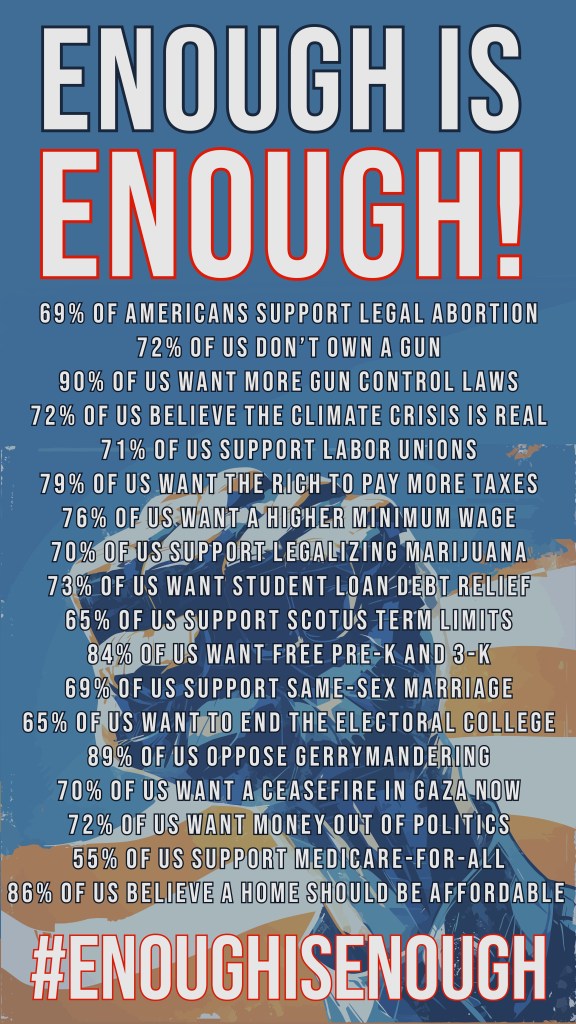
    It started with a question: What is actually wrong with this country, and why do we seem so far apart? The division felt real. The anger felt real. But when you actually looked at the polling data, something didn’t add up. Americans agree on almost everything that matters. Healthcare. Wages. Campaign finance reform. Taxing the…

  • Passing the Buck: Why We Pay More But Make Less Part 9: Death, Taxes, and Everything In Between

    ,

    The Fee Economy Lisa decided to track every fee she paid for one month. Not the big stuff—rent, car payment, insurance. Just the fees. The extra charges. The convenience fees. The service charges. The processing fees. All those little costs that companies tack on for doing business. She’s 29, works as a marketing coordinator in…

  • Passing the Buck: Why We Pay More But Make Less Part 8: Insurance

    ,

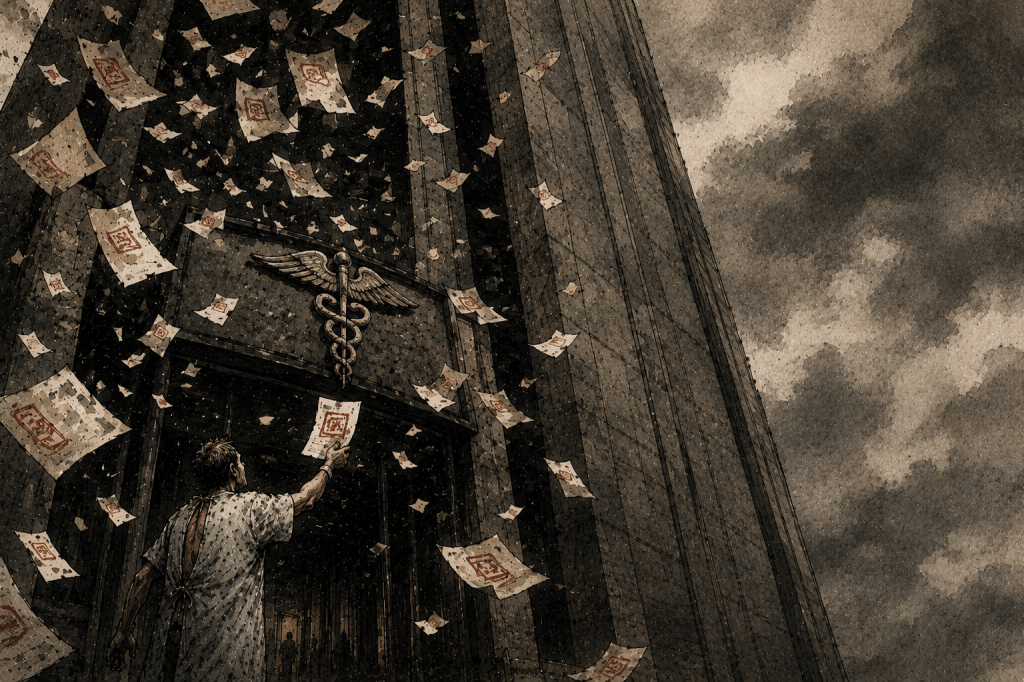
    Mandatory Purchase, Shrinking Coverage David is 38, lives in Tampa, Florida. He’s a physical therapist making $68,000 a year. He’s healthy, doesn’t smoke, exercises regularly, hasn’t had a car accident in 12 years. He’s the kind of customer insurance companies claim to want. Here’s what insurance costs him every year: Health insurance: $4,800/year Auto insurance:…

  • Passing the Buck: Why We Pay More But Make Less Part 7: Phone and Internet

    ,

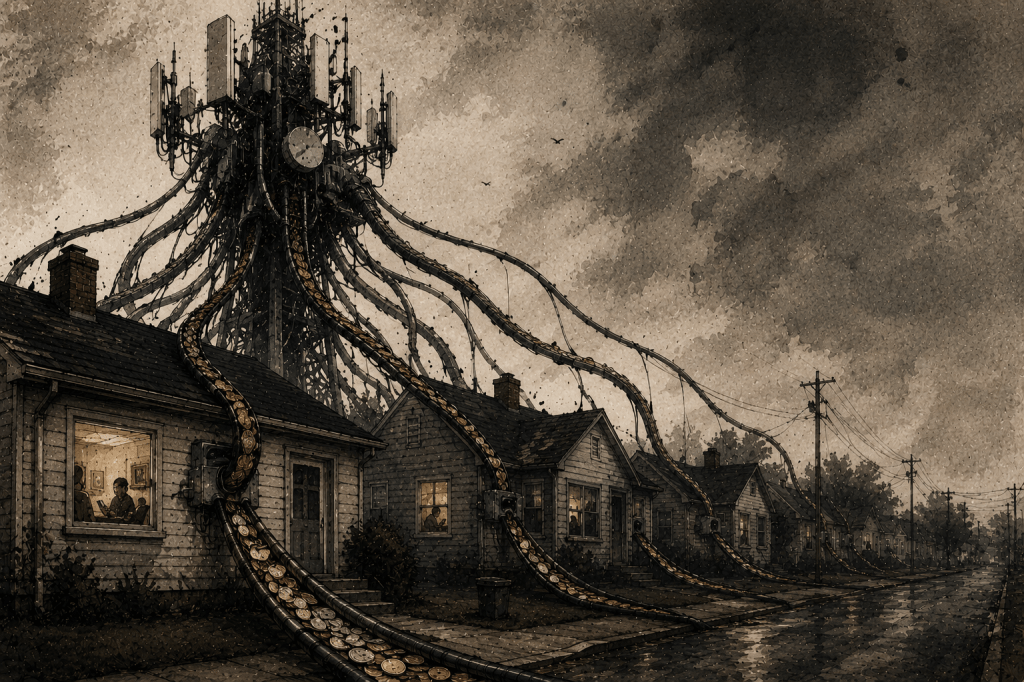
    The Monopoly You Can’t Escape Rachel lives in suburban Atlanta. She works from home as a customer service rep for a health insurance company. Her job requires reliable high-speed internet—it’s not optional. She’s on video calls, accessing patient records, processing claims in real-time. When she moved into her apartment, she called to set up internet…

  • Passing the Buck: Why We Pay More But Make Less Part 6: Food Monopolies

    ,

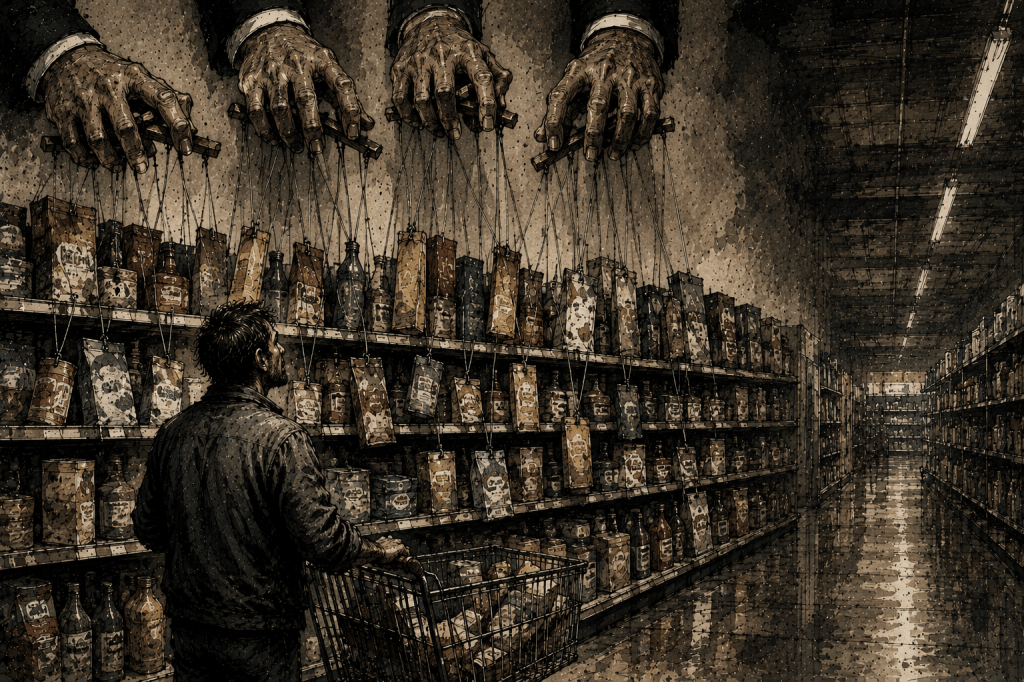
    Paying More While Farmers Make Less Let’s follow a gallon of milk from farm to your refrigerator. At the dairy farm in Wisconsin: Tom has been dairy farming for 30 years. He has 150 cows. He wakes up at 4:30 AM every day—no weekends, no holidays. Cows need milking twice a day, every day. His…

  • How MTV Killed the Video Star (And Cable/Network Greed Finished the Job)

    I’m not a media analyst. Smarter people than me — like Evan Shapiro, who you should follow on LinkedIn immediately — dissect this industry for a living. But I spent years working inside broadcast television, and I’ve been chewing on this particular problem for over a decade. So here’s my humble, slightly obsessive take on…

  • Americans Agree on Almost Everything—We Just Don’t Realize It

    , ,

    I scroll Instagram mostly because I have to. Crooked Number lives there and you can’t sell baseball mom shirts to an empty room, so I spend more time on it than I’d choose. Which means most of what I see is algorithm-served noise I didn’t ask for. One of those infographics floated past the other…

  • Do Unto Others Part 5: What This Means for Democracy

    ,

    When Shared Reality Dissolves, Only Power Remains Introduction: The Foundation Is Cracking Democracy rests on three pillars that most Americans take for granted: Over the course of this series, we’ve documented how all three pillars are systematically eroding. Part 1 showed empathy has become transactional – Melissa Hortman gets “I don’t know who she was,”…

  • Do Unto Others Part 4: Flooding the Zone

    ,

    Part 4 of Do Unto Others, a 5-part series. Read the complete series → When Lies Work Better Than Truth After documenting transactional empathy (Part 1), Stage 2 moral reasoning (Part 2), and asymmetric hypocrisy (Part 3), one question remains: How does this actually work in practice? The answer is documented. It’s called the “firehose…

  • Do Unto Others Part 3: Both Sides Are Hypocrites

    ,

    Part 3 of Do Unto Others, a 5-part series. Read the complete series → But the Hypocrisy Differs in Depth and Kind After two parts documenting transactional empathy and Stage 2 moral reasoning, a predictable objection arises: “Both sides do it.” This is true. Both parties exhibit hypocrisy. Both say one thing and do another.…

  • Vote FOR Something: An Honest Look at Voting Reform

    , ,

    The last time I felt good about a vote I cast for president, I was probably in college and the candidate was probably losing. Every election since has been damage control. I’m not voting for somebody, I’m voting against the other guy because my kids have to live in whatever country the next four years…

  • Let’s Stop Screaming at Each Other

    , ,

    Libtard. Right-wing nut. Snowflake. MAGA moron. Commie. Fascist. We’ve all heard it. Most of us have said some version of it. I know I have. And every time it happens, somebody wins — but it’s not you, and it’s not the person on the other end of it. Americans are more polarized than at any…

  • BrokeCon by Design Part 25: The Bottom 90% Agenda – How We Fix This

    ,

    On September 3, 2025, a bunch of people who do not agree with each other about anything stood on a stage in the Capitol and unveiled a bill. The lineup was the tell. A Texas Republican from the hard right. A Rhode Island Democrat. Alexandria Ocasio-Cortez fist-bumped a Tennessee Republican from the Freedom Caucus on…

  • BrokeCon by Design Part 24B: Rebuilding Worker Power – Why Unions Are the Key to Everything

    ,

    At seven in the morning on August 3, 1981, the air traffic controllers walked off the job. Almost thirteen thousand of them, out of a union of roughly seventeen thousand five hundred, went out over pay, hours, and the kind of working conditions you do not want the people watching the planes to have. Seven…

  • BrokeCon by Design Part 17: The Systemic Theft Of Our Retirement

    ,

    On December 9, 1963, the Studebaker Corporation announced it was closing its main automobile plant in South Bend, Indiana. The company had been building things to ride in since before there were engines to put in them — wagons, in the 1850s — and for the people on the line the pension was not a…